Museo Genaro Perez
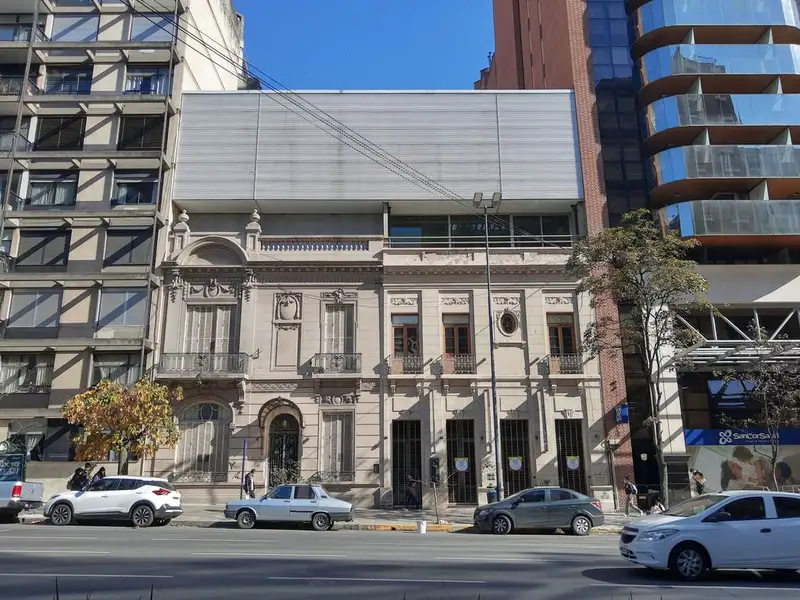
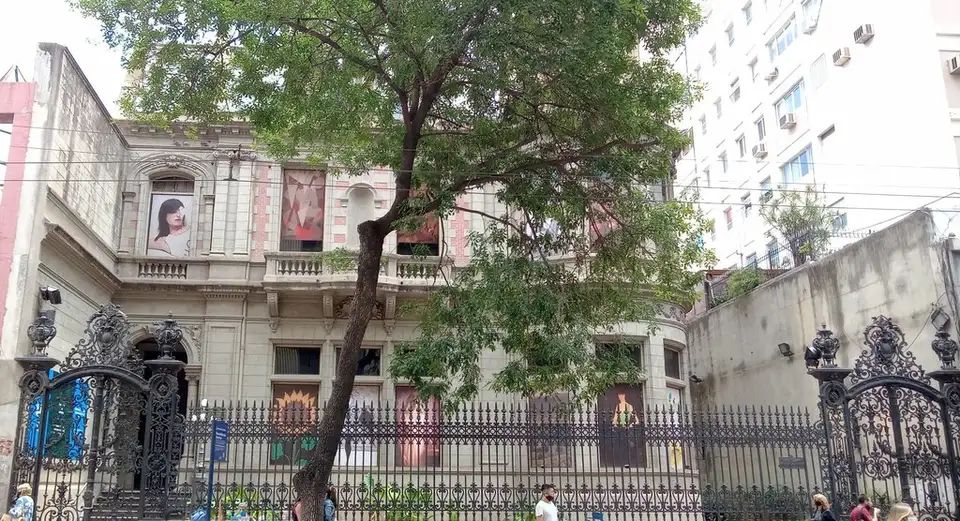
Located in the heart of Córdoba Capital, on Avenida General Paz, the Museo de Bellas Artes Genaro Pérez occupies a structure that is, in itself, a testament to the architectural grandeur of the early twentieth century. What now functions as a space dedicated to the visual arts was originally conceived between 1905 and 1910 as the family residence of Dr. Félix Tomás Garzón, who served as governor of the province. The building not only represents a landmark in the urban history of the city, but also marks the transition from a highly prestigious private dwelling to a public space for the stewardship of cultural heritage.
Architecture and the memory of the house
The building stands out for its imposing presence and construction details that reflect the opulence of the era. Its façade draws visitors in through an imported wooden door, leading to an interior defined by a grand staircase, broad reception rooms, parquet floors, and walls bearing significant artistic interventions. Among them, the work of Emilio Caraffa is particularly notable: he decorated the ceilings of several rooms with painting, integrating the pictorial work directly with the architecture of the space.
The history of the site has layers that extend beyond its time as the Garzón family residence. Before the current construction, the plot held buildings that served as carriage houses and, later, as a funeral service operated by Silencio Córdoba. This accumulated history has fueled local accounts of presences and legends — among them the figure of a young girl said to roam the staircases, linked to a family tragedy of the original owners — adding a mystical dimension to a visit through its rooms.
A catalogue of Argentine art
Since its conversion into a museum in 1943, the space has built up a permanent collection that serves as a compendium of Argentina’s aesthetic and social transformations. The holdings bring together approximately one thousand works that trace a path from the precursors of the nineteenth century — with colonial and republican influences of a European character — through to modern avant-gardes and contemporary production.
Visitors may encounter pieces by artists fundamental to the country’s visual identity, including Prilidiano Pueyrredón, Lino Enea Spilimbergo, Raúl Soldi, and Antonio Berni. The presence of figures such as Genaro Pérez, the museum’s own namesake, alongside names like Xul Solar and Antonio Seguí, offers a comprehensive view of the diverse artistic languages that have shaped national culture.
The museum in its cultural context
The Museo Genaro Pérez does not operate in isolation; it is integrated into a circuit of cultural institutions that define the pulse of Córdoba. Its approach seeks to connect historic collections with new modes of artistic production, allowing classical works to enter into dialogue with the expressions of newer generations. As a space that safeguards both the pictorial heritage and the architectural memory of the city, it stands as an essential point of reference for understanding the evolution of taste and Córdoban identity in relation to the rest of Argentine territory.