Catedral De Cordoba Nuestra Senora De La Asuncion
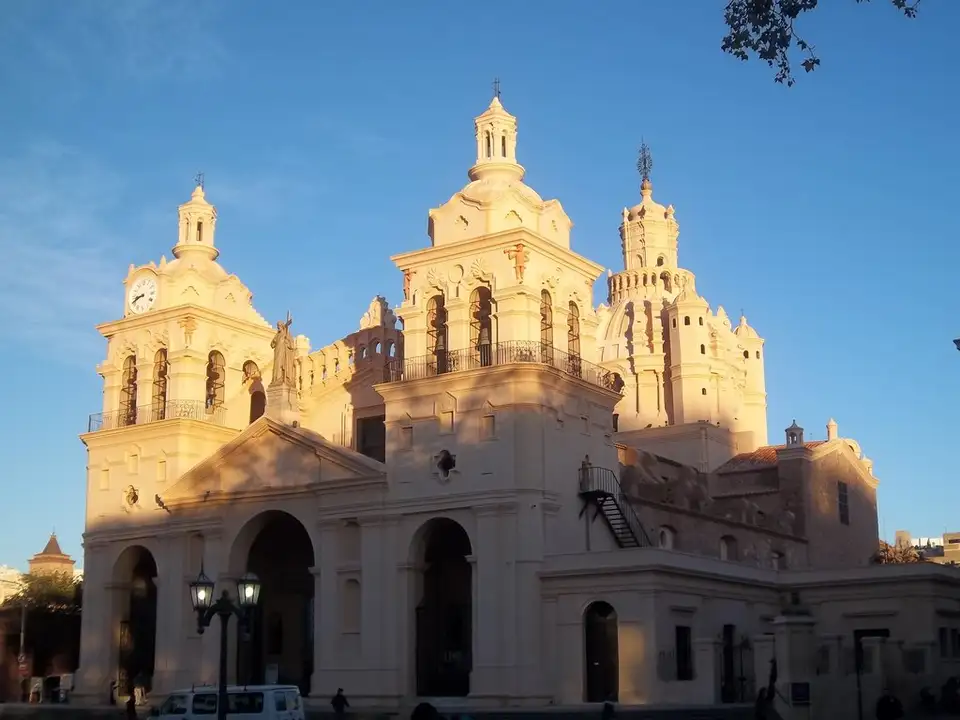
Situated at the very heart of Córdoba’s Casco Histórico, the Cathedral of Nuestra Señora de la Asunción is far more than a religious temple; it is the axis around which the city’s original layout was organized. Since 1577, when this plot was designated for the ‘Iglesia Mayor’ in the plan of the 70 blocks, the building has served as the fundamental point of reference for the city centre. Declared a National Historic Monument in 1941, its presence marks the transition between colonial Córdoba and the modern metropolis, integrating into the urban landscape through an architecture that is, in essence, a physical record of the centuries that have passed.
A construction process of resilience and cultural blending
The current structure is not the result of a single design, but of a long and complex construction process that unfolded over more than two hundred years. What began as a modest building of mud and straw, erected through the labour of indigenous, mestizo, and criollo hands, evolved into a monumental work of eclectic character. This development was marked by critical episodes, such as the collapses that occurred in 1677 and 1724, which forced the rebuilding of parts of the temple and left traces of different aesthetic currents.
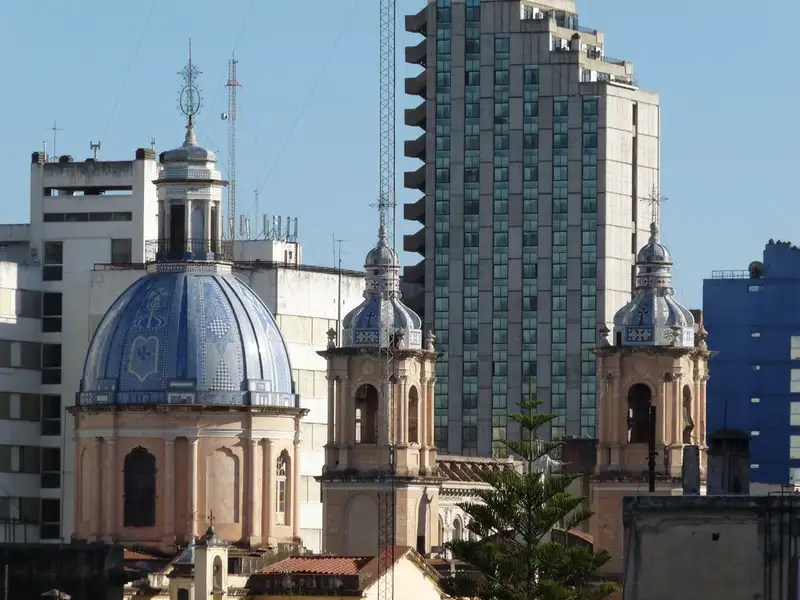
The building displays a notable cultural blending in its forms. Architectural solutions with Indo-American features can be observed, particularly visible in the details of its two bell towers, where the presence of angels with local physiognomies enters into dialogue with the colonial baroque style. The imposing dome and the Jesuit portico complement this mixture of styles ranging from baroque to neoclassical, reflecting the influence of architects such as José González Merguete and Andrés Blanqui in the masonry and the foundations of the temple.
A journey through its naves and artistic treasures
Upon entering, the visitor finds a space divided into three naves that offer a visually rich decorative experience. Much of the interior ornamentation seen today is the result of interventions carried out in the early twentieth century, under the direction of artists such as Emilio Caraffa, Manuel Cardeñosa, and Carlos Camiloni, who endowed the interior with a solemn and artistic atmosphere.
The route allows visitors to appreciate specific details that define the identity of the place, such as the neoclassical-style iron portal bearing the silhouettes of Saint Paul and Saint Peter. Among its most significant corners are the interior chapels, where the Capilla del Santísimo stands out. In this space the Tabernáculo or Sagrario de Plata is kept — a piece of silverwork made in 1804 that constitutes one of the most valuable treasures of Córdoba’s heritage.
Context and cultural legacy
The Cathedral does not function as an isolated element, but as the heart of a historic circuit that connects with other landmarks of the city. Its strategic location on calle Independencia allows one to understand its role as the centre of social and religious life since the colonial period. The presence of the bronze Cristo Redentor, installed between its towers in 1901, adds another layer of symbolism to this monument that has survived natural disasters and urban transformations, consolidating itself as the living testimony of Córdoba’s collective memory.