Pensar Malvinas Space
Pensar Malvinas Space
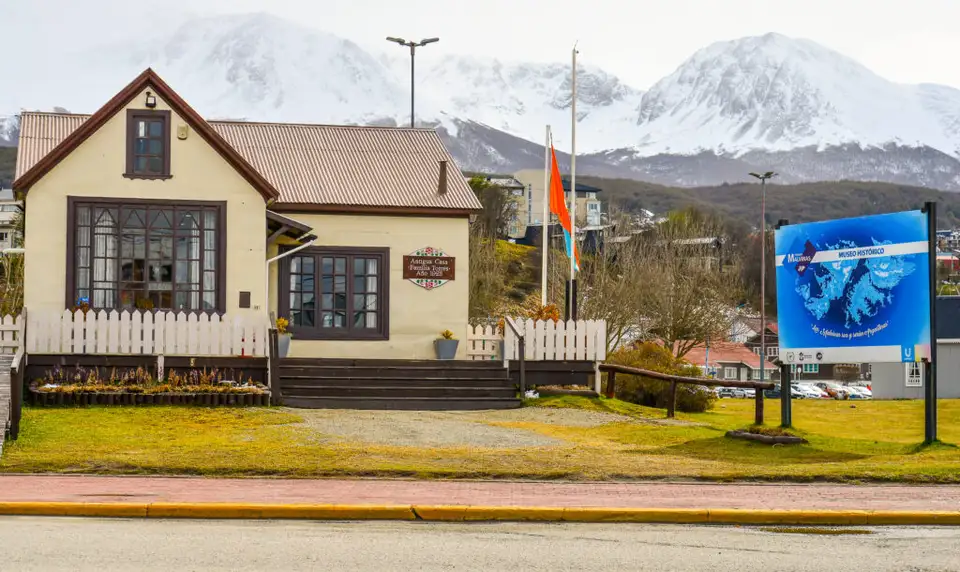
Pensar Malvinas is presented as a center for memory and public education within Ushuaia’s historical narrative. The Ushuaia Tourism Secretariat presents it as one of the city’s routes to better understand Argentina’s sovereignty claim over the Falkland Islands (Islas Malvinas), a historical relationship that strongly shapes local identity. The site acts as a bridge between national history and the everyday experience of the southern city because it gathers objects and stories that place the conflict and diplomatic claim in visible, accessible artifacts.
The main room is structured as a historical-documentary exhibition. Visitors find objects, letters, and press clippings related to the heroes of 1982, along with photos and documentation referencing milestones of the Malvinas narrative: the first sighting of the island, the Treaty of Tordesillas, British invasions, and Argentina’s advocacy at the UN. The interpretation is not limited to the immediate wartime period; it seeks to show historical continuity to explain how the territorial dimension of the claim has been built over time.
The material context is also central to the experience. The exhibits are displayed in an old house associated with the early beginnings of Ushuaia and linked to the Paseo de los Antiguos Pobladores, described in the official English version as a traditional Fuegian house of the Torres family. The venue choice is itself symbolic: this is not only a display about the islands, but also a way to read territorial memory through local architecture and the urban history of the city.
If you leave the space and walk along the waterfront, the route leads about 700 meters to Plaza Islas Malvinas, bordered by a photo walk that extends the historical reading into a more open urban setting. The war memorial and the eternal flame are included as focal points for collective remembrance, making Pensar Malvinas less an isolated attraction and more part of a broader memory circuit that combines history, cityscape, and civic commemoration.
From a visit perspective, the official portal states opening details and access conditions, and it also lists free guided visits with free admission. That explicit gratuity and public focus supports its educational role: it is designed for general visitors and for groups seeking guided learning on historical memory. In a city known for extreme climate, nature tourism, and historical routes, this spot adds a civic-historical counterpoint: small scale, deep historical anchoring, and a material reading of the past that helps explain why local narratives often frame Ushuaia as the capital of the Malvinas.