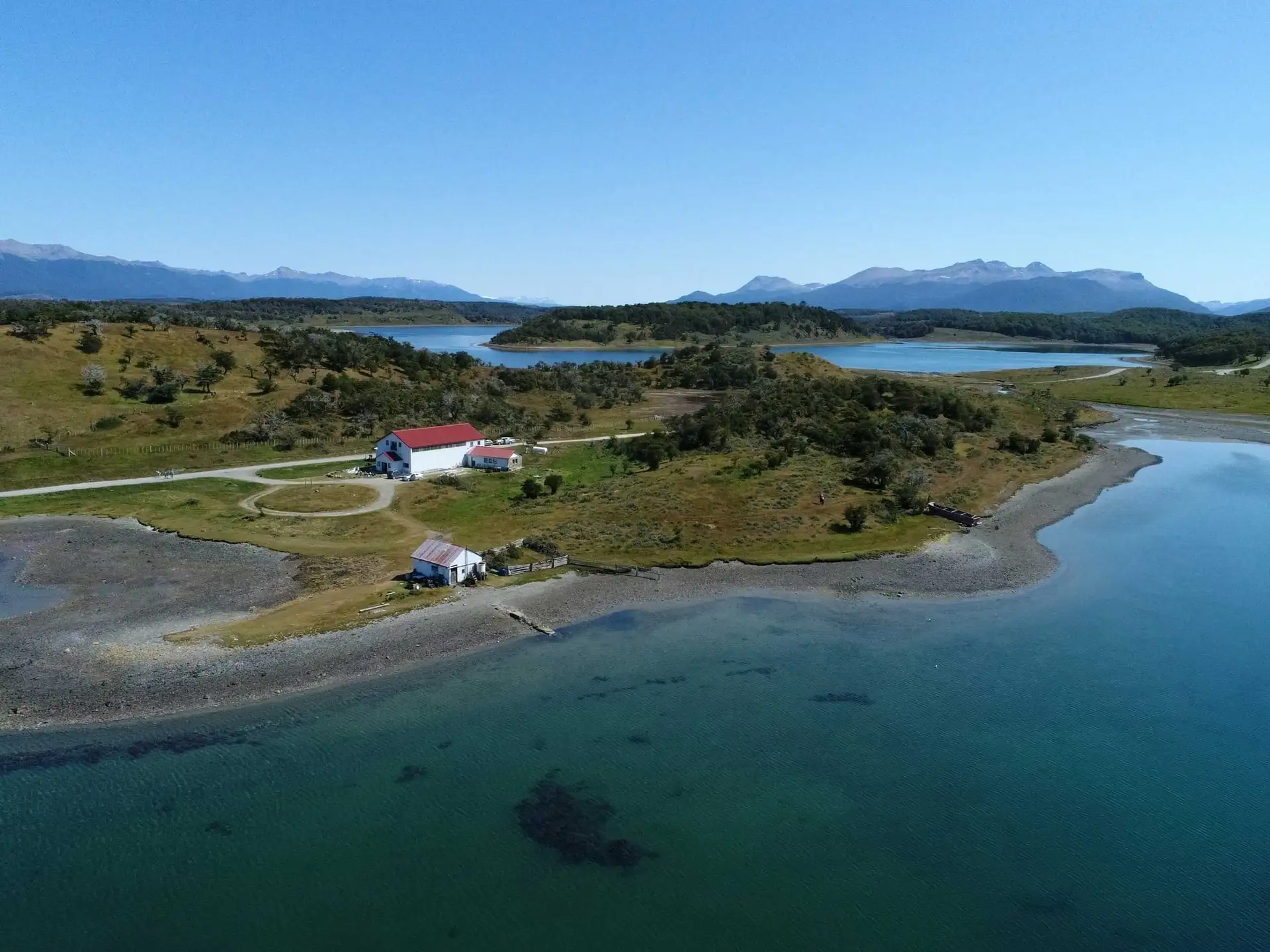
Acatushun Museum at Harberton
The Acatushun Museum is part of Harberton Estate’s historic and natural experience and helps present the site as more than a heritage destination. It is one of the key points in Harberton, linking family continuity, research, and the Patagonian seascape.
Harberton was founded in 1886 by Thomas Bridges, a central figure in the region’s history, and remains in the hands of his descendants. That continuity shapes how the visit is framed: guests move through the estate’s core buildings, park, and family cemetery, then expand to marine life and its scientific memory at the Acatushun Museum. This sequencing makes the museum meaningful within the broader site, because it connects physical heritage with the continuity of the people who have maintained it.
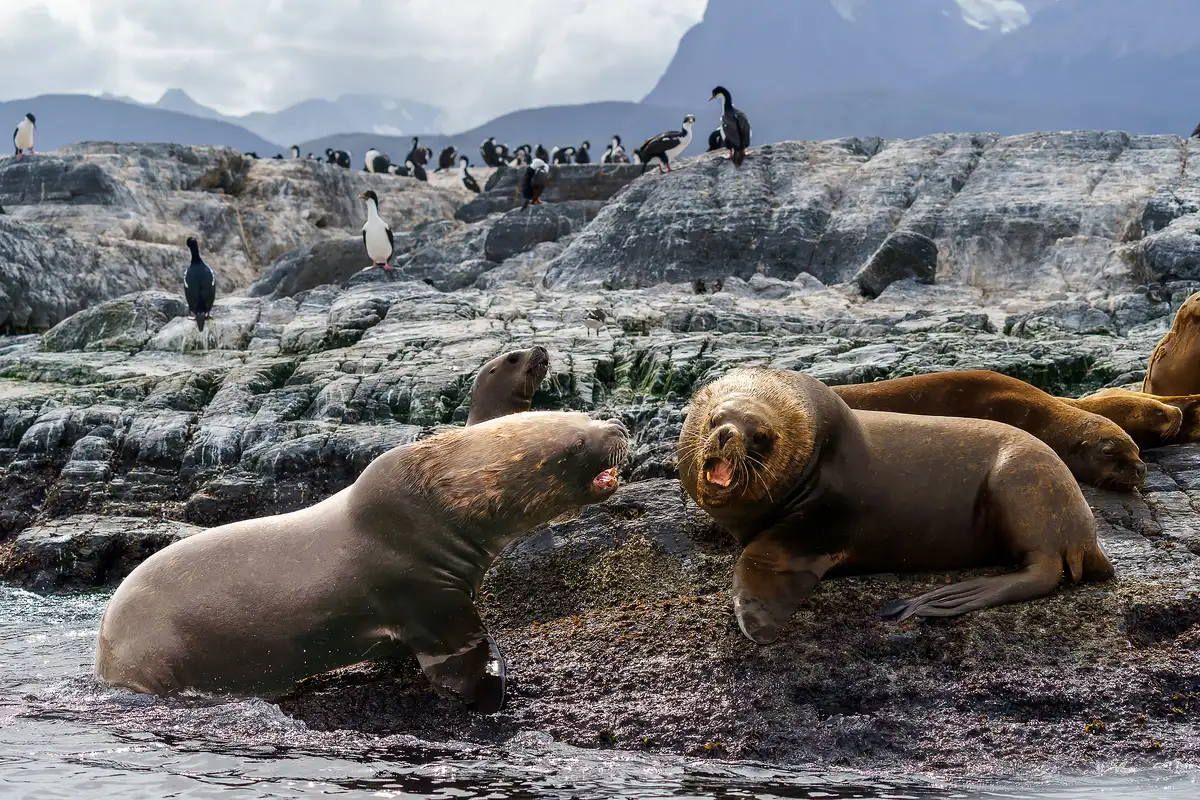
The Acatushun Museum is designed as an immersion in Tierra del Fuego’s underwater world. Its main narrative is built around its collection itself: more than 2,800 marine mammal specimens and 2,300 bird specimens, plus life-size representations of underwater animals. The thematic focus highlights regional biodiversity and encourages interpretation from conservation and scientific perspectives rather than simple tourism display.
A distinctive feature is the museum’s relationship to field research. The bone and biological material is tied to specimens collected by Dr. Natalie Goodall and her interns along Fuegian coasts. That places Acatushun within a regional scientific museum tradition: it is not only a display collection but also evidence of fieldwork, cataloguing and preservation practices. In some cases and depending on availability, visitors may also access the laboratory and Bone House, where specimens are handled.
For travelers, its value is twofold. First, it acts as a strong interpretive node for Tierra del Fuego biodiversity, showing connections between mammals, birds, and coastal ecosystems at a broad visual scale. Second, it strengthens Harberton’s story as a living heritage site. The visit becomes more legible when guests understand that the human history of settlement and the natural systems of the surrounding waters are part of one continuous context. That coherence gives the museum a weight that few stops around southern travel routes provide.
In Ushuaia terms, Acatushun broadens the city’s image beyond scenic views. It supports a less surface-level experience: local history, then natural heritage, and finally a more complex understanding of why Tierra del Fuego is not only a landscape destination but also a living archive of ecology and memory.