Church of the Society of Jesus
Located in the heart of the Jesuit Block, the Church of the Society of Jesus is the oldest building in the city of Córdoba. This church is not merely a religious structure, but a fundamental pillar of the architectural ensemble declared a UNESCO World Heritage Site in 2000. Its presence marks the point where the Jesuit order consolidated its administrative and cultural influence in the region, transforming Córdoba from a peripheral outpost of the Viceroyalty of Peru into a key hub for the missions that connected with the Guaraní and Chiquitano peoples.
Architecture and Baroque Symbolism
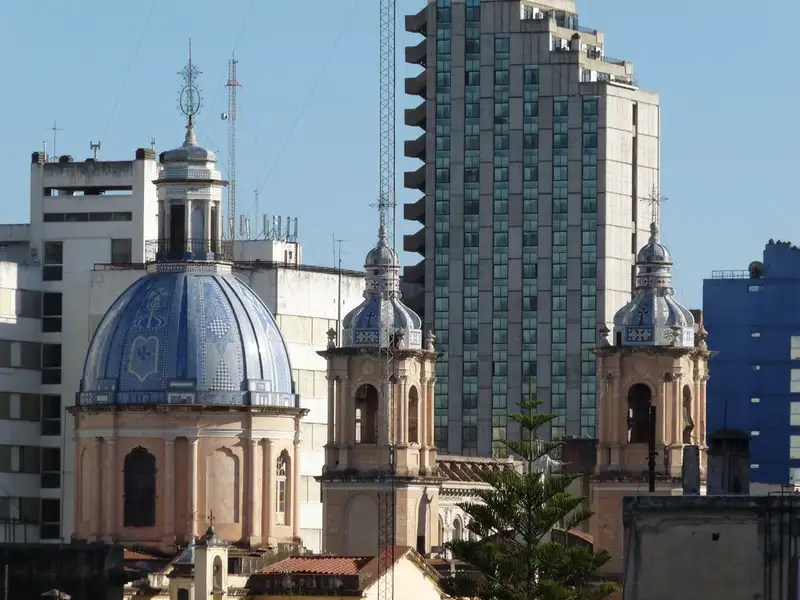
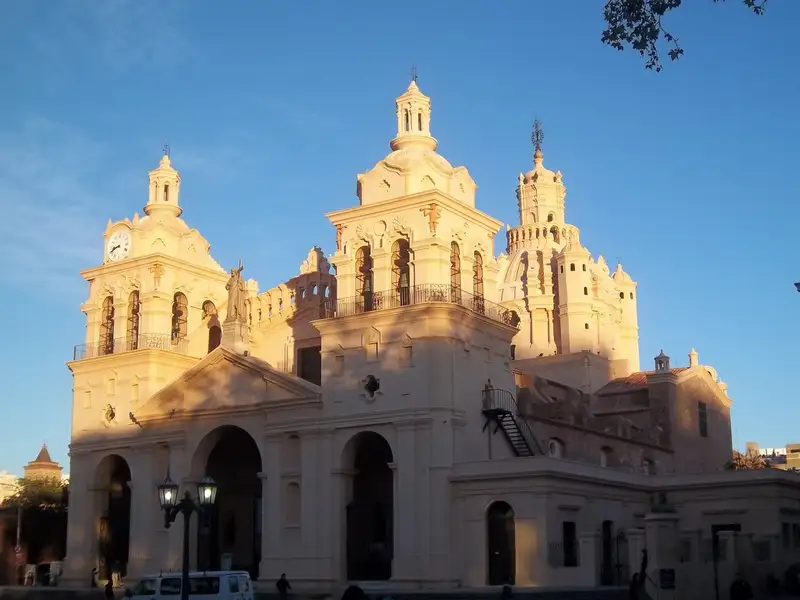
Construction of this church spanned several decades, from 1640 to 1676, under the direction of engineer Felipe Lameire. Its structure features a Latin cross floor plan, with a main nave and a transept culminating in an imposing dome. The stone walls, set with lime and reaching a meter and a half in thickness, convey a sense of solidity and shelter, with small exterior openings that regulate natural light.
The facade, built in piedra sapo, stands out for its austerity compared to the richness of the interior. The two towers flanking the entrance are topped by handcrafted weathervanes; one bears the monogram of the Society and the other displays a banner with the phrase “Ave María”. This contrast between an austere exterior and a dazzling interior is a defining characteristic of American Baroque, where ornamentation aims to strike the visitor the moment they cross the threshold.
The Art of Syncretism in the Interior
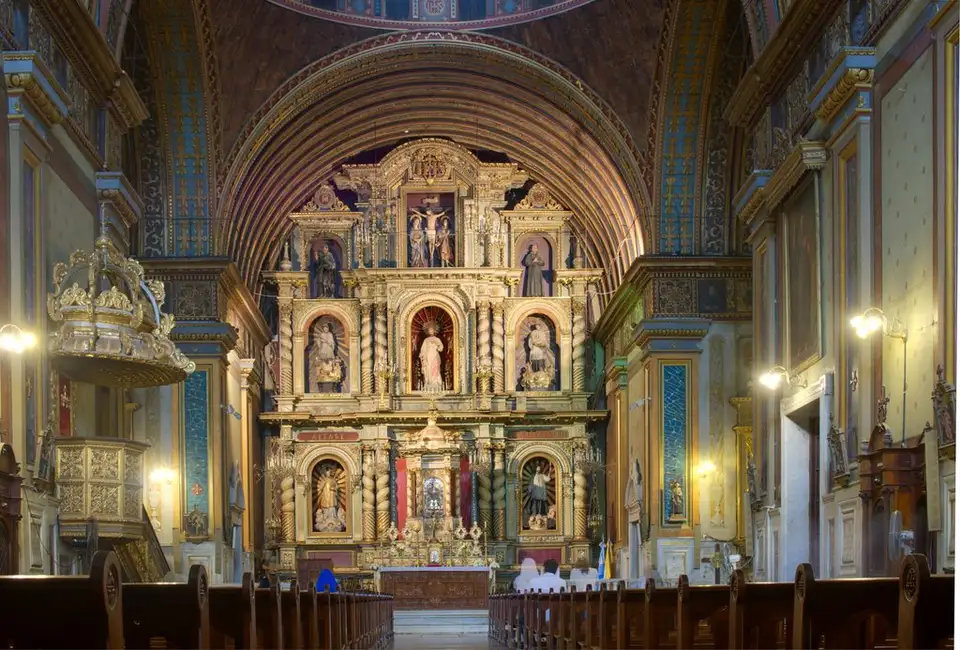
Upon entering, the visit centers on observing the details that reflect the encounter of cultures. The vault takes an unusual form, resembling an inverted ship’s keel, crafted from Paraguayan cedar wood and gilded with gold leaf. Within this Baroque decoration it is possible to identify the handiwork of indigenous artists and African enslaved people who participated in its construction, leaving their mark on the design.
The main altarpiece, carved in wood, together with the Tabernacle, complete an environment of great artistic value. The presence of elements such as mission cedar evidences the logistical and cultural connection between the Jesuit estancias, the missions, and the city. The space is organized around a main nave and side chapels: to the south lies what was the chapel “de los españoles” (currently the Graduation Hall of the Universidad Nacional de Córdoba) and to the north, the chapel “de los naturales”, today known as the Capilla de Lourdes.
Context within the Jesuit Block
The church forms part of an urban and historic ensemble that includes the Capilla Doméstica, the Colegio Nacional de Monserrat, and the Casa de Trejo. This ensemble allowed the Jesuits to manage not only spiritual life, but also the educational and administrative affairs of their territories. Visiting this space means traversing a living fragment of Argentine colonial history, where the architecture serves as testimony to the legacy of an order that reshaped the cultural map of the Southern Cone.