Estadio Mario Alberto Kempes
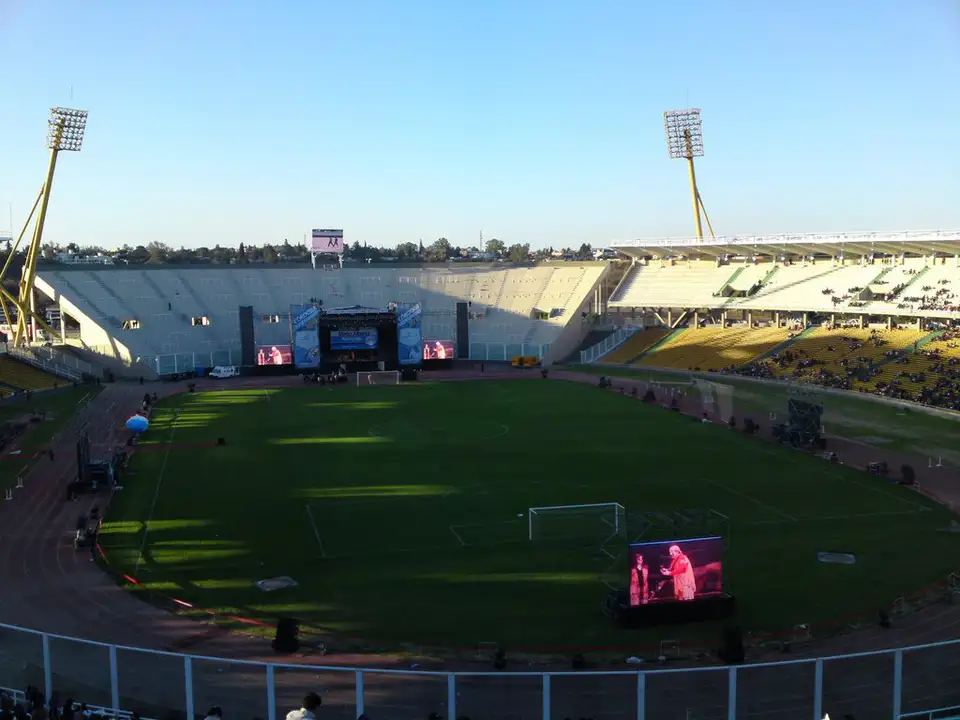
The Estadio Mario Alberto Kempes is one of the most important sports venues in Argentina. Located in the Chateau Carreras neighbourhood, about 10 kilometres from the centre of the city of Córdoba, this monument to sport was originally conceived as one of the main venues for the XI FIFA World Cup in 1978. Its architecture, the result of a team of professionals that included the firm Sánchez Elia-Peralta Ramos alongside architects Hugo Oviedo and Alberto Ponce, established its technical and aesthetic significance from its inauguration in May of that year.
A World Cup legacy and its monumental scale
What defines the stadium’s presence is its capacity and its history tied to international football. Although it is popularly known as “Chateau Carreras”, its identity is linked to the figure of Mario Alberto Kempes, an undisputed reference in Argentine sport. The site functions not only as a concrete structure for large events, but as a landmark of Córdoba’s urban infrastructure. With a capacity recorded at various times between 47,000 and 57,000 spectators, the stadium is the setting for the province’s largest sporting and cultural gatherings.
The Parque del Kempes surroundings
The stadium does not function as an isolated element; it forms an integral part of a much broader recreational corridor. Surrounding the main structure is the Parque del Kempes, a space of more than 80 hectares that has succeeded in revitalising the banks of the Suquía river. This site combines native vegetation with exotic species and offers infrastructure that complements the monumental scale of the stadium. The park acts as a green lung for the city’s north-western zone, incorporating paths, cycling lanes of more than 2,500 linear metres, and aerobic stations.
This urban ecosystem is connected via pedestrian bridges to the Parque del Chateau, creating a continuous circuit that crosses the Avenida de Circunvalación Agustín Tosco. The presence of this corridor makes the stadium the nucleus of an area dedicated to wellbeing and recreation, where disciplines such as extreme sports at the Street Plaza coexist with low-impact activities on its natural paths.
A hub of culture and sport
The importance of the complex extends beyond sport alone. The area surrounding the stadium connects with other points of cultural and educational interest, such as the Museo Provincial del Deporte and the Centro de Arte Contemporáneo del Chateau Carreras. This proximity turns the zone into a hub of activity where the historical memory of the World Cup era engages with new proposals in art and urban recreation. The integration of cycling lanes, children’s play areas, and spaces for extreme sports consolidates the site as a central node linking the history of 1978 with the contemporary social life of Córdoba.