Córdoba Argentina Temple
Located in the northwestern sector of the city, specifically in the Villa Belgrano neighborhood, the Córdoba Argentina Temple stands as an architectural and spiritual landmark within the provincial capital. This building, part of the global network of temples of The Church of Jesus Christ of Latter-day Saints, is not only a religious structure but also an element that incorporates materials from the region itself, linking its design to the Córdoba territory.
Architecture and regional materials
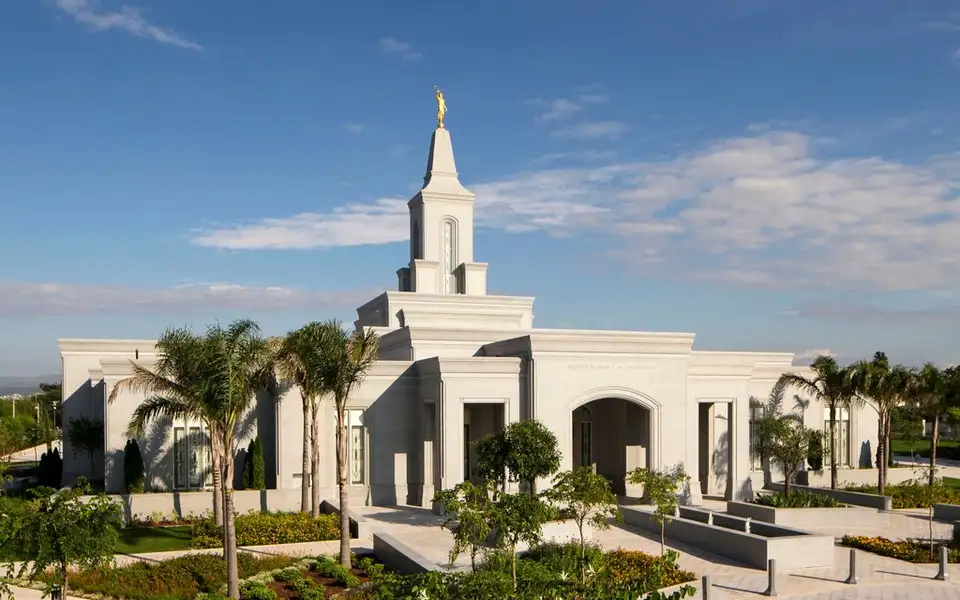
The temple’s visual identity is defined by the use of light grey granite, a stone quarried from within the province of Córdoba itself. This material was processed in Buenos Aires before being applied to the façade, achieving a finish that speaks to the sobriety and solidity of the urban surroundings. The structure sits on a plot of approximately 2.1 hectares, allowing the building to maintain an imposing scale while remaining integrated into the Villa Belgrano landscape.
One of the most distinctive features is its single central spire, which holds a statue of the angel Moroni covered in gold leaf. This piece was installed in August 2014 and forms the highest point of the temple’s silhouette, serving as a visual landmark in the area. The architectural design is completed by a floor plan of just over 3,100 square metres, distributed across spaces intended for ceremonies and instruction.
Site context and development
The presence of this temple in Córdoba has a background rooted in urban and community planning. The land on which the building stands previously belonged to a local sports complex, which involved an acquisition and development process that began with the official announcement in October 2008. The construction of the site was a large-scale project that included the integration of adjacent properties to consolidate the current plot.
The layout of the complex is designed to reflect the solemnity befitting its function. The interior features specific rooms, including two instruction rooms and two sealing rooms, as well as a baptistry. Each of these spaces was conceived according to a logic of progression and order, following the architectural standards the institution applies to its temples worldwide.
Since its public inauguration in 2015, the temple has established itself as a significant element for the local community, representing one of the most recent milestones in the expansion of this religious architecture in the country. Its integration with the Villa Belgrano neighborhood and the use of Córdoba’s natural resources position it as a work that, while following a global model, has material roots deeply embedded in the province.