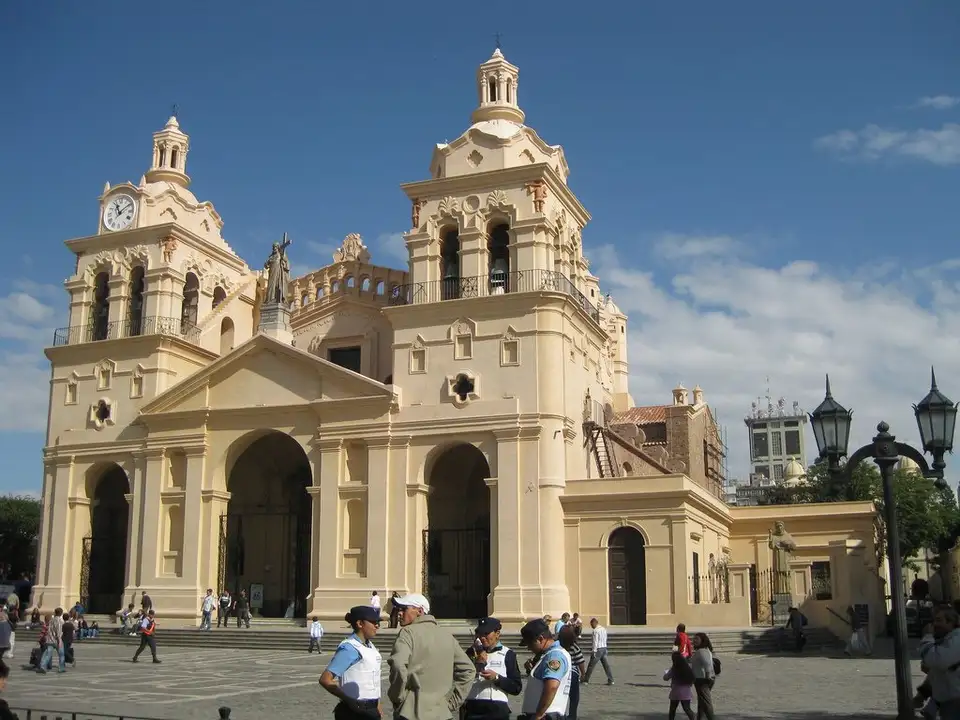
Córdoba Cathedral
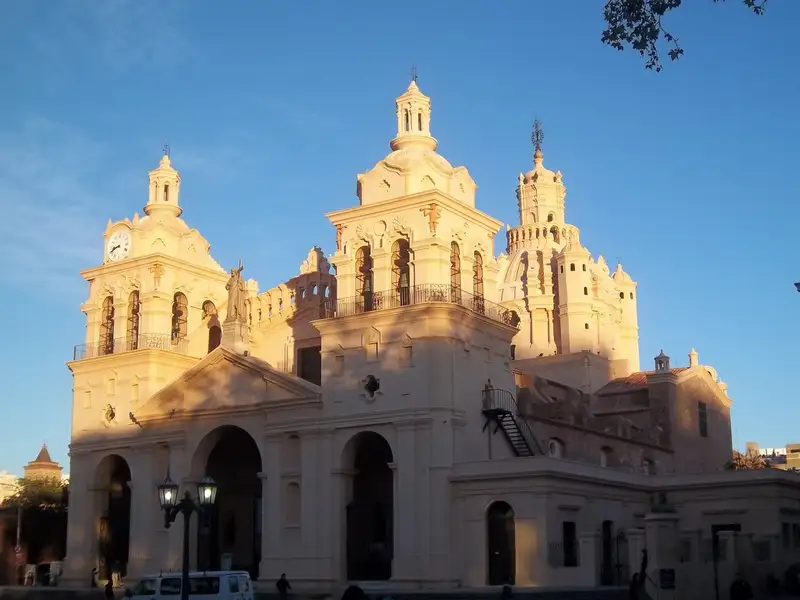
Located facing Plaza San Martín, the Córdoba Cathedral stands as the spiritual and architectural heart of the city. It is the oldest church in Argentina to maintain continuous religious service, with construction beginning toward the end of the 16th century. Its presence in the historic center is not only religious — it marks the starting point for understanding the urban evolution of the region, connecting directly with other landmarks such as the Cabildo through the Alameda de Santa Catalina.
A palimpsest of architectural styles
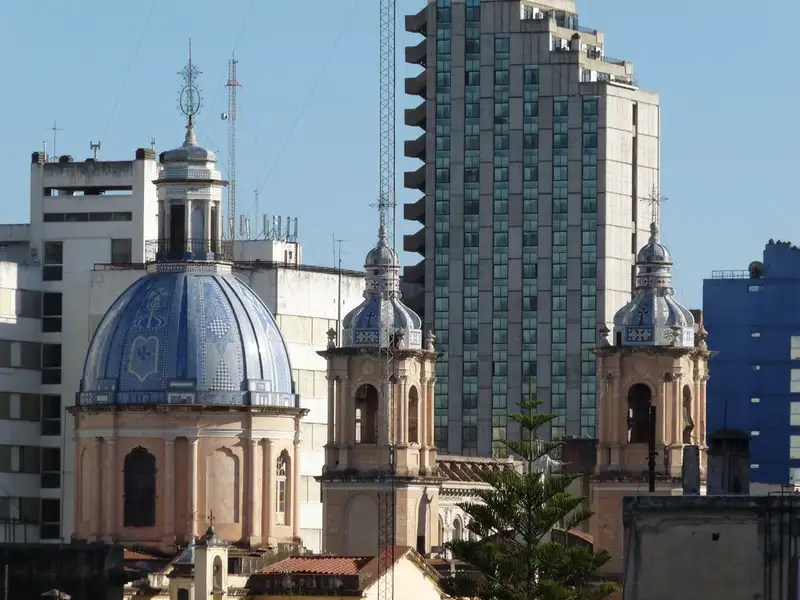
The current structure is the result of a construction process that extended over nearly two centuries, giving it a unique aesthetic complexity. The design, configured in the shape of a Latin cross, presents a fluid transition between different currents. Gothic vaults can be observed alongside proto-Baroque elements and a Renaissance-style dome. This mixture of eras becomes evident when walking through its naves, where the solidity of colonial construction dialogues with later additions.
The main façade and neoclassical portico, designed in 1729 by Italian architect Andrea Blanqui, contribute a sobriety that contrasts with the richness of the interior. The two bell towers, completed around 1787, complete its silhouette on the Córdoba skyline. Despite structural challenges — such as the collapse suffered in 1677 that forced the reconstruction of much of the original church — the building managed to consolidate its own identity, fusing European tradition with local craftsmanship.
Artistic treasures and ornamental details
The cathedral’s interior stands out for its ornamental richness, where the use of noble materials such as marble and mahogany defines the atmosphere of the space. One of the most notable features is the main altar, sculpted in marble and completed during the 17th century. On either side of the main arch stand monumental pulpits in marble and mahogany by sculptor Miguel Verdiguer, demonstrating the technical mastery of the era.
The choir is another space of great artistic value; its mahogany pews, crafted by the Sevillian master Pedro Duque Cornejo, feature intricate carvings covering nearly every centimeter of the wood. Likewise, the silver altar, made in colonial Peru, and the collection of votive offerings in gold and silver, add a very tangible dimension of material devotion. In the Capilla del Cardenal Salazar, part of the treasury can be admired, including ivory and silver objects dating from the 15th to 20th centuries, with particular distinction given to the Corpus Christi monstrance made by Enrique de Arfe in the 16th century.
Cultural integration and visual legacy
Beyond its liturgical value, the cathedral functions as a museum of Córdoba’s visual history. During the early years of the 20th century, the space was enriched with frescoes and murals executed by artists such as Emilio Caraffa, Carlos Camilloni, and Manuel Cardeñosa, who integrated a more modern aesthetic into the historic ensemble. Above the portico, the cast-iron monument of Christ the Redeemer, installed in 1901, completes this journey through temporal layers.
This monumental ensemble cannot be understood in isolation, but as part of an urban fabric where religious and civil architecture intertwine. The presence of elements built by local craftsmen and indigenous workers, under the direction of master builders such as Juan Rodríguez and Mateo Domínguez, adds a layer of territorial identity that transcends the purely European, making the cathedral a living testimony to the formation of Argentine society.