Floralis Genérica
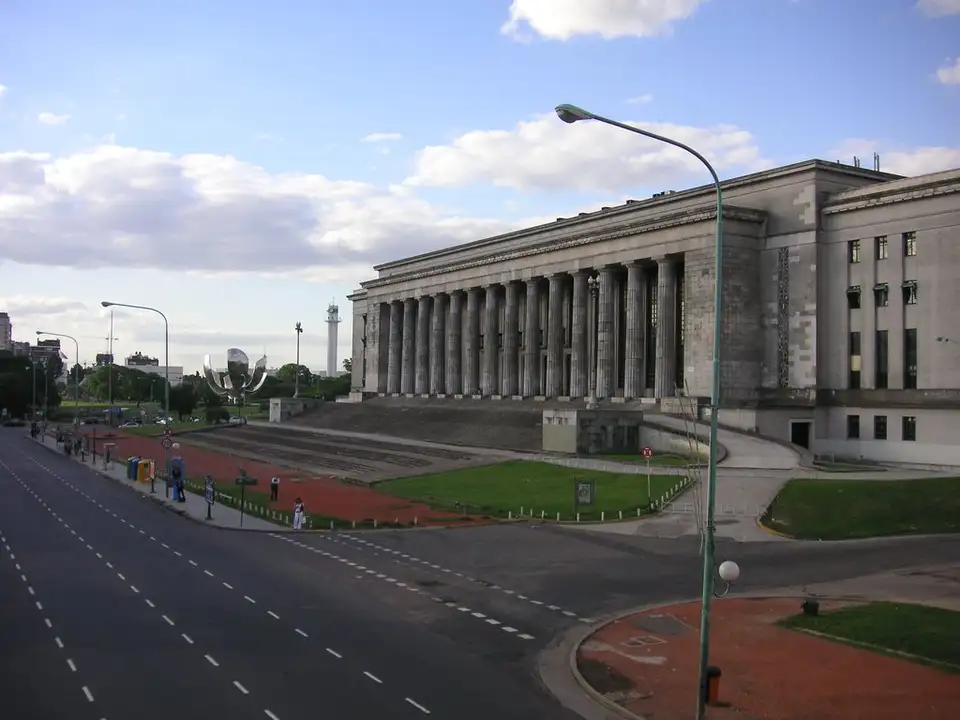
Located at the center of a reflecting pool within Plaza de las Naciones Unidas, the Floralis Genérica is one of the most recognizable landmarks in Buenos Aires. This stainless steel kinetic sculpture is not merely a static monument but a piece that interacts with its surroundings through movement. Its structure, which rises some 23 meters into the sky and weighs approximately 18 tonnes, operates via a mechanism that allows its petals to open in the morning and close at dusk.
Architecture and symbolism
The work was designed and financed by Argentine architect Eduardo Catalano, who gifted it to the city of his birth in 2002. Beyond its imposing scale, the piece functions as a tribute to Argentina’s green spaces. The use of stainless steel allows light to play across the metallic surface, creating reflections that shift with the position of the sun and the interplay with the water of the surrounding pool.
The structure presents itself as a giant flower in constant transformation. This mechanical movement is not merely a technical detail but the core of its identity: the capacity to mimic the biological cycle of a real plant, responding to the rhythms of the day. Positioned above a reflecting pool, the sculpture doubles its visual impact, integrating the metallic architecture with the natural elements of the park.
The surroundings in Recoleta
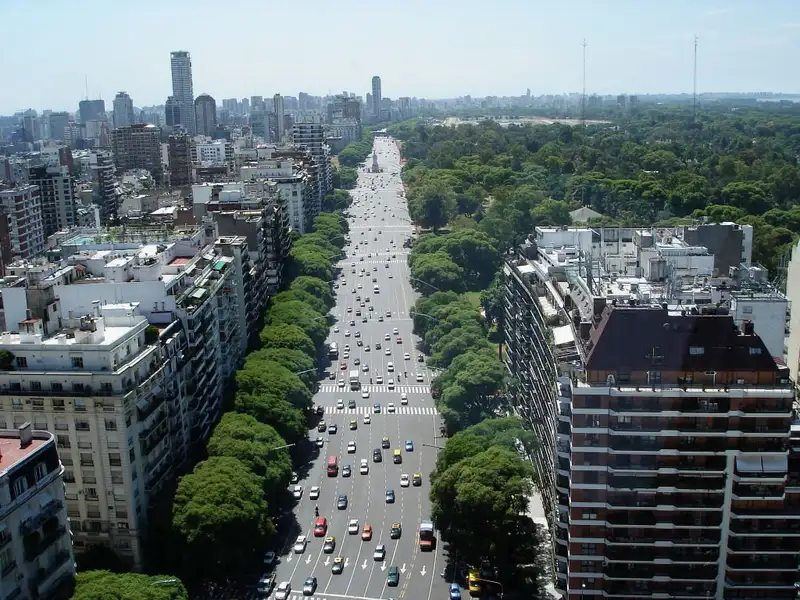
The presence of the Floralis Genérica defines much of the experience in the area around Plaza de las Naciones Unidas. The monument is surrounded by pedestrian paths and rest areas that allow the work to be observed from different angles and perspectives. Its strategic location connects it directly to other key points in the Recoleta neighborhood, making it easy to combine with visits to the Cementerio de la Recoleta or Plaza Francia.
The space occupied by the sculpture serves as a pause within the urban dynamism of the city. The surrounding paths offer a transition between the movement of nearby avenues and the calm of the parks in the northern zone. The layout of the park, with its green areas and walkways, is designed so that visitors can appreciate both the scale of the structure and the details of its opening mechanism.
Walking through the surroundings, one perceives how the work acts as a visual axis that organizes the urban landscape of this sector. The combination of precision engineering with the setting of parks and reflecting pools makes this point a reference for the modern identity of Buenos Aires, integrating architectural heritage with contemporary landscape design.