Abasto de Buenos Aires
Located in the heart of the Balvanera neighborhood, on Avenida Corrientes, the Abasto de Buenos Aires represents one of the most significant points of convergence between historical memory and the current urban activity of the City of Buenos Aires. What today operates as a large-scale shopping center stands on the original structure of the Mercado de Abasto, a building whose importance to the supply of the Argentine capital was fundamental throughout much of the twentieth century.
Architecture and historical legacy
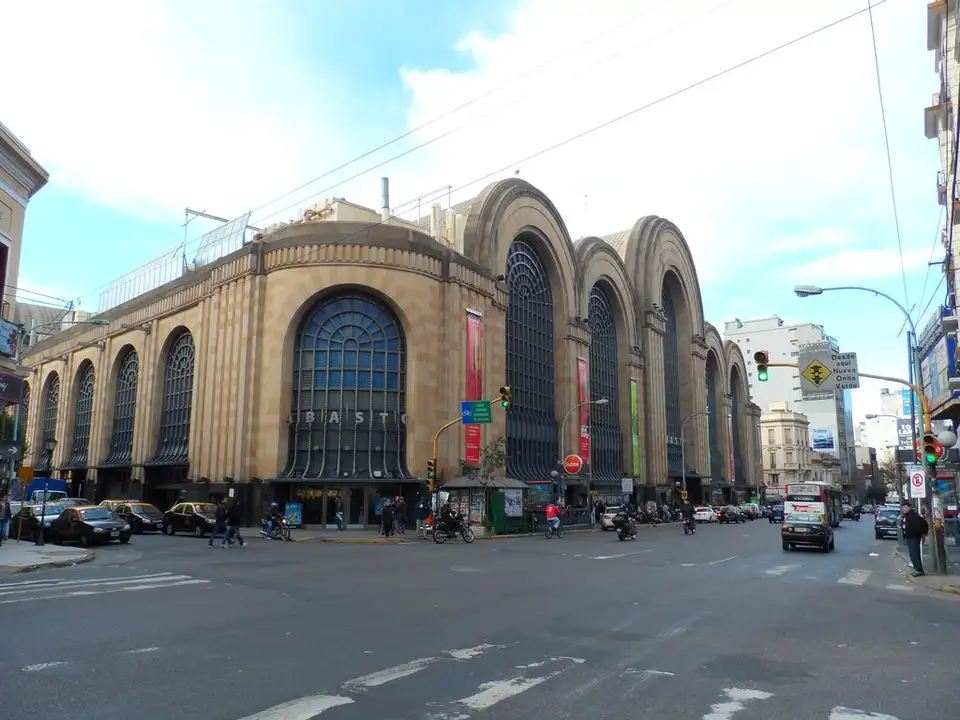
The heritage value of the complex lies in its imposing structure. The original building, whose construction began in the late nineteenth century, is distinguished by a structural system combining steel and reinforced concrete. This design, which supported a floor area of approximately 58,000 square meters spread across four levels, stands as testimony to the engineering of the era. The work of figures such as architect Víctor Sulcic and engineers José Luis Delpini and Raúl Bes gave the site a monumental scale that sets it apart from other commercial buildings in the area.
The building’s architecture is not merely a container for retail spaces but an element that defines the urban landscape of Balvanera. The presence of its facades and massing recalls the period when the market was the distribution hub for fresh produce across the entire city, consolidating the district as a strategic logistical and commercial node.
The space in the urban dynamic
Moving through this complex means traversing a space where the monumental scale of the old market meets the needs of contemporary Buenos Aires. The four-level structure allows circulation connecting different retail areas while preserving the sense of openness inherent in its original design. The building functions as a landmark on the Avenida Corrientes axis, integrating into the constant flow of people moving along this central corridor of the city.
The transition from wholesale market to shopping center involved a transformation in land use, but without losing the identity of its territorial scale. The space continues to operate as a major meeting point, where the architecture of the late nineteenth and early twentieth centuries serves as a frame for today’s commercial activity, keeping alive the relevance of this district within the urban fabric of Buenos Aires.