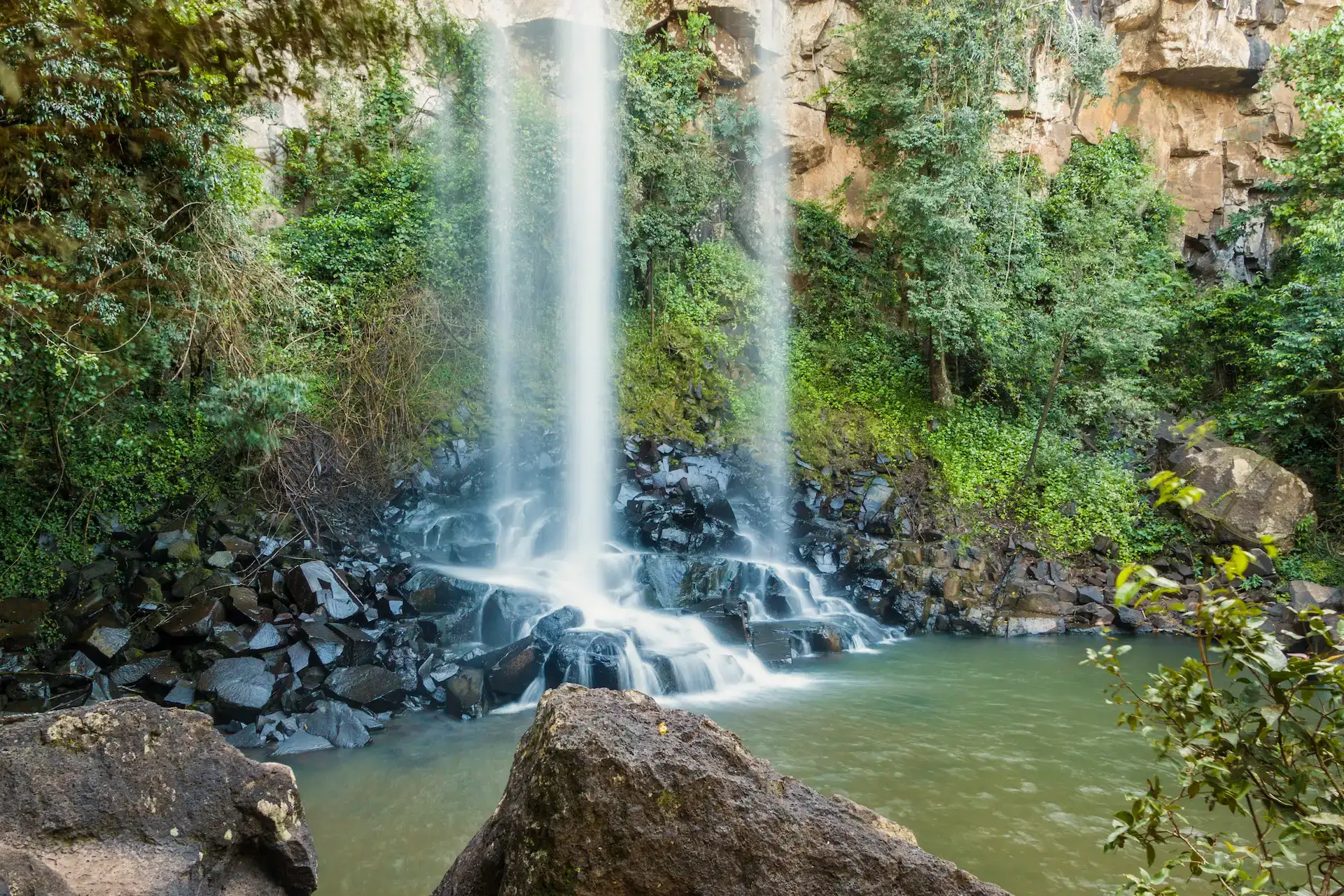
Salto Arrechea
Inside Iguazu National Park, a few kilometers from the crowded circuits where the water roars without pause, there is a different path. The Macuco Trail begins to the right of the Central Station and heads directly into the Paraná Atlantic rainforest, away from the metal walkways and tour groups, offering something rarer: the silence of dense vegetation, green half-light, and enough time for the jungle to stop being scenery and become its own world.
The trail covers 7.6 kilometers out and back and takes around three hours at a relaxed pace. Difficulty is moderate: the path is rugged, with no services or support infrastructure, and park rangers close it whenever rain makes it slippery or unsafe. Anyone lacing up boots here should understand they are walking through a living ecosystem, not a theme park.
What the trail delivers along the way is as valuable as the destination itself. The canopy of the Interior Atlantic Forest — gallery forest with trees like palo rosa, laurel, and guatambú reaching 40 meters — filters light in layers. Lianas, epiphytes, and ferns cover every available surface of trunks and branches. The damp soil smells of living earth. In this setting, coatis cross the path without breaking stride, capuchin monkeys shake the high branches, and with patience and stillness it’s possible to spot an armadillo or catch fresh tapir tracks in the mud. The park hosts around 450 bird species: toucans, parrots, vivid jays, and the swiftlets that nest in waterfall walls appear throughout the walk with a frequency that the main crowded circuits — with their constant noise — simply don’t allow.
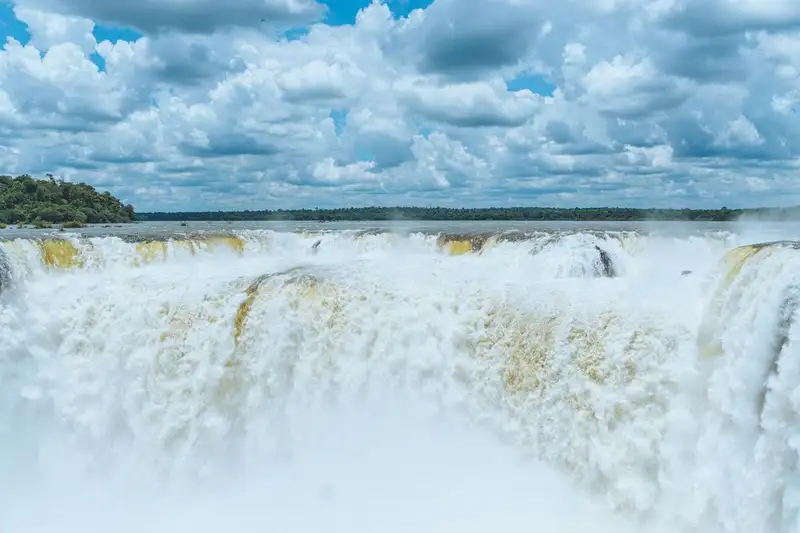
At the end of the trail waits Salto Arrechea: a 23-meter vertical drop that feeds a natural pool of clear water enclosed by rocks and dense vegetation. The scale is entirely different from Iguazu Falls. There is no spray rising 30 meters, no Devil’s Throat, no roar audible from kilometers away. There is instead the precise, clean sound of a jungle waterfall: water hitting rock, the echo contained between stone walls, a continuous murmur that fills the clearing without overwhelming it.
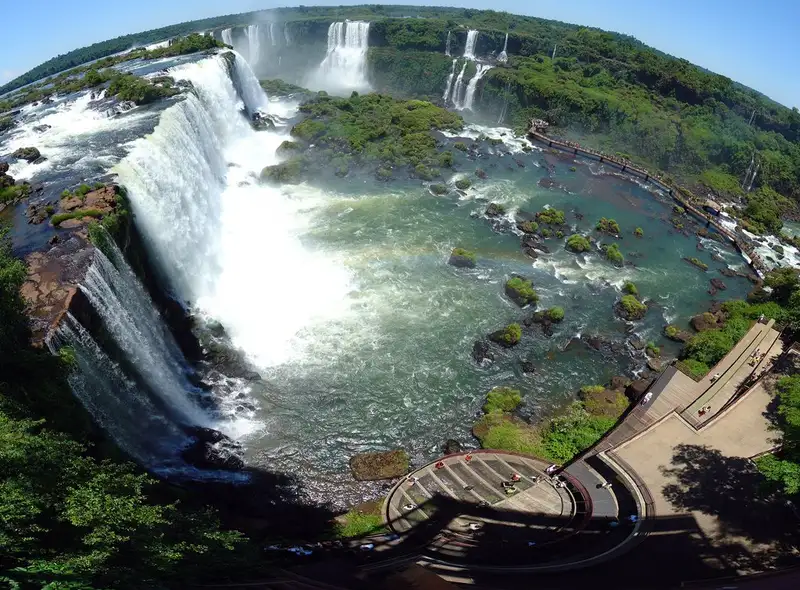
That difference in scale is, in fact, the whole point. The Devil’s Throat demands awe; Salto Arrechea invites stillness. The natural pool was long a popular spot for swimming, though current park policy on bathing should be confirmed on arrival.
The trail takes its name from the macuco (Tinamus solitarius), a large, brown-plumaged tinamou with solitary habits that lives in the undergrowth of the Atlantic Forest. Its call — a single long, low note that seems to come from several directions at once — is one of the defining sounds of the Misiones forest. Hearing it while walking the trail that bears its name is the kind of experience that never appears in the park’s photographs, but that visitors tend to remember.