Hito de las Tres Fronteras (Triple Frontier Landmark)
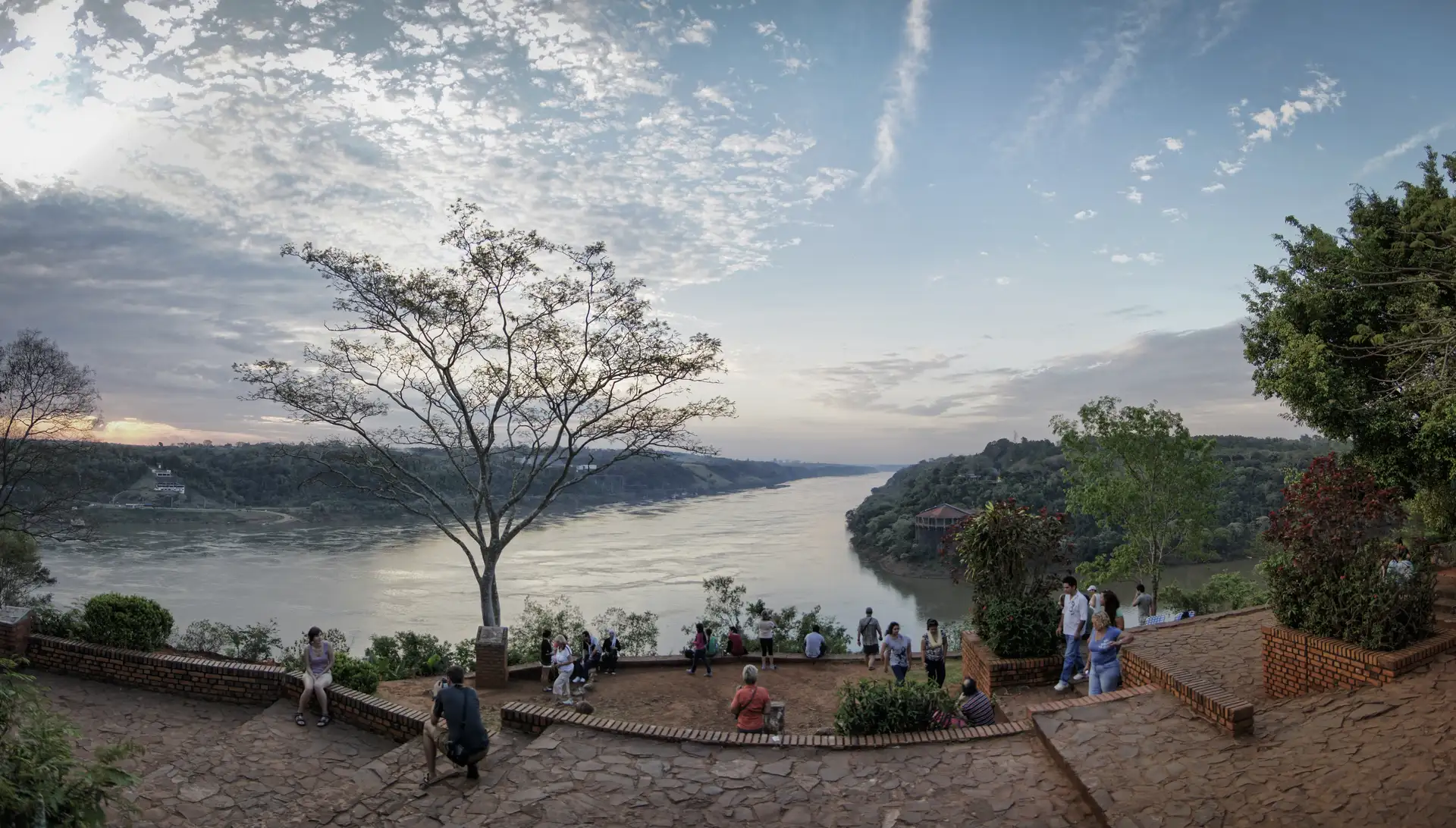
At the northern tip of Puerto Iguazú, where the Iguazú River empties into the Paraná, geography does something that rarely happens anywhere in the world: three countries share a single vertex. This is where the Hito de las Tres Fronteras stands — the Argentine marker that signals, in the blue and white of the national flag, the exact convergence point of Argentina, Brazil, and Paraguay.
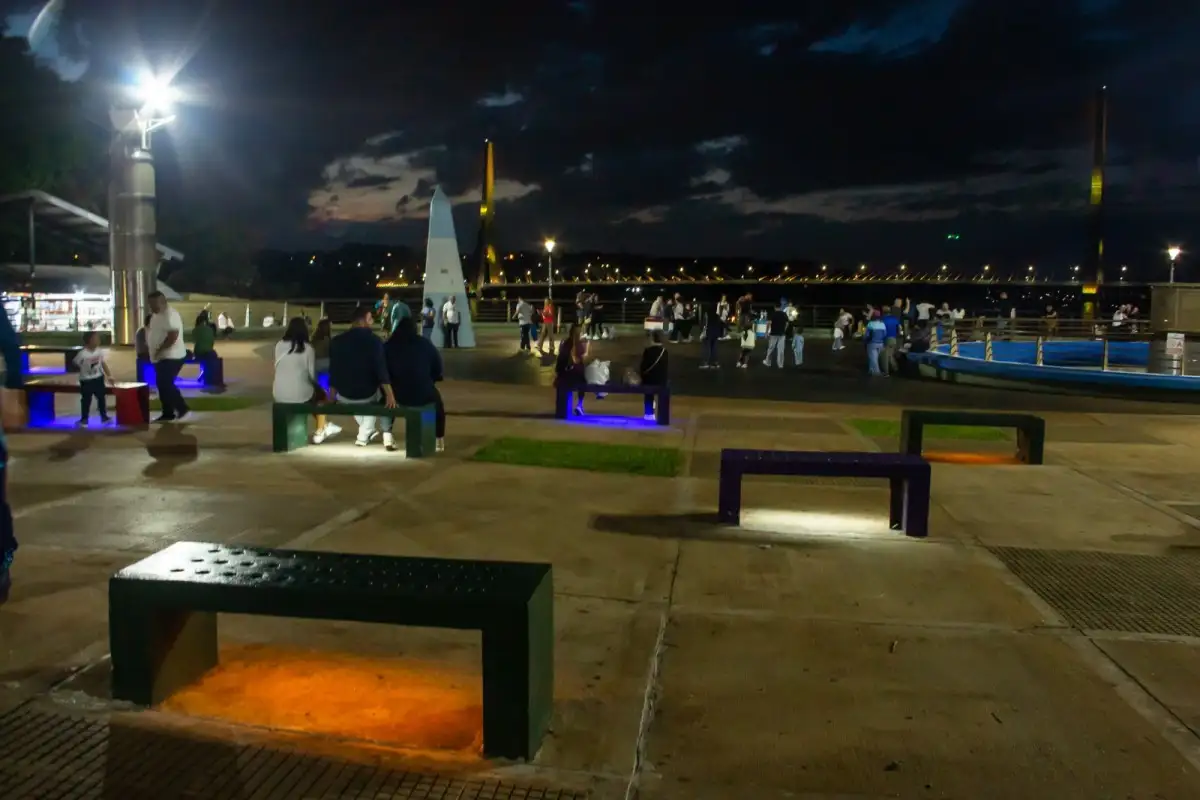
From the viewpoint at the Paseo Hito Tres Fronteras, the map arranges itself almost like a diagram. To the right, on the Brazilian shore, the green and yellow obelisk of Foz do Iguaçu; straight ahead, across the Paraná, the red, white, and blue of the Paraguayan monument at the city of Puerto Franco. The three markers — each on its own soil, each visible from the other two — form a triangular figure that has no physical equivalent at any other triple frontier in the Americas. The Iguazú River divides Argentina from Brazil on an east-west axis; the Paraná separates Argentina from Paraguay on a north-south axis; and both currents merge here, dissolving that distinction into a single body of water that belongs, simultaneously, to all three and to none.
The landmark is more than a geodetic marker. The site also functions as a living artisan corridor: the Paseo Artesanal Hito Tres Fronteras gathers Guaraní craftspeople who make and sell basketry, wood carvings, textiles, and ceramics using techniques passed down through generations. The Guaraní presence is not ornamental — indigenous peoples inhabited this river corridor long before the republics that now border it came into existence, and their handwork is one of the few elements that endures without borders.
As the afternoon fades, the space takes on a different character. The Dancing Waters Show synchronizes water jets, colored lighting, and projections depicting traditional dances from all three countries set to their respective music. Each performance lasts around twenty minutes and runs twice an evening. The spectacle is particularly striking because, as a backdrop, the lights of Foz do Iguaçu and Puerto Franco flicker across the water.
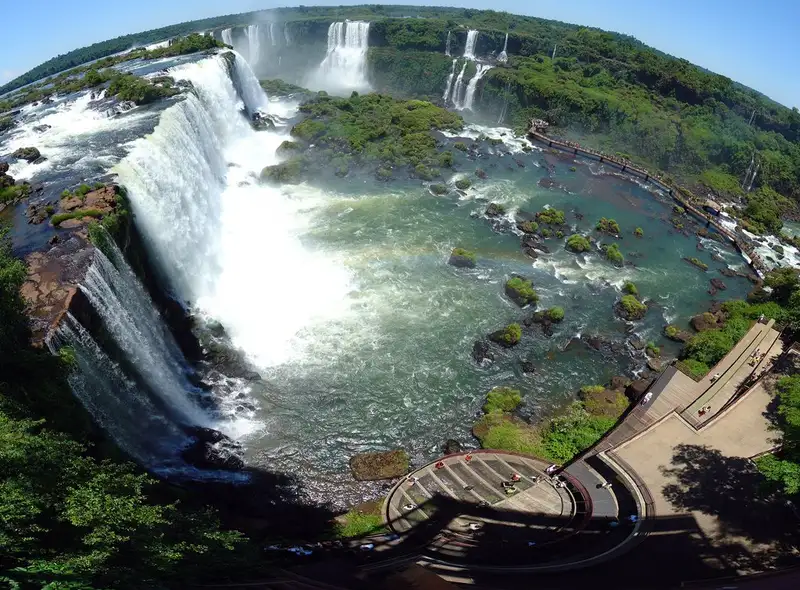
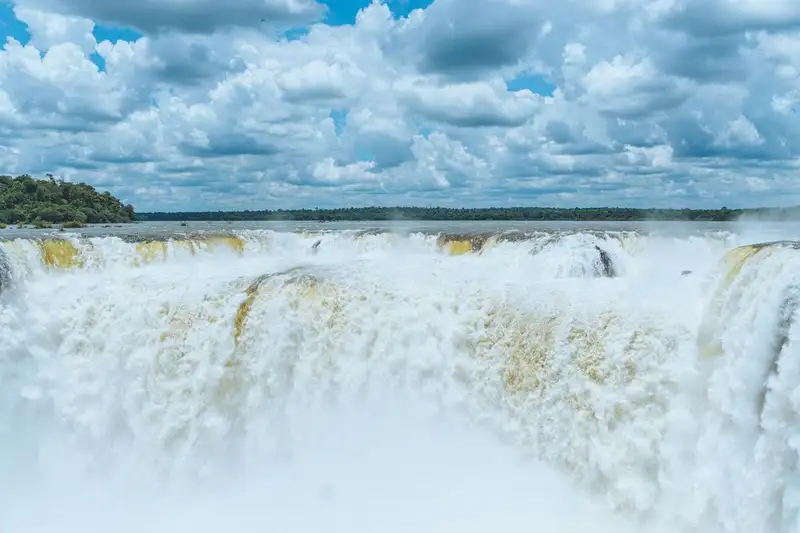
A visit to the Hito is often combined on the same day with the Iguazú Falls — about twenty kilometers to the east — but it holds its own weight as a standalone experience. More than a conventional tourist attraction, the tripoint condenses centuries of shared history: trade, geopolitical conflict, and cultural exchange that shaped the identity of the Misiones river corridor. The river smuggling that once dominated this stretch of water, the Jesuit legacy that left its mark across the province, and the migration waves that transformed all three neighboring cities all find their most eloquent coordinate at this vertex.
Entry to the Argentine sector is free. The site is less than three kilometers from the center of Puerto Iguazú and can be reached by private vehicle, taxi, or local public transport.