Hito Tres Fronteras
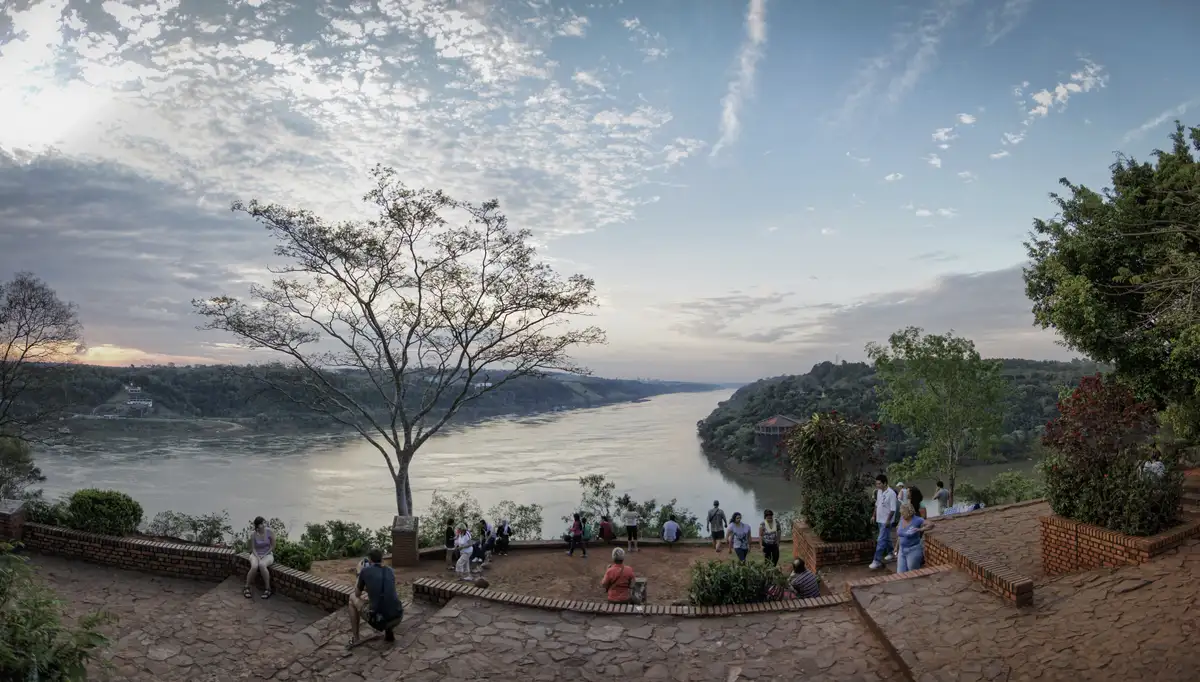
At the northern tip of Puerto Iguazú, geography produces a rarity that few cities in the world can claim: two rivers join at the precise point where three countries end. The Iguazú River arrives from the east — carrying the same name as the waterfalls that made it famous — and surrenders its flow to the Paraná, which from that point onward marks the border between Argentina and Paraguay. The line separating Argentina from Brazil runs along the Iguazú; the one separating it from Paraguay runs along the Paraná. The result is an international trifinium whose Argentine vertex is known as Hito Tres Fronteras.
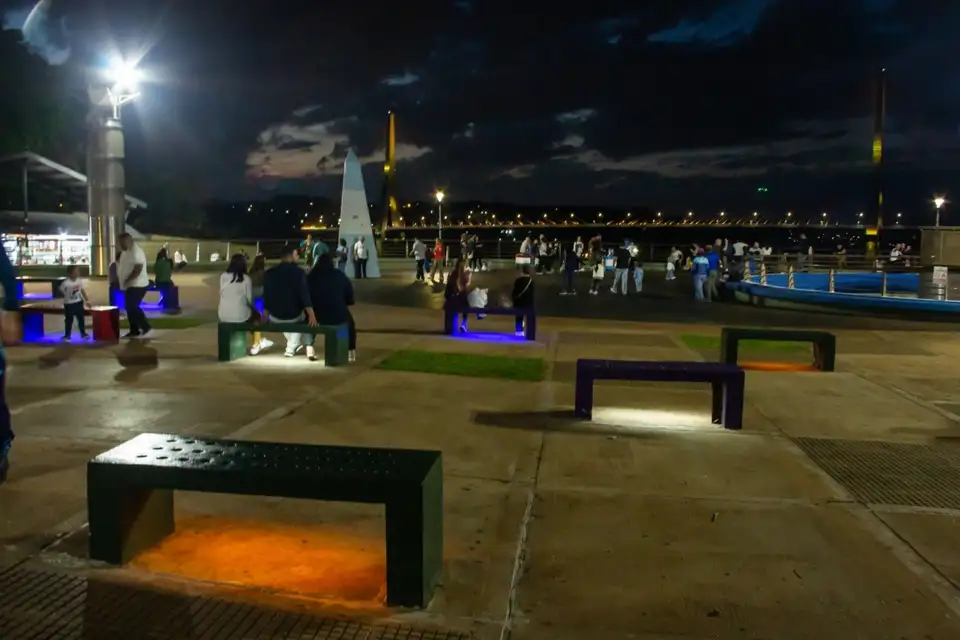
The hito itself is an obelisk painted in the colors of the Argentine flag, topped with the coat of arms of all three countries, set on a small platform with a direct view of the confluence. Facing it, across the Iguazú, stands the Brazilian obelisk — white, green, and yellow — near Foz do Iguaçu. Turning westward, the Paraguayan monolith rises on the far bank of the Paraná, close to Ciudad del Este, in that country’s red, white, and blue. The three monuments never touch: the same rivers that define the border keep them apart. Seeing all three at once from Argentine soil is the central draw of the place.
Subtropical vegetation frames the scene, the Misiones jungle pressing almost to the water’s edge in several stretches. On clear afternoons the confluence shifts through warm hues as the sun descends toward the Paraguayan horizon. The Iguazú’s waters, darker from the sediment it carries down from the interior of Misiones, contrast visibly with the broader Paraná — an effect easily appreciated from the bank.
Attached to the viewpoint is the Paseo Artesanal, a row of stalls where Guaraní craftspeople display and sell objects made using techniques passed down through generations. The offerings include wood carvings, basketry, woven goods, and ceramic figures, each piece rooted in a tradition that Misiones’ Guaraní communities continue to practice. Unlike a generic souvenir market, the paseo allows direct contact with the makers, many of whom can explain the origin of their materials or the meaning behind certain decorative motifs. It is one of the few places in town where the Guaraní presence is visible in a concrete, everyday way.
Hito Tres Fronteras sits on Avenida Tres Fronteras at the northern edge of Puerto Iguazú’s urban center. Most visitors include it on the same day as a trip to Iguazú National Park — the falls lie about twelve kilometers to the south — though the pace here is entirely different. Where the falls demand hours of walking and draw dense crowds, the hito is an unhurried late-afternoon stop where the river landscape and the quiet of the border do the work. Its status as a concrete geopolitical boundary, marked with visible monuments and framed between two major rivers, gives it a symbolic weight beyond the scenic: it is a physical reminder that Puerto Iguazú exists at the intersection of three legal systems, three cultures, and two river basins that together drain an enormous portion of the South American continent.