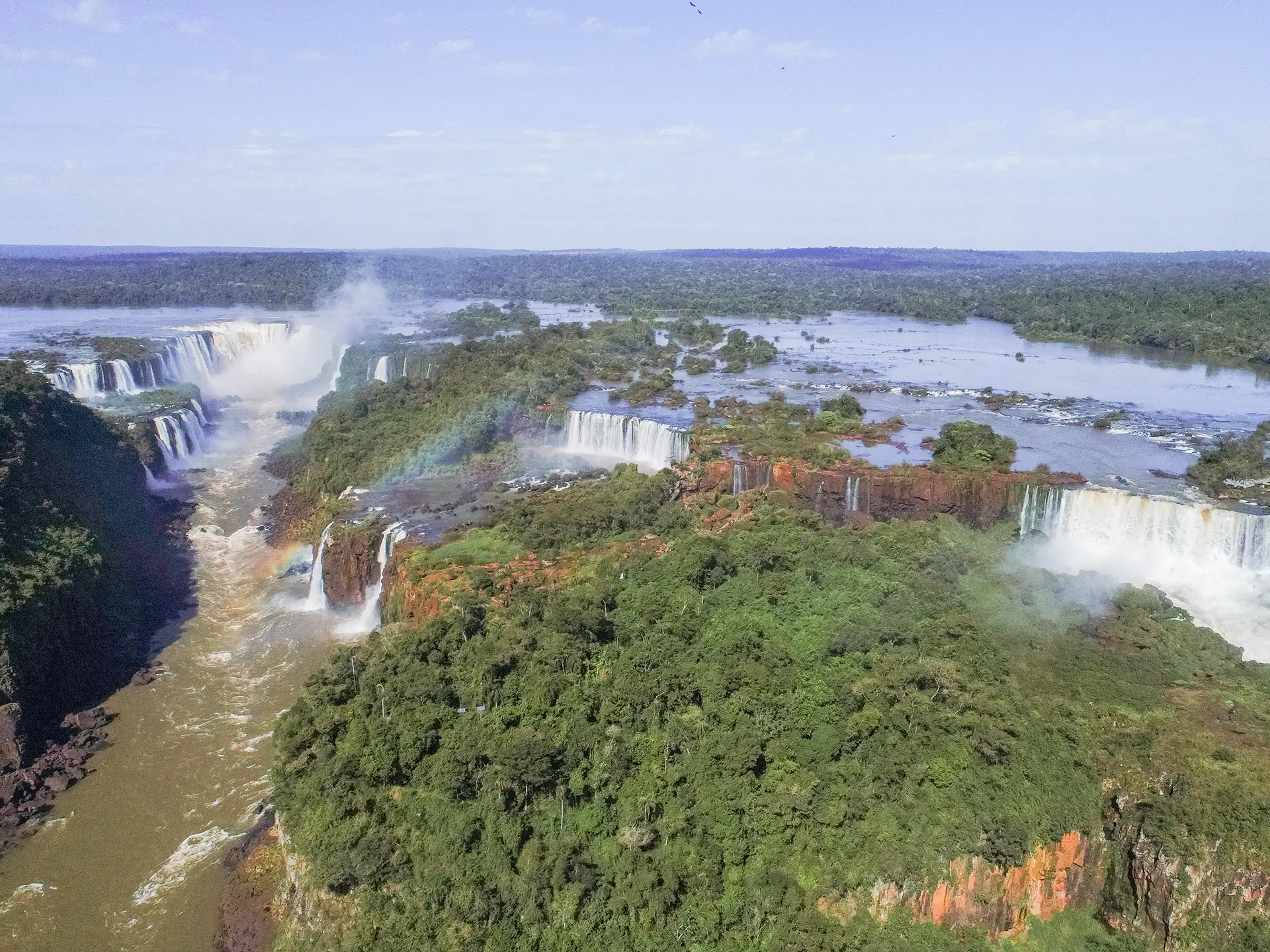
Iguazú National Park
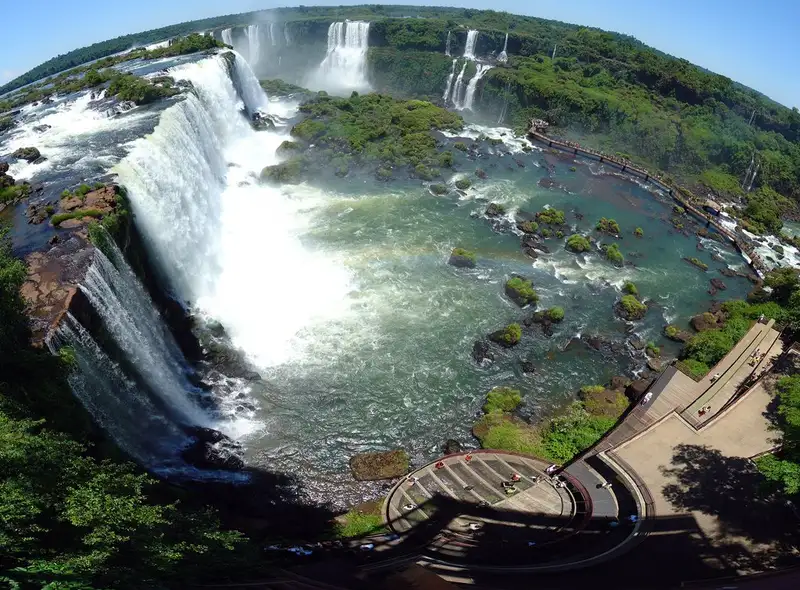
The Iguazú Falls don’t announce themselves from a distance. The sound arrives first — a low roar that builds as the park’s trails approach the river — and it is then that the forest opens to reveal a waterfall system stretching nearly three kilometres wide. Iguazú National Park, established in 1934 and declared a UNESCO World Heritage Site in 1984, exists to protect that spectacle and the ecosystem surrounding it.
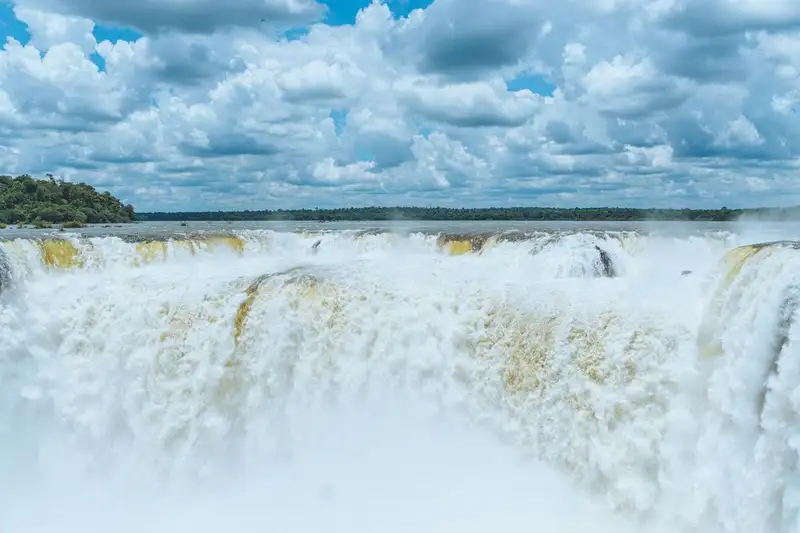
The park preserves more than 67,000 hectares of Paranaense Rainforest — also known as the Alto Paraná Atlantic Forest — Argentina’s most biodiverse ecoregion. In the far north of Misiones, on the border with Brazil, its subtropical location produces a warm, humid climate year-round: average temperatures of 24°C in summer and 14°C in winter, with annual rainfall of around 1,800 mm. That rainfall regime is what drives the falls: the volume of the Iguazú River, amplified by summer storms, can transform the cascades from a curtain of silver threads into a thundering torrent of ochre water that darkens the sky with mist.
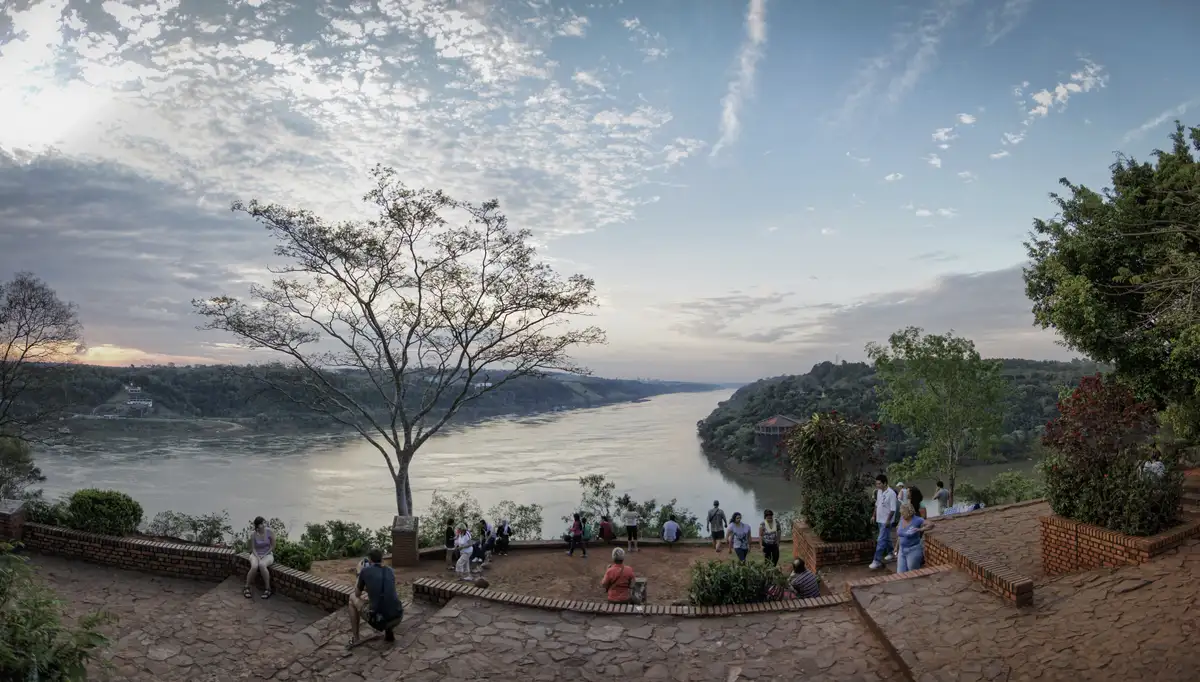
A network of metal walkways over the river allows visitors to move through the falls at distances that would be impossible in any other setting. The Devil’s Throat — the highest-volume drop in the system — is accessed via a walkway that ends directly over the void. The Upper Circuit offers panoramic views from the cliff edge, while the Lower Circuit descends to river level and brings visitors close to the base of several smaller falls.
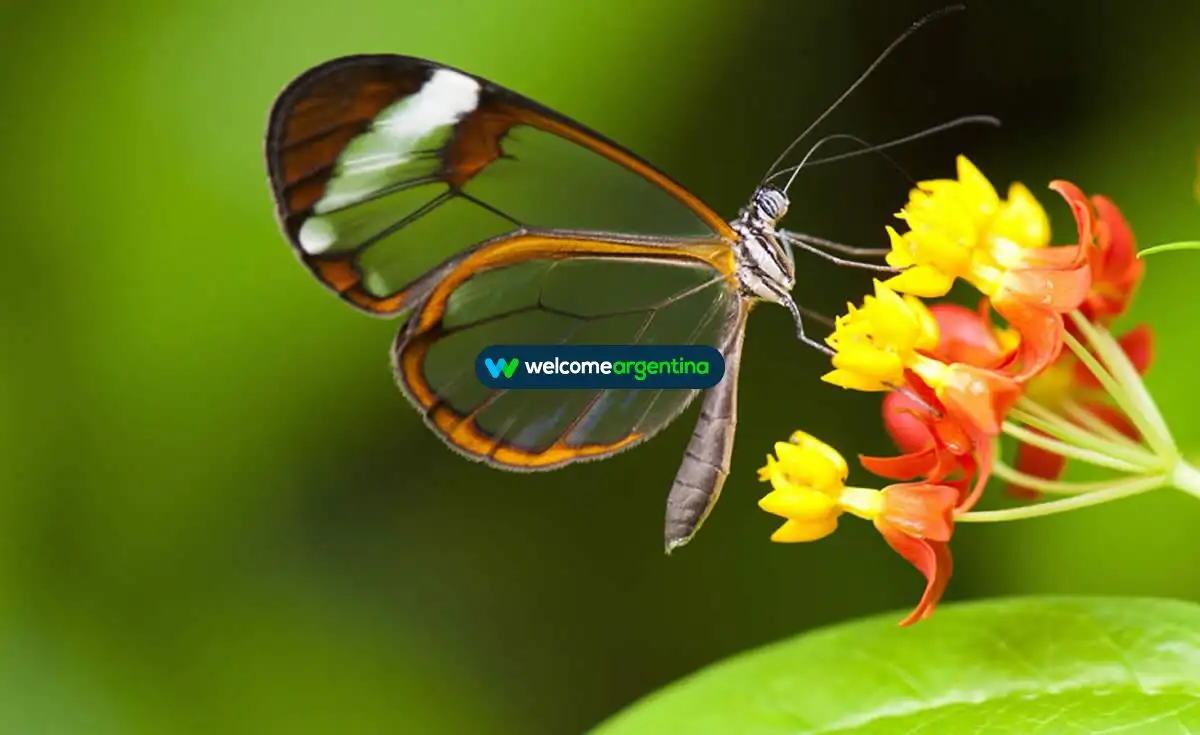
The rainforest framing every stretch of the route is inseparable from the experience. Palo rosa trees reach nearly 40 metres in height and dominate the canopy across much of the park; alongside them grow palmettos, laurels, and guatambú, woven through with lianas and draped in epiphytes. On the trails, capuchin monkeys and coatis move through the foliage with an ease that reflects decades of exposure to visitors. On the forest floor, brocket deer, agoutis, and tegus are common; in the water, caimans and freshwater turtles. With some luck, a print in the mud may be the only sign of a jaguar, which still inhabits the most remote corners of the park.
The sky has its own cast. The great dusky swift — the park’s emblematic bird — nests behind the falls themselves and flies in flocks that cut through the mist without apparent effort. In total, the park harbours more than 450 bird species, making it one of the most significant birdwatching destinations in South America. Its designation as an Important Bird and Biodiversity Area (IBA) formally recognises that richness.
Visiting Iguazú National Park requires some planning. Tickets must be purchased in advance, and each one carries an assigned entry time. The park operates every day of the year — there is no bad month to visit — though the high-water period (January through March) and the spring window (September through November) combine powerful cascades and lush vegetation with temperatures more moderate than the height of summer.