Iguazú National Park
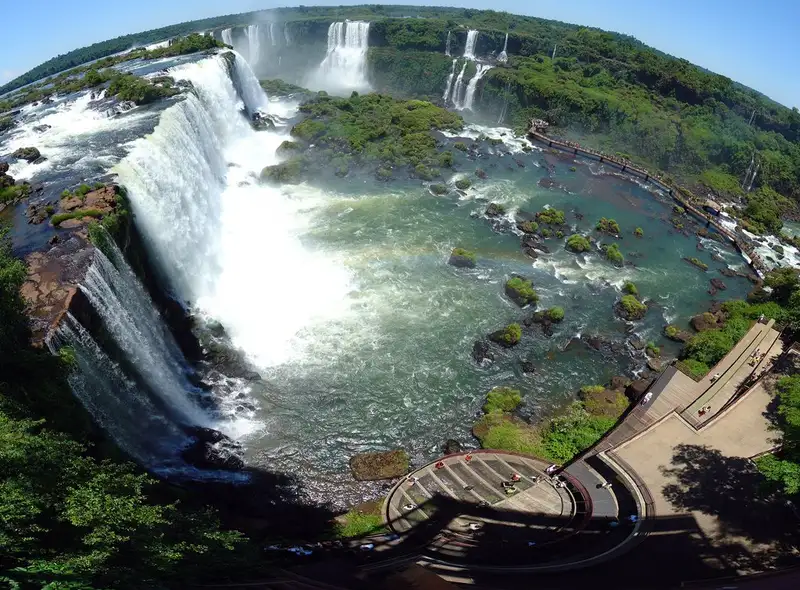
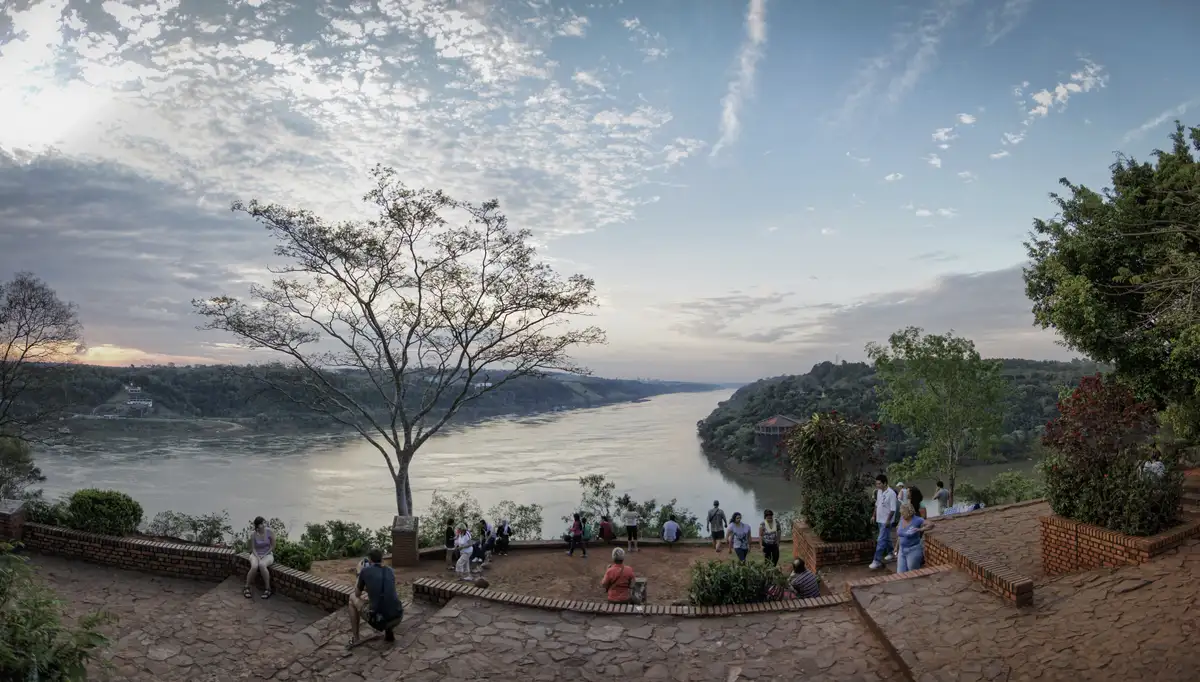
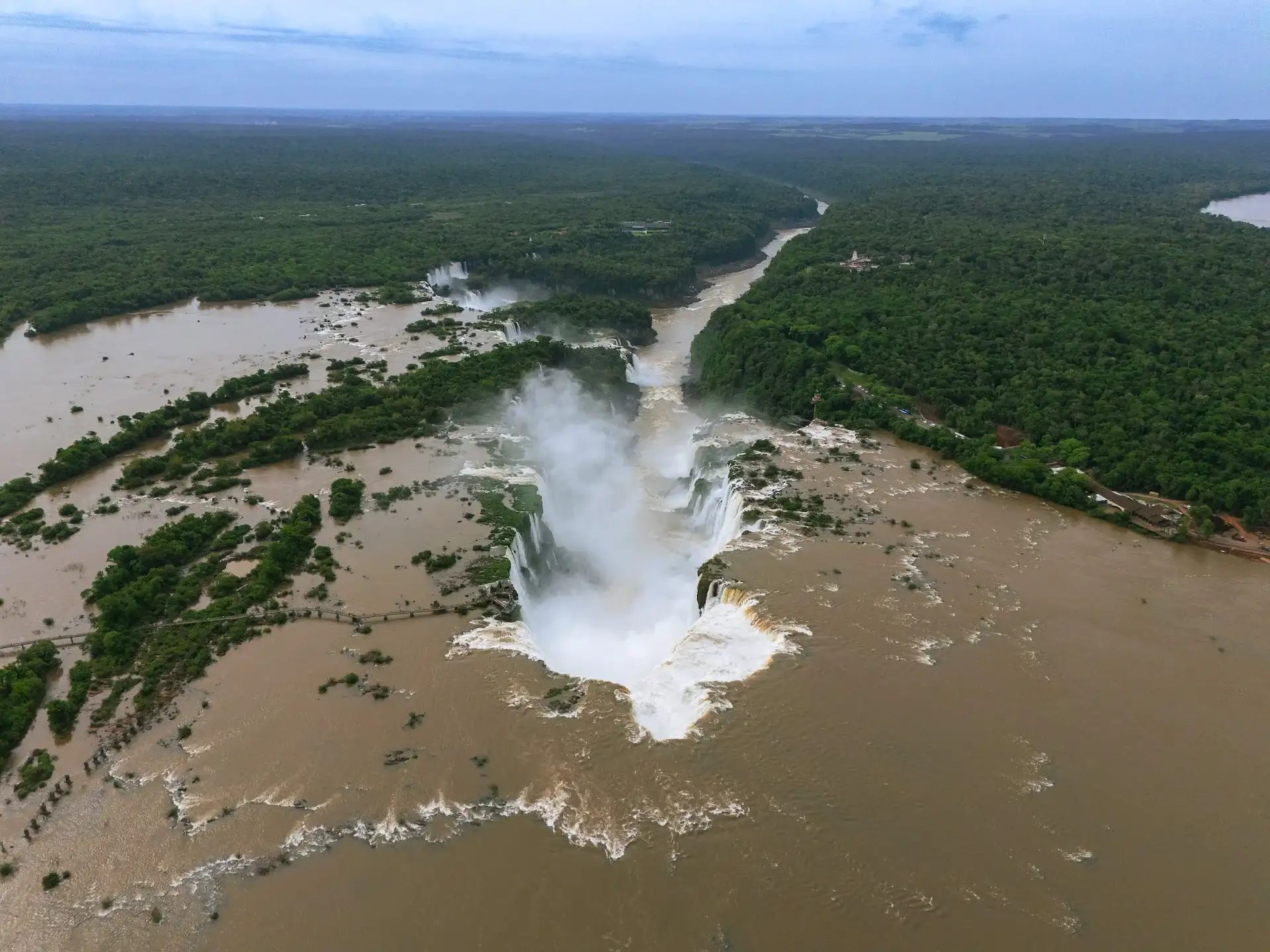
Iguazú National Park covers 677 km² in the far northeast of Misiones Province, at the triple border junction of Argentina, Brazil and Paraguay. At its heart are Iguazú Falls: the largest waterfall system in the world, made up of between 150 and 300 individual drops — depending on the river level — spread across 2.7 kilometres of the Iguazú River. Roughly 80% of that curtain of water falls on the Argentine side.
The falls descend in two basalt steps — 35 and 40 metres high respectively — reaching a maximum drop of 82 metres. Average flow is 1,756 cubic metres per second, though during exceptional floods that figure can multiply more than twentyfold: on 9 June 2014 the all-time record of 45,700 m³/s was recorded. The Guaraní name for the river — y guasú, ‘big water’ — leaves no doubt about the scale they encountered long before any European arrived.
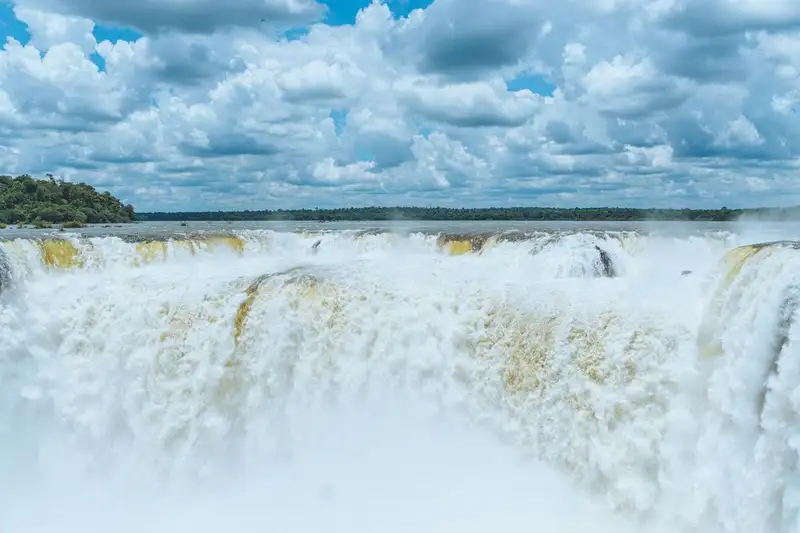
The centrepiece of the system is the Devil’s Throat (Garganta del Diablo), a chasm 70–80 metres deep and 80–90 metres wide that swallows roughly half the river’s total flow. On the Argentine side, a Rainforest Ecological Train carries visitors to the start of the Paseo Garganta del Diablo, a one-kilometre walkway that ends directly above the plunge. The experience is physical before it is visual: the roar, the constant mist and the vibration of the water create an environment that overwhelms the senses. The upper and lower circuits allow visitors to approach the broader curtain of falls from different vantage points, and inflatable boat excursions from the Argentine bank take groups to the base of the falls at water level. Argentina prohibits helicopter overflights because of their environmental impact on the park’s wildlife and flora.
The park was established in 1934 specifically to protect the rainforest surrounding the falls. In 1984 it was declared a UNESCO Natural World Heritage Site — under criteria for outstanding natural beauty (vii) and biological significance (x) — a designation its Brazilian counterpart, Iguaçu National Park, received two years later in 1986. Both parks are coordinated within the proposed Trinational Biodiversity Corridor of the Upper Paraná, which aims to link protected areas across Argentina, Brazil and Paraguay.
The park sits within the Alto Paraná Atlantic forests ecoregion, one of the most threatened ecosystems on Earth. Protected fauna includes the jaguar, South American tapir, ocelot, giant anteater, harpy eagle and yacare caiman, alongside large toucans, the great dusky swift — which nests behind the falls themselves — and the vinaceous amazon parrot. The coati is the mammal visitors most commonly encounter along the trails. Vegetation features the ceibo, whose blossom is Argentina’s national flower, black and yellow lapacho trees, heart-of-palm and the palo rosa, which can grow to 40 metres tall.
The area has a long human history that predates European arrival by millennia: hunter-gatherers of the Eldoradense culture inhabited the region 10,000 years ago, displaced around 1000 CE by the Guaraní, who introduced new agricultural technologies. The first European to record the falls was the Spanish explorer Álvar Núñez Cabeza de Vaca in 1542; Jesuit missions followed in 1609, and their cultural influence persists across the region. The park is administered today by Argentina’s Administración de Parques Nacionales.
Puerto Iguazú — the Argentine gateway city, a few kilometres from the park entrance — provides year-round access. December through February typically brings the highest rainfall across the basin and therefore the highest water volumes, making this the period of the most powerful falls.