La Hoya Centro De Ski
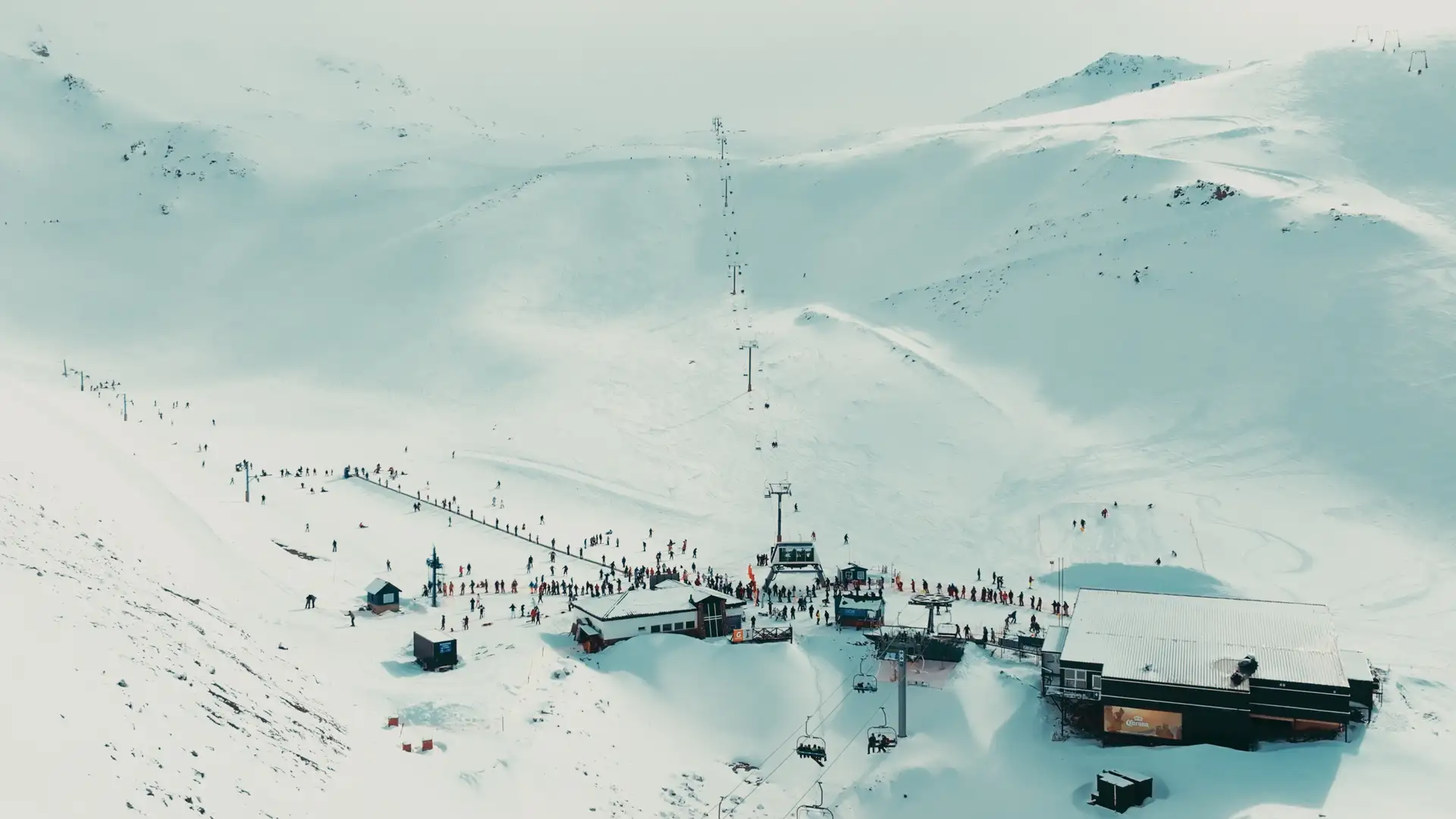
Located in the Andes mountain range, near the city of Esquel, La Hoya is one of the ski resorts with the longest history in Argentina. Its formal operations, under the management of Club Andino Esquel (C.A.M.), were established in 1974, making it the second ski resort with the most years of continuous operation in the country. The site is defined by its particular terrain — a snow-filled hollow that gives it a distinctive identity within the Patagonian landscape.
Roots and memory of the mountain
The history of the site goes beyond the inauguration of its lifts. Its sporting origins date back to the 1930s, when local residents knew the area by the name Pirrén Challá, a term in Mapuzungún meaning “Snow-Filled Hollow.” This name accurately describes the morphology of the terrain. During the 1940s, the Regimiento de Montaña Nº 21 of Esquel played a key role in shaping the site through the construction of trails and mountain shelters.
In the 1950s, the facilities passed to Club Andino Esquel, the institution that drove the development of the infrastructure needed for winter sports. What began with basic equipment such as the Telesilla del Bosque and a T-bar evolved through shared management among the club, Vialidad Provincial, the Municipalidad de Esquel, and the local Chamber of Commerce.
The setting and the mountain experience
The terrain at La Hoya unfolds in a high-mountain environment where snow is the central element. The resort offers activities ranging from skiing and snowboarding for different skill levels to options for those who do not practice snow sports, allowing direct engagement with the Andean landscape. The hollow terrain enables runs that take advantage of the mountain’s natural slopes.
The current infrastructure also addresses safety and environmental maintenance, including systems for avalanche prevention to ensure the stability of the slopes. The relationship between the resort and Esquel is close, operating as a hub of activity that integrates the region’s military and sporting history with the contemporary tourism development of Chubut.