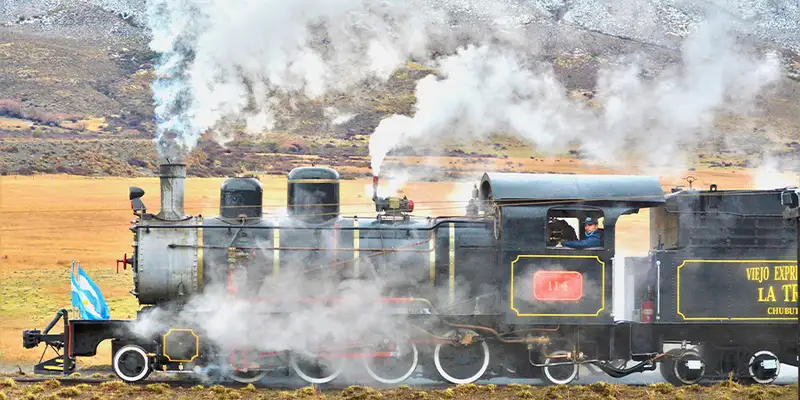
Estación Esquel Paseo Ferroviario
The Estación Esquel Paseo Ferroviario serves as a meeting point with the technical and historical memory of the region. Located in the city’s former railway terminal, this space functions as a cultural extension of Esquel’s identity, allowing the legacy of the Patagonian Express —popularly known as La Trochita— to reach beyond the movement of trains and settle into a setting of exhibition and preservation. The project aims to connect residents and visitors with the significance of this railway system, declared a National Historical Heritage site.
Preserving railway heritage
The walkthrough the paseo centers on the recovery of elements that once formed part of the station’s daily life. The restoration work involved collecting and refurbishing antique furniture, mechanical spare parts, and office supplies that belonged to the various eras of railway service. These objects are not mere decorations, but pieces that illuminate the scale and operational complexity of a narrow-gauge system that has shaped the development of the area.
The arrangement of these elements aims to offer a detailed view of La Trochita’s historical context. Through the observation of recovered materials, it is possible to appreciate the evolution of the tools and objects that sustained the train’s logistics in Patagonia. This restoration effort is complemented by audiovisual material, where photographs and videos document both the past and present of the railway network, adding a narrative dimension to the physical experience.
A connection to local identity
Beyond being an exhibition space, the Paseo Ferroviario acts as a link between the railway infrastructure and the community of Esquel. By being situated within the station itself, the site allows those visiting the city to engage with the history of the Patagonian Express without the need for long journeys, weaving railway culture into the urban fabric of the city. The space provides specific information about the historical and current context of the line, making it possible to understand how this system has shaped the cultural identity of the province.
The significance of this site lies in its capacity to spread awareness of railway heritage as a cultural hallmark of Esquel. By combining restored elements with informative content, the paseo makes the history of the rails accessible and tangible, keeping alive the relevance of a technology that, while today experienced primarily through excursions, finds in this station its documentary foundation and historical recognition.