Teatro Colón
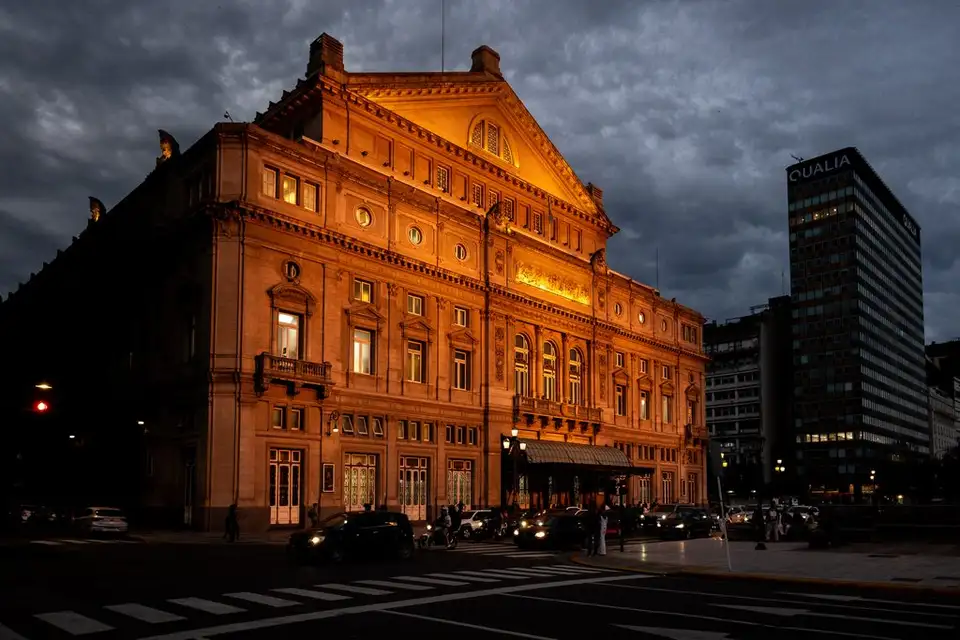
Located in the San Nicolás neighborhood, in the heart of the Ciudad Autónoma de Buenos Aires, the Teatro Colón stands as one of the most important cultural landmarks in the region. This building is not merely a point of reference on the porteño map, but a symbol of the artistic and architectural development that defined the city in the early twentieth century. Its presence at the center of the downtown area connects it directly to the urban pulse of Buenos Aires, functioning as a nexus where history and contemporary cultural life converge.
Architecture and construction history
The structure known today is the result of a construction process that spanned several decades. The original project began in 1889 under the direction of architect Francesco Tamburini, whose work was fundamental in laying the foundations of the design. Following his death, the work continued with the participation of Víctor Meano and was finally completed in 1908 by Jules Dormal.
The predominant style is French Renaissance, a choice that manifests in the richness of its decorative details and the imposing facade of the building. This aesthetic not only contributes a grand visual dimension, but also reflects the European influences that shaped the architectural identity of Buenos Aires during its period of greatest expansion. The variety of ornamental elements present throughout the structure reveals craftsmanship and technical work of considerable complexity.
The main auditorium and its acoustics
One of the most distinctive features of the Teatro Colón is, without doubt, its acoustic quality. The building houses a main auditorium that has received international recognition for its exceptional acoustics, attracting renowned musicians and singers from around the world. This technical characteristic is one of the pillars that establishes the theatre as a benchmark for interpretive excellence.
The layout of the auditorium is designed to offer an immersive experience. It accommodates up to 2,478 spectators, distributed across a structure that includes six tiers of boxes, as well as a row of stalls and the parterre. This architectural design, inspired by the Italian Renaissance style, creates an atmosphere that combines the scale of a grand theatre with a sense of closeness and intimacy between performers and audience.
Cultural context in San Nicolás
The theatre functions as a multifaceted space that goes beyond the presentation of opera or ballet. Integrated into the urban fabric of San Nicolás, it becomes a meeting point for diverse artistic expressions across its multiple halls and unique spaces. Its significance lies in its capacity to act as a cultural epicenter, keeping the historical memory of the city alive while continuing to serve as an active stage for global culture.