Basílica de Nuestra Señora del Socorro
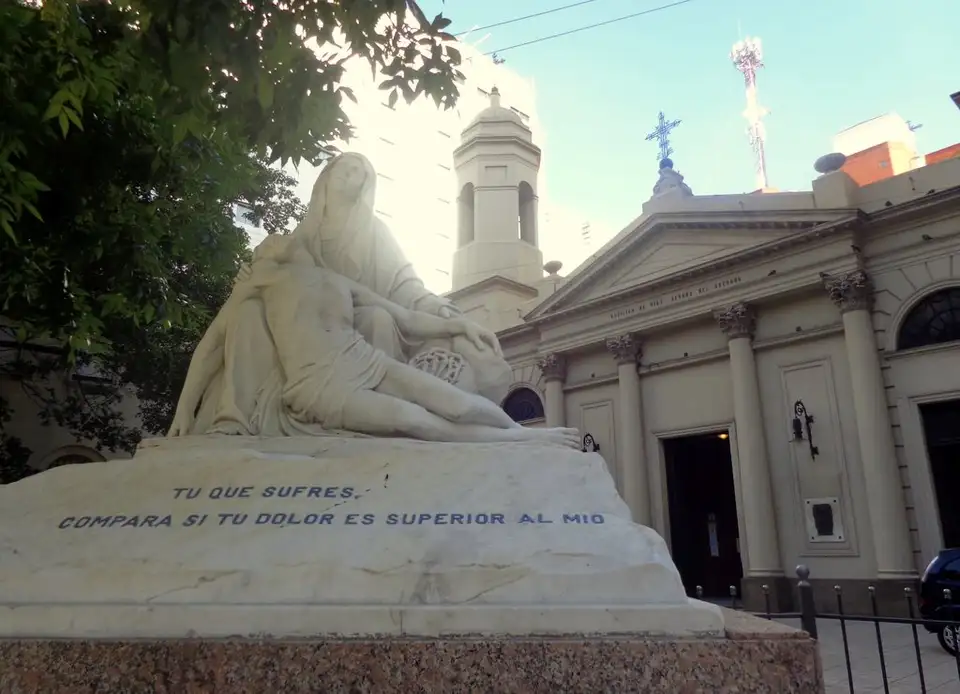
Located in the heart of the Retiro neighbourhood, the Basílica de Nuestra Señora del Socorro stands as one of the oldest architectural and religious landmarks in the City of Buenos Aires. This neoclassical church is not only a reference point at the corner of Juncal and Suipacha streets, but also represents the urban evolution of the city’s northern zone, marking the shift from an extramural periphery to a consolidated core of the capital.
Colonial roots and early devotion
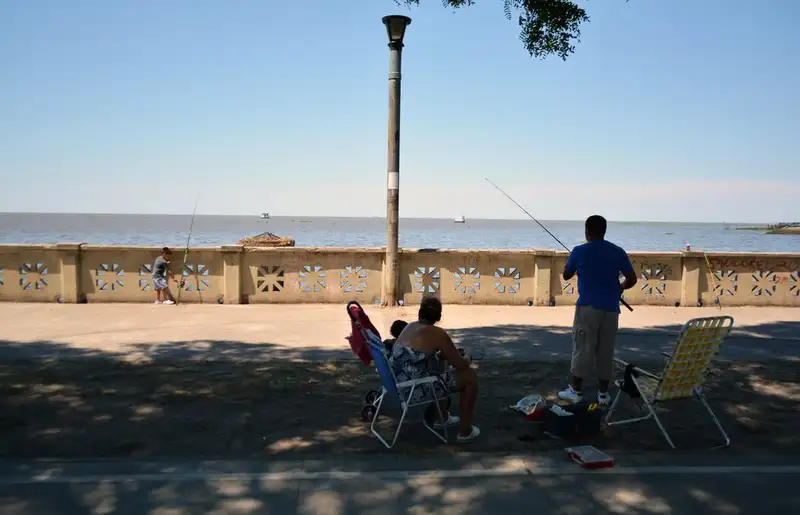
The history of the site has origins far humbler and older than its current monumental structure. At the end of the sixteenth century, on this very spot, a small chapel known as the “fishermen’s chapel” operated. This modest space served as a spiritual refuge for residents living on the outskirts of Buenos Aires, allowing them to participate in the liturgy without having to travel to the city centre.
By the mid-eighteenth century, the landscape began to change through the involvement of Alejandro del Valle, a Spanish resident settled in the Río de la Plata. In 1750, Del Valle donated part of his land to build a larger church, with the intention of establishing a parish dedicated to Nuestra Señora del Socorro — a devotion of Sicilian origin that he practised with great fervour. This gesture sought not only to expand the cult, but also to respond to the needs of a growing population on the margins of what was then the extramural zone.
The development of a parish centre
The consolidation of the basilica as a parish entity was not a process free of legal and territorial difficulties. Although the original project sought to grant religious autonomy to local residents, succession disputes following Alejandro del Valle’s death in 1768 delayed its official recognition. The donor’s heirs initiated litigation against the Bishopric to reclaim the property, keeping the institution under a state of dispute for several years.
It was not until 1783 that, following a court ruling in favour of the Bishopric, the church could be formally erected as a parish. This milestone was fundamental for the area’s inhabitants, as it allowed regular access to religious services without the complications of long journeys — particularly on rainy days, when the climatic and geographic conditions of the zone, marked by the presence of the Matorras stream, made communication with the city centre extremely difficult.
A link between the urban past and present
The importance of the Basílica extends beyond its liturgical function, serving as an anchor of memory in an environment that has undergone radical transformation. The course of the old Matorras stream, which roughly followed the path of the present-day calle Paraguay, is a reminder of the natural geography that once shaped the lives of this area’s inhabitants and has since been replaced by the dense urban fabric of Retiro. The church remains as a witness to that transition between the colonial city and the modern metropolis.