Obelisco de Buenos Aires
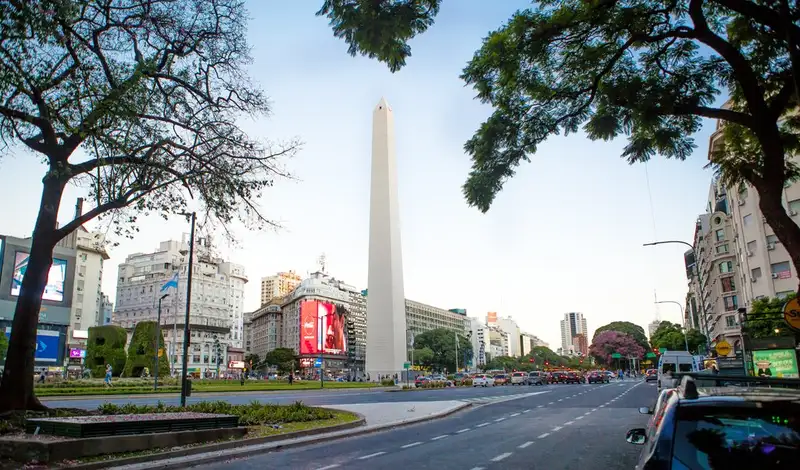
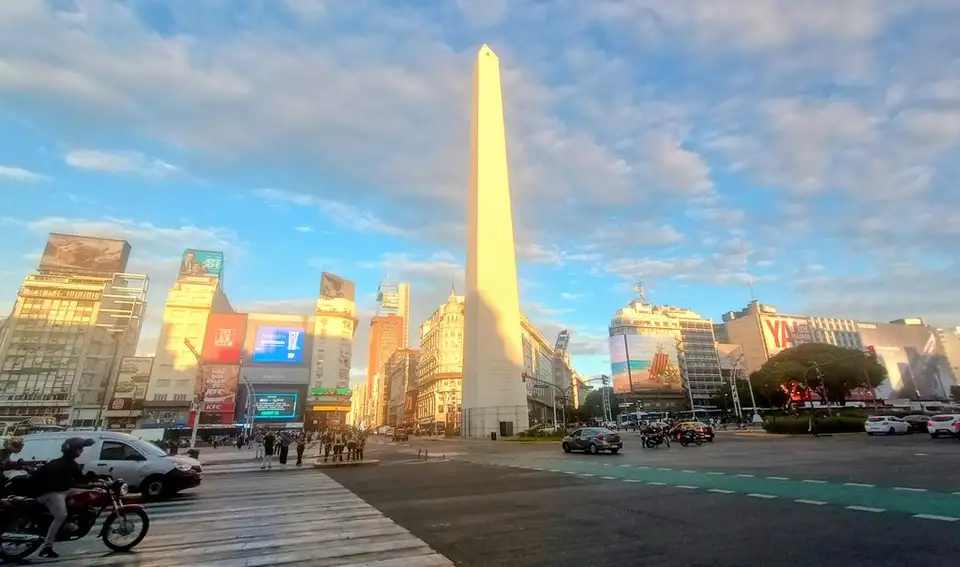
The Obelisco is the most distinctive landmark in Buenos Aires. Located in the Plaza de la República, at the exact point where Avenidas Corrientes and 9 de Julio cross, this reinforced concrete monument serves as the visual axis of the city centre. Its presence marks the heart of the San Nicolás neighbourhood and constitutes a landmark that defines the urban scale of one of the widest thoroughfares in the world.
History and architecture
Erected in 1936, the monument was built to commemorate the four-hundredth anniversary of the city’s first founding. The design and execution were carried out by architect Alberto Prebisch, a key figure of modernism in Argentina, who also served as the structural engineer of the work. The structure, which rises to 67.5 metres at its upper platform, is an example of the rationalist architecture of the period.
Construction was carried out by the firm Siemens and represented a significant investment at the time, with an estimated cost of 200,000 pesos moneda nacional. Over the decades, the Obelisco has moved from being a commemorative structure to a national historical monument, consolidating its status as a symbol of porteño identity and the gathering point for the most significant events in the city’s public life.
The observation deck and the urban perspective
Beyond its historical value, the monument offers a unique perspective on the urban layout. By way of a route that includes an internal lift designed to preserve the original structure and a spiral staircase of 35 steps, it is possible to reach an observation platform. From this height, 360-degree views over the centre of Buenos Aires can be taken in.
The observation deck allows visitors to appreciate the scale of Avenida 9 de Julio and the dynamics of the city’s commercial and cultural core. The ascent offers a detailed view of the cardinal points, allowing one to contemplate the architectural density surrounding this vital node. This vantage point connects directly with the immediate surroundings, providing a clear reading of how the urban fabric is organised around its base.