Luna Park
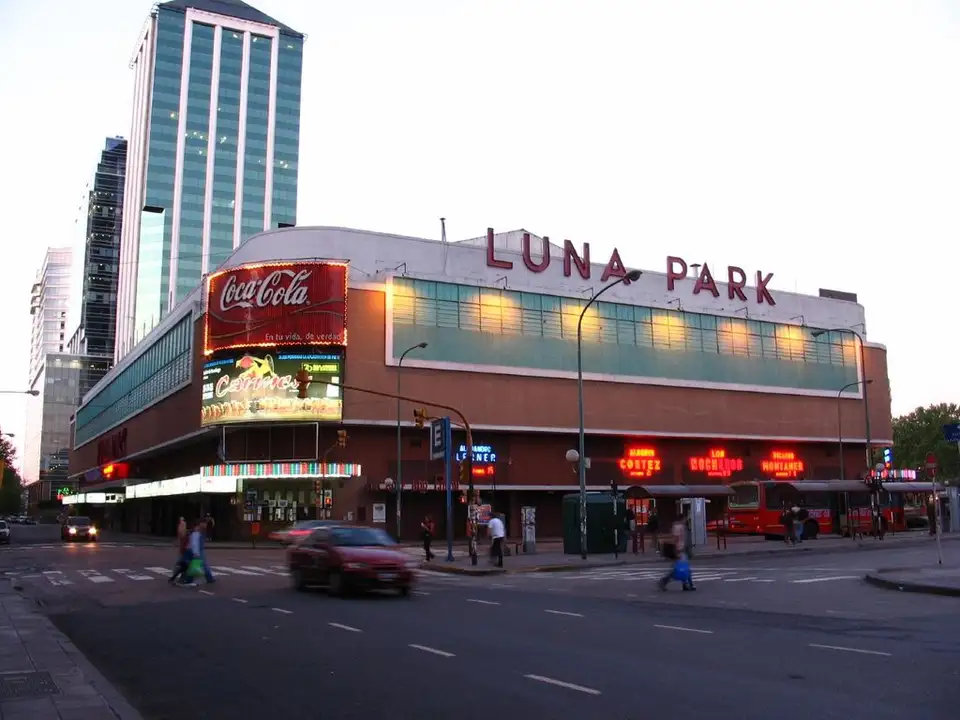
Located in the heart of the San Nicolás neighbourhood, at the intersection of Corrientes and Bouchard avenues, Luna Park remains a fundamental pillar of cultural and sporting life in Buenos Aires. This multi-purpose stadium is more than a concrete structure; it is a gathering point that has defined the identity of the city since its inauguration in February 1932. Its presence in the downtown core connects it directly to the urban pulse, functioning as a node where the historical memory of boxing converges with the energy of contemporary shows.
A legacy of sporting and cultural glory
The venue’s architecture, originally designed by Jorge Kálnay, was conceived to hold large crowds during a period of urban expansion. Although its origins are deeply tied to the boxing ring — serving as the setting for world-title bouts involving legendary figures such as Nicolino Locche, Carlos Monzón, and Juan Roldán — its evolution turned it into a versatile space. From the 1950s onward, the stadium expanded its capacity to accommodate a much broader offering, incorporating everything from circus and ballet performances to large-scale music and tennis events.
This multi-purpose character allowed Luna Park to transcend the category of a simple sporting arena. By hosting visits from international figures such as Pope John Paul II and exhibition teams like the Harlem Globetrotters, the venue established itself as a space where the local and the global meet. The stadium’s structure has undergone renovation processes aimed at maintaining its functionality in the face of the demands of an increasingly diverse audience.
The pulse of downtown Buenos Aires
The importance of Luna Park lies in its capacity to act as a mirror of Buenos Aires’s recent history. Its strategic location in the San Nicolás area makes it an integral part of any route through the city centre, folding into the flow of people who move along the city’s commercial and financial avenues. It is not simply a place to attend an event, but a geographic landmark that marks the rhythm of nightlife and cultural activity in this district.
Walking through its surroundings, one can sense how the stadium engages in dialogue with its immediate environment, enveloped by the urban dynamic characteristic of the capital. The enduring presence of this space, despite the changes in the city’s configuration, reinforces its role as a witness to the passage of time and to Argentina’s social transformations. Luna Park remains the point where the tradition of great bouts interweaves with the modernity of contemporary artistic productions.