Quinquela Martín Cruise Terminal
The maritime gateway to the city
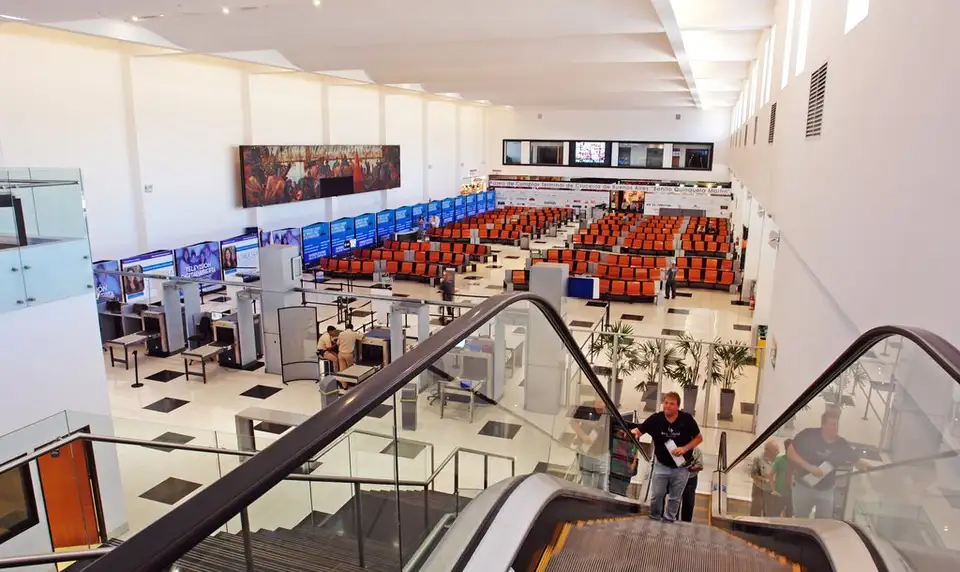
The Quinquela Martín Cruise Terminal is the main arrival point for those traveling the region by sea. Strategically located in the port area along Avenida Presidente Ramón Antonio Castillo, this infrastructure serves as the gateway to the heart of Buenos Aires. Its importance lies not only in its operational capacity, but in its role as a connecting node between the flow of international passengers and the urban fabric of the Argentine capital.
Upon disembarking, visitors find a space designed to ease the transition toward the city’s various points of interest. The terminal is a very short distance from the city center, allowing immediate contact with the local rhythms of Buenos Aires. Its strategic position in and around Puerto Madero means that exploring the city can begin without lengthy transfers from the moment of arrival.
Connectivity and urban surroundings
The terminal integrates into Buenos Aires’s transport network, enabling fluid movement toward the city’s most representative areas. From this point, passengers can access the bus and subway network, as well as taxi services to reach specific destinations. The infrastructure also accommodates more modern and sustainable transport options, such as the E-Bus, a line of electric minibuses that covers the area.
For those who prefer a panoramic tour, the terminal is the starting point or stop for tourist bus lines (the Bus Amarillo and the Bus Rojo), designed to connect the most prominent landmarks. This connectivity means the terminal is not merely a transit point, but the beginning of a route that passes through various neighborhoods, each with its own identity.
The link with Buenos Aires’s history
The surroundings of the terminal are deeply tied to the memory and architecture of Buenos Aires. From this port hub, visitors can reach in just a few minutes fundamental sites such as the Plaza de Mayo, the political and historical epicenter of the country. That area concentrates emblematic buildings including the Cabildo, the Catedral Metropolitana, and the Casa Rosada, which together form the nucleus of the most significant events in Argentine history.
The terminal also acts as a bridge to other cultural quarters, allowing the flow of visitors to spread into neighborhoods with a strong heritage character. The proximity to areas of great architectural and cultural value ensures that the arrival experience is directly linked to the identity of the city, integrating the port’s movement with the historical patrimony and the most recognized urban landmarks.