Museo Xul Solar
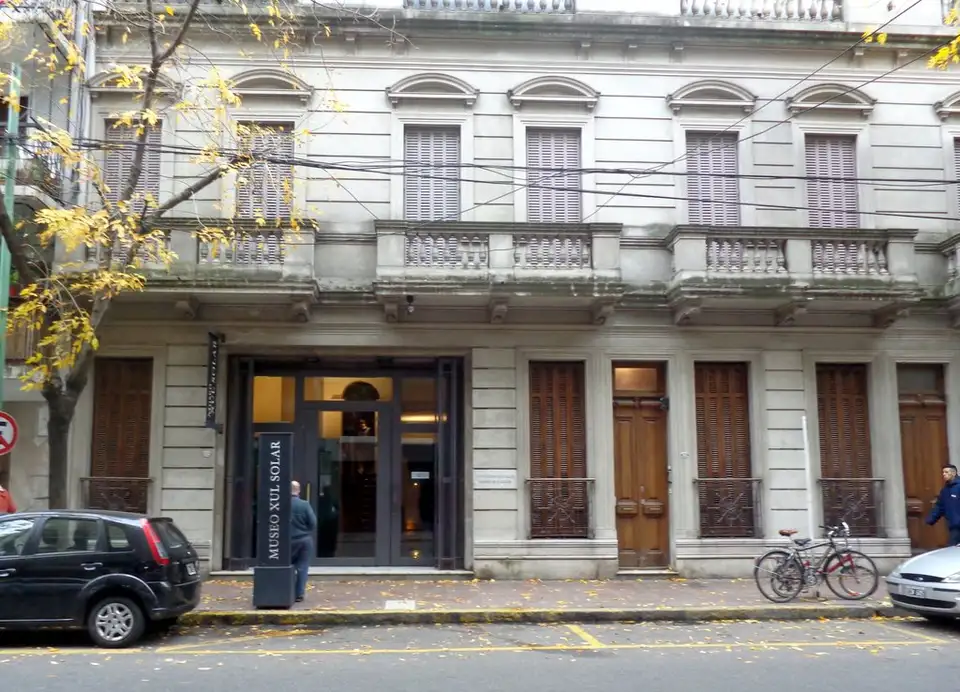
Located in the heart of the Recoleta neighbourhood, Museo Xul Solar occupies what was the artist’s own residence. This space is not merely an art gallery but a direct immersion into the atmosphere where Oscar Agustín Alejandro Schulz Solari — known as Xul Solar — developed his vision of the world. The structure itself, a restored historic house, combines period elements with modern interventions that have earned architectural awards, allowing the building to act as a bridge between physical reality and the fantastical dimension of his creations.
The Symbolic Universe and His Inventions
The museum’s permanent collection offers a detailed look at a unique visual language, where painting intertwines with poetry and philosophy. The works on display were selected by the artist himself and include watercolours and oil paintings characterised by their use of geometry, vivid colours, and a symbolism rooted in the esoteric and the spiritual. The tour allows visitors to observe how Xul Solar integrated his interests in astrology, mystical traditions, and ancient cultures into compositions featuring impossible architectures and mythical figures.
Beyond painting, the museum safeguards key pieces from his intellectual side. Visitors can find documents, original manuscripts, and notes on his linguistic projects, which reveal his pursuit of universal communication systems. Among these, his most celebrated inventions stand out: the “panlanguage” (“panlenguaje”), an attempt at a universal tongue, and the “panchess” (“panajedrez”), a variant of the board game that challenges traditional rules to expand the limits of strategy and creativity.
A Cultural Meeting Point
The museum also functions as an active cultural centre, where the house becomes a venue for temporary exhibitions that complement the artist’s personal archive. A visit takes in spaces that hold not only paintings but also sculptures and personal objects forming part of his material legacy. This arrangement invites a sensory experience in which the boundaries between literature, music, and the visual arts become blurred.
As part of Recoleta’s cultural circuit, the museum serves as a reference point for understanding Argentina’s artistic identity in the twentieth century. The preservation of his personal archive and the restoration of his residence allow visitors not simply to observe the work from the outside, but to inhabit, for a moment, the creative environment that gave rise to one of the most complex and compelling symbolic universes in the region.