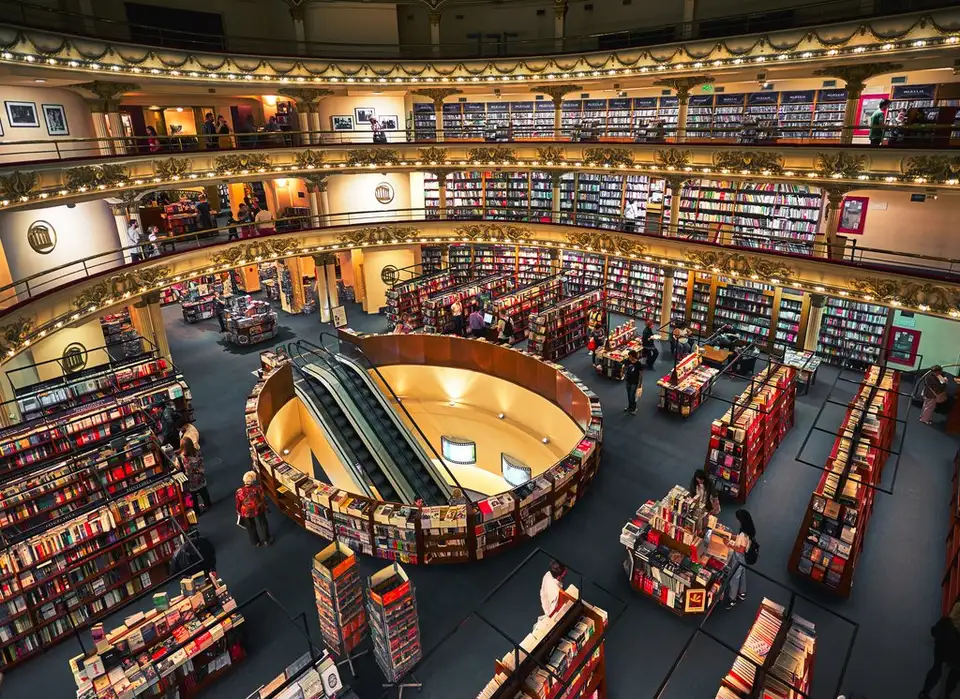
El Ateneo Grand Splendid
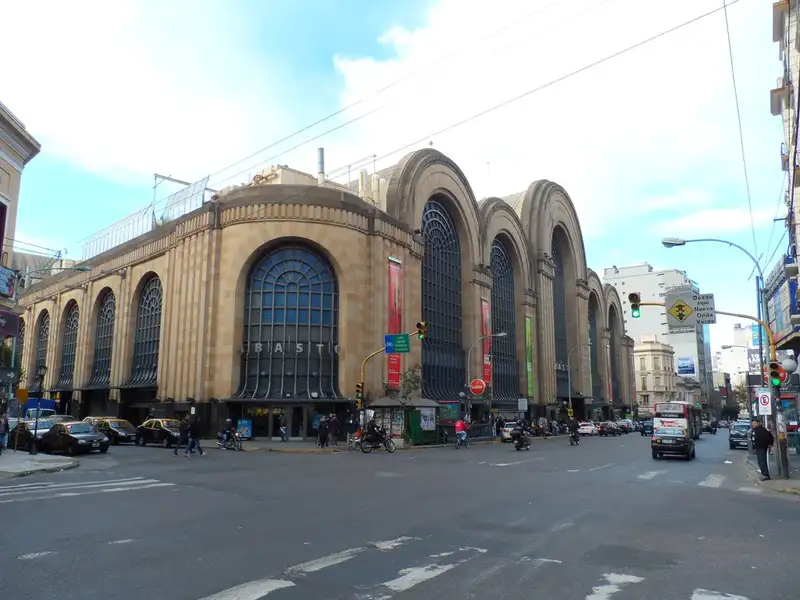
Located in the heart of Recoleta, this bookstore operates within what was once an imposing theatre inaugurated in 1919. Beyond being a space for selling books, the building stands as a living testament to the golden age of entertainment in Buenos Aires, integrating its monumental architecture with contemporary literary culture.
Architecture and historical legacy
The building was the creation of Max Glücksmand, a Hungarian-Argentine entrepreneur who left his mark on the music and film industry. The original design was carried out by architects Peró and Torres Armengol, who achieved a structure of great opulence. Walking through its corridors, visitors can appreciate decorative elements that evoke the splendour of the last century, such as the frescoes by Italian artist Nazareno Orlandi and the sculptures by Troiano Troiani.
Originally conceived to host ballet and opera performances, the space also served as a stage for tango shows. Over the following decades, its use evolved: in 1929 it was converted into a cinema and served as a base for recording musical sessions for the Odeon label, as well as being the starting point of Radio Splendid. This transition from theatre to cinema and finally to bookstore has allowed the original structure to retain much of its historical significance.
A journey through its shelves
The experience inside unfolds surrounded by a vast collection of more than 120,000 titles. The arrangement of the books makes use of the scale of the former theatre, allowing visitors to move through the levels while taking in the majesty of the vaulted ceilings and ornamental details. The contrast between the stillness of reading and the grandeur of the painted ceilings creates a particular atmosphere, where the architecture is not merely a container but an essential part of the content itself.
The exterior, along Avenida Santa Fe, presents a façade that hints at the richness within, though it is only upon crossing the threshold that the true scale of the space becomes apparent. The structure allows for easy movement between the different book sections, with the artistic elements that defined its identity as a cultural centre of Buenos Aires always in view.