Iglesia de Nuestra Señora de Montserrat
Located in the Monserrat neighborhood, the Iglesia de Nuestra Señora de Montserrat is one of the oldest and most significant landmarks in Buenos Aires’s historic city center. Its origins date to the mid-eighteenth century, when a brotherhood devoted to the Virgin of Montserrat brought Catalan traditions to the Río de la Plata. What began as a cult established in 1755 laid the foundations for a structure that, despite undergoing major transformations, retains its relevance as part of the city’s foundational fabric.
Roots and architectural evolution
The history of the current building is the result of a transition between two distinct construction phases. The first project, commissioned in 1756 from architect Antonio Masella, consisted of a more modest structure built with lime-whitewashed adobe bricks and even included an adjoining cemetery. This first version was what allowed the institution to be elevated to the status of parish in 1769.
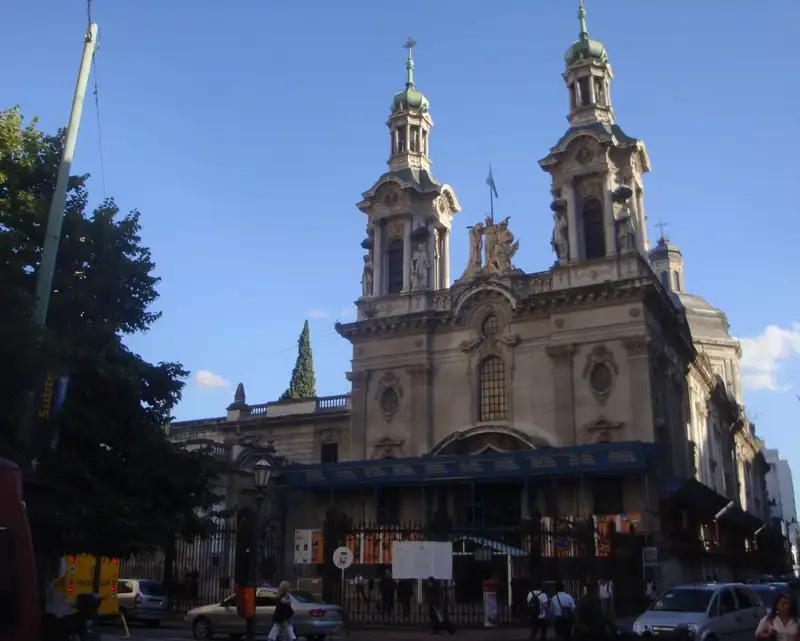
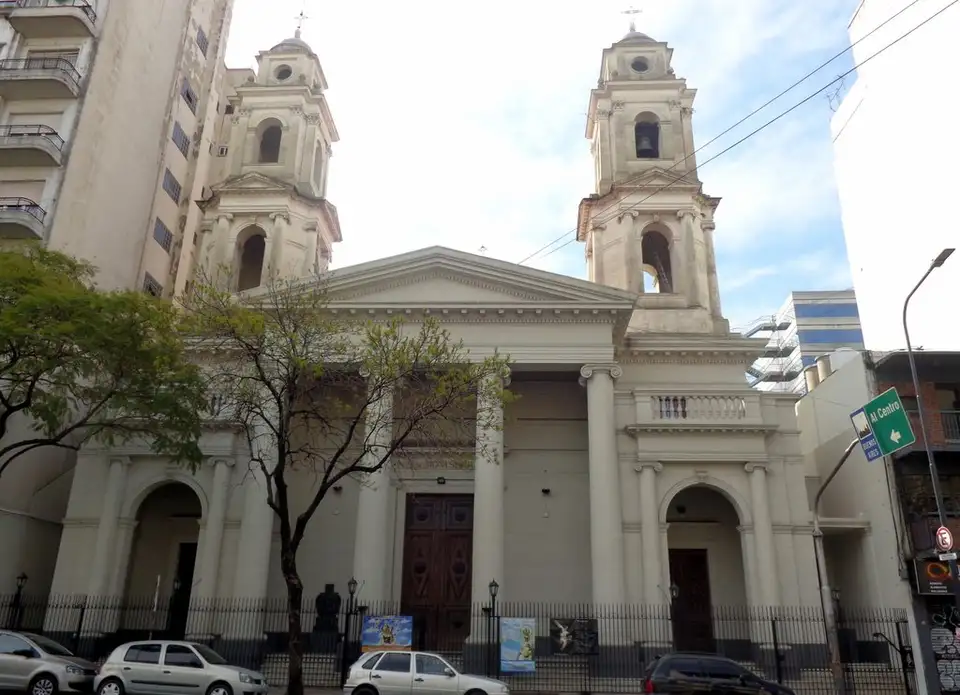
Over time, however, the need to accommodate a growing community led to a comprehensive reconstruction during the nineteenth century. In the mid-1800s, as the original building deteriorated, a committee of local residents promoted a new project attributed to architect Manuel Raffo. Completed in 1865, the building presents an Italianate style that defines its presence on Avenida Belgrano. The facade is distinguished by a portico supported by four Ionic columns, flanked by two three-tiered towers whose crowns feature spires clad in Pas-de-Calais tiles — an ornamental detail that lends distinction to the whole.
The interior and its heritage value
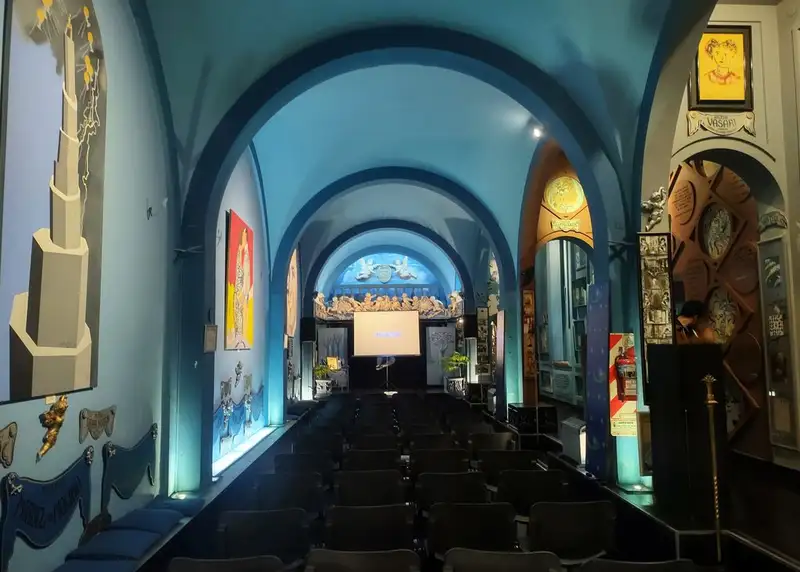
Upon entering, the space reveals a central nave with a pitched roof, crowned by a dome over the crossing, also clad in the aforementioned French tiles. The side naves, with flat roofs, complete a space that underwent significant ornamentation in the late nineteenth century. The interior preserves paintings of religious subjects and decorative motifs that serve as visual records of the aesthetic sensibility of that period.
This church is not merely an isolated building; it is an element that connects the memory of migratory currents with the urban development of Buenos Aires. The presence of features such as the imported tiles and the neoclassical architecture reflects the desire of mid-nineteenth-century porteño society to endow its religious institutions with a European monumentality, integrating local devotion with international aesthetic standards.