Botica del Ángel
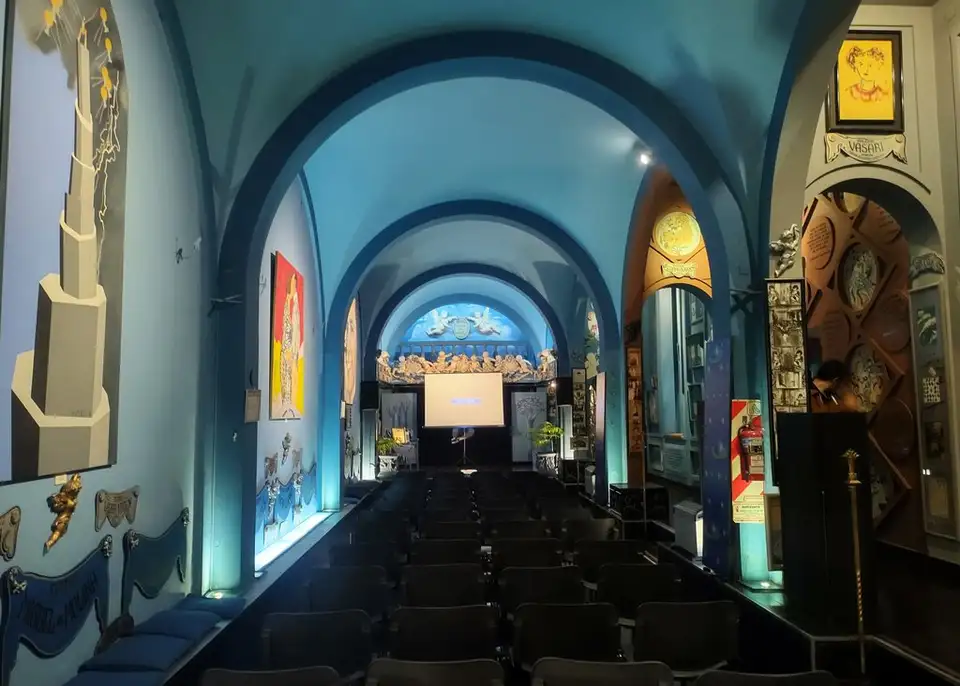
Located in the Monserrat neighborhood, Botica del Ángel is far more than a static exhibition; it is a scenographic collage and artistic space that functions as a labyrinth of cultural memory. Originally created in 1966 by the multifaceted Eduardo Bergara Leumann — animator, painter, set designer, and actor — this place was conceived as an alternative avant-garde center, emerging in an era contemporaneous with the legendary Instituto Di Tella.
A journey between the visual and the literary
The experience inside the Botica is defined by its sensory character and labyrinthine structure. The space was designed for visitors to lose themselves among theatrical settings, works of art, and historical objects in dialogue with one another. The circuit allows visitors to appreciate pieces by foundational visual artists of Argentina’s cultural heritage, such as Raúl Soldi, Antonio Berni, and Marta Minujín. This arrangement does not seek a linear observation, but rather an immersion in an environment where scenography and artistic object become one.
Beyond the visual arts, the space safeguards fragments of the country’s literary identity through manuscripts by figures such as Jorge Luis Borges and Ernesto Sábato. The proposal integrates the tangible with the narrative, making the visit an encounter with the physical traces left by major authors. This blend of elements turns the space into a living testament to Argentine creativity, where every corner offers a new layer of cultural interpretation.
Memory and heritage at the heart of Monserrat
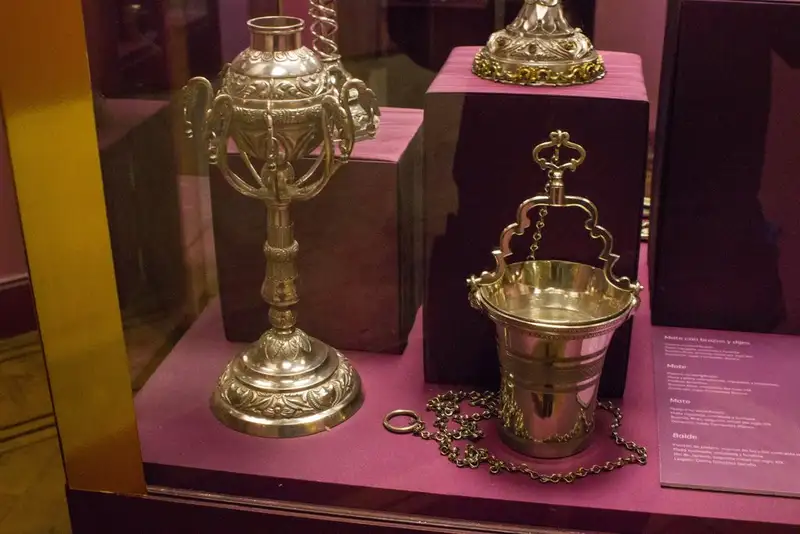
The value of Botica del Ángel also lies in its capacity to house personal objects associated with icons of popular culture. Among its treasures are belongings of Carlos Gardel and Mercedes Sosa, alongside other keepsakes that evoke a Buenos Aires that has transformed over time. These elements lend a human and nostalgic dimension to the visit, connecting the history of music and folklore with the architecture of the place.
Following the death of Bergara Leumann in 2008, the Universidad del Salvador assumed custody of this heritage, ensuring its preservation and allowing the space to maintain its dynamism. Today, the institution not only oversees the conservation of the works, but also ensures the space continues to function as a point of interaction through guided visits and performances that weave theatricality into the visitor experience. In this way, Botica del Ángel remains a bridge between the past of the Buenos Aires avant-garde and the city’s cultural present.