Basílica y Convento de San Francisco de Asís
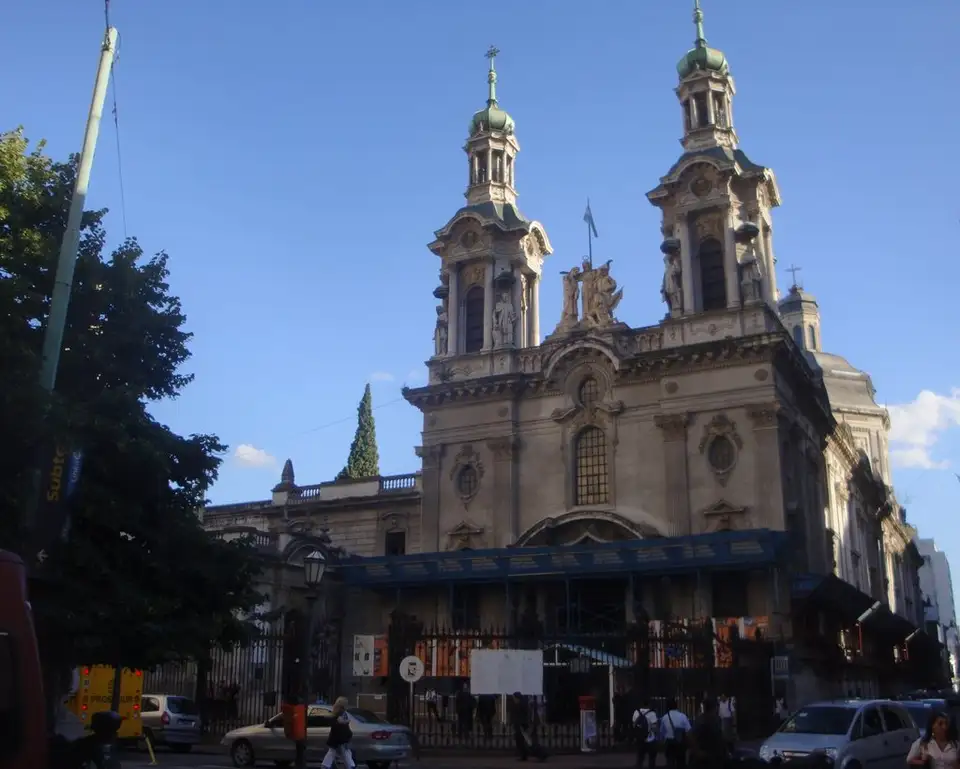
Located in the historic centre of Monserrat, the Basílica y Convento de San Francisco de Asís is one of the oldest religious foundations in the City of Buenos Aires. Situated on Adolfo Alsina street, this religious complex marks the presence of the Franciscan order in the region since 1583, shortly after the second founding of the city by Juan de Garay. The site, which originally covered a full city block bounded by the streets Defensa, Alsina, Balcarce, and Moreno, has witnessed the urban and social evolution of the oldest part of the Argentine capital.
Architecture and colonial legacy
The current structure is the result of a construction process that extended throughout much of the eighteenth century. Although earlier churches had existed using more precarious materials, the definitive building was carried out between 1731 and 1754. The project was led by Jesuit architect Andrés Blanqui, a central figure in the colonial architecture of the region, also responsible for other landmark works such as the Iglesia de San Ignacio de Loyola.
The façade visible today is not the original eighteenth-century one, but rather the product of a renovation carried out between 1907 and 1911. Under the direction of architect Ernesto Sackmann, the church was given a Baroque style with German influences, lending it a distinctive character within the Monserrat streetscape. At the top of this façade stands a sculptural group by Antonio Voegele, depicting Saint Francis surrounded by historical and literary figures associated with his order: the poet Dante Alighieri, the painter Giotto, and Christopher Columbus.
The heritage circuit
Moving through this space means entering the memory of colonial Buenos Aires. The complex is not limited to the main body of the basilica alone; it shares its atrium with the Capilla de San Roque, situated to its left, which adds an extra layer of historical complexity to the ensemble. A visit makes it possible to observe how religious architecture has managed to integrate elements from different periods, from the original sixteenth-century layout to the aesthetic interventions of the early twentieth century.
The significance of this site extends beyond the religious to occupy cultural and territorial ground. Situated at the very heart of Monserrat, the Basílica serves as a point of reference connecting to other nearby landmarks, such as the Iglesia de San Ignacio or the Cabildo. Its physical presence and imposing scale offer a counterpoint to the commercial and urban activity of the city centre, preserving an identity that reaches back to the very origins of the city.