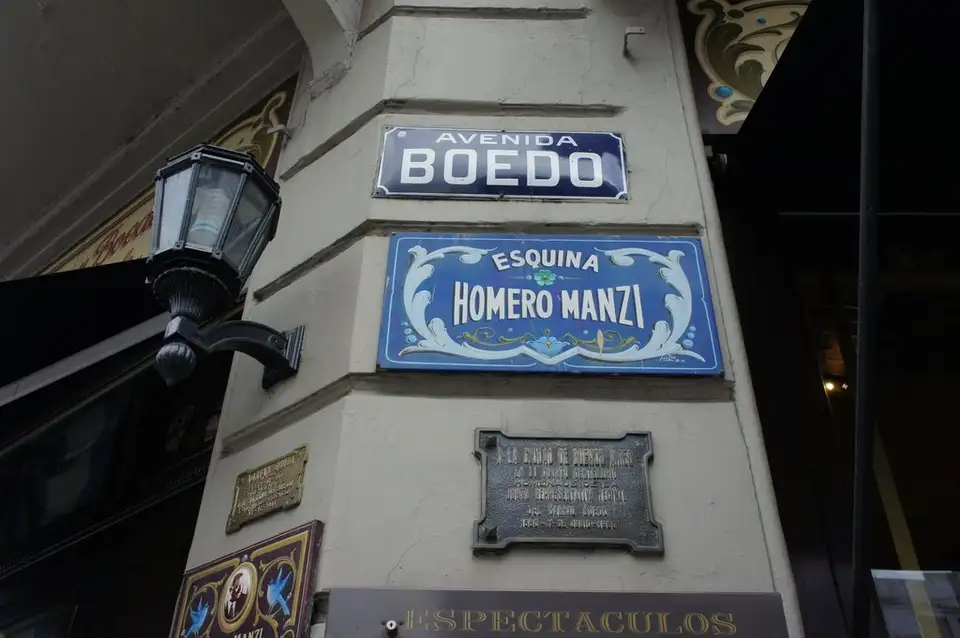
Esquina Homero Manzi
Located at the intersection of Avenidas San Juan and Boedo, Esquina Homero Manzi serves as a reference point for the cultural memory of Buenos Aires. This space, situated on the border between the Monserrat and Boedo neighborhoods, is not merely a performance venue but a building that carries the imprint of porteño tango. Its significance lies in having been immortalized by the poet Homero Manzi, whose lyrics tied this area to urban identity and the nostalgia of traditional neighborhoods.
Heritage and Porteño Atmosphere
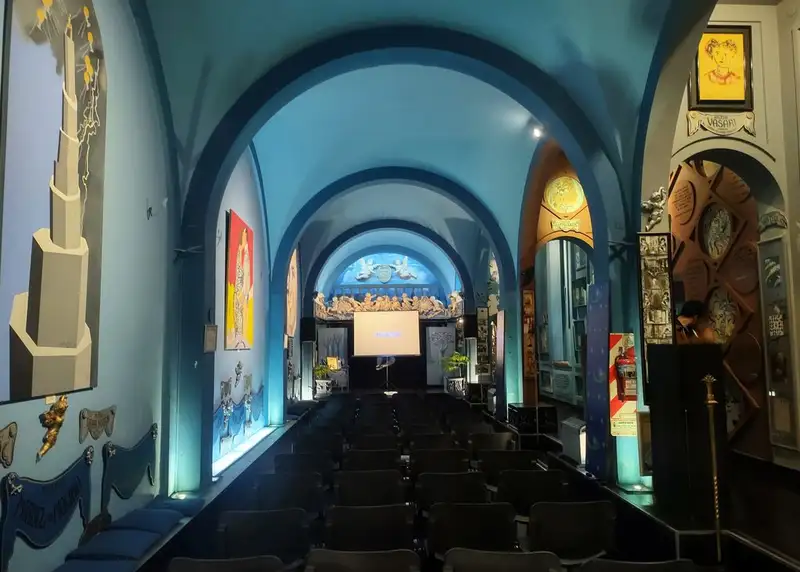
The building preserves architectural features that evoke the golden age of the genre. With elements such as stained glass windows and a historic bar, the hall maintains an aesthetic typical of the city’s old notable cafés. The structure was originally built around 1927 and has served as a gathering place for key figures of Rioplatense music; artists of the caliber of Aníbal Troilo, Roberto Goyeneche, Edmundo Rivero, and Tita Merello once sat at its tables. This heritage translates into an atmosphere that avoids large theatrical productions in favor of a more intimate scale, where proximity to the stage allows the details of the artistic performance to be fully appreciated.
The Pulse of Tango on Stage
The artistic offering moves away from modern artifice to focus on a classical repertoire. The musical program is typically performed by a live quintet featuring essential instruments: bandoneón, piano, violin, guitar, and double bass. The show alternates vocal pieces with choreographic numbers performed by professional dance couples, maintaining a structure that prioritizes technique and tradition over complex theatrical narrative. As a venue of modest dimensions, the acoustics and sightlines allow for a direct connection between the musicians and the audience.
A Refuge in the Urban Fabric
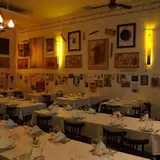
Unlike other, busier circuits in San Telmo, this corner feels like part of the everyday rhythm of Boedo. The venue operates as a bar-restaurant that integrates traditional cuisine with the musical experience, offering individual tables that reinforce its character as a porteño café. This configuration allows a visit to blend into the immediate surroundings of the city, connecting with the history of the neighborhoods that Manzi described in his work and keeping alive a space where the cultural identity of Buenos Aires continues to resonate through the sound of the bandoneón.