Edificio Banco Argentino Uruguayo
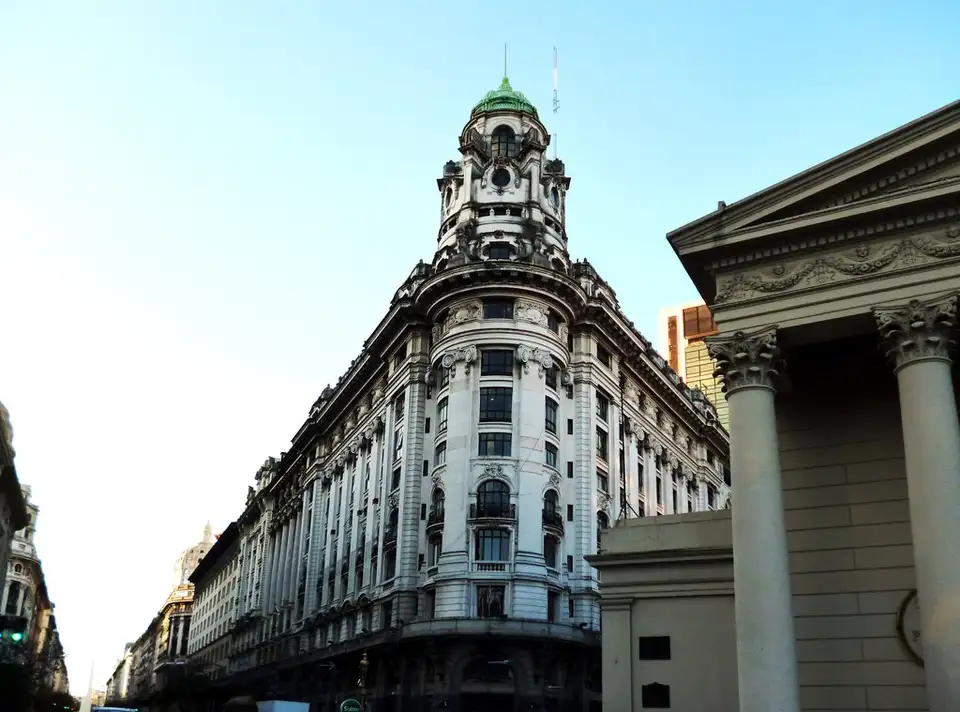
Located on one of the most emblematic corners of the San Nicolás district, facing Plaza de Mayo, the Edificio Banco Argentino Uruguayo stands as a solid testament to the institutional architecture of the early twentieth century. Situated at Avenida Roque Sáenz Peña 501, this structure is not merely a piece of administrative infrastructure but a reference point for the French academicism style that defined much of Buenos Aires’ urban landscape during its emergence as a metropolis.
Architecture and institutional design
The building, dated to 1928, was designed by architect Eduardo Le Monnier, a key figure for understanding the aesthetic sensibilities of the era. It is notable for its imposing scale, reaching a height of 56 metres at its dome, which allows it to stand out in the city’s skyline. Its structural system, based on the use of iron, made it possible to achieve the dimensions and robustness required to house its original eight floors.
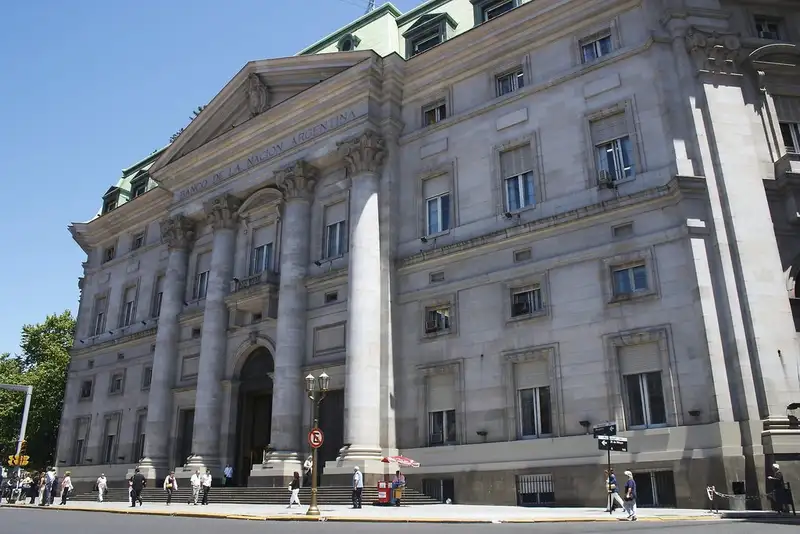
Aesthetically, the work follows the canons of the Beaux Arts style, characterised by detailed ornamentation and a symmetrical composition intended to convey order and prestige. The work of civil engineers Perrone and Ayerza was essential in realising this design, producing a structure that combines the modern techniques of its time with a façade that engages with the historical surroundings of the city centre.
Context and current use
What was originally conceived as the headquarters of a financial institution today plays a central role in Argentine public administration. The building currently serves as one of the offices of the Jefatura de Gabinete de Ministros, maintaining its relevance within the country’s governmental and political fabric. This transition from financial to administrative use has not diminished its standing as an architectural landmark in the Monserrat and San Nicolás area.
Its strategic location facing Plaza de Mayo connects it directly to the main centres of power and memory in Buenos Aires. Walking along Diagonal Norte, the building’s presence becomes part of the route taken by those crossing the historic core of the city, forming part of that ensemble of buildings that narrate the region’s economic and political history through stone and iron.