Basílica del Sagrado Corazón de Jesús
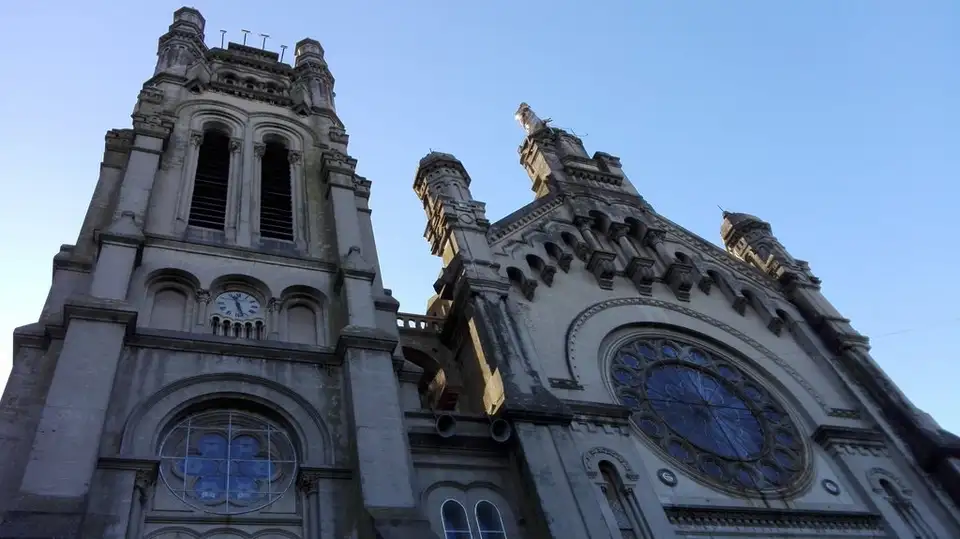
Located on the border between the Barracas and La Boca neighborhoods, the Basílica del Sagrado Corazón de Jesús stands as an architectural landmark that breaks with the predominant aesthetic of corrugated metal and wood houses in the area. This church, whose construction was approved in the early twentieth century, is a reference point for understanding the diversity of styles that coexist in the south of the city, setting itself apart from the traditional iconography of tango to present a Neo-Gothic character.
Architecture and materials of European origin
The basilica was designed by architect Pascasio González Erazo, who conceived a space where ornamentation and materiality play a central role. The structure is characterized by the use of imported elements that give it a particular distinction within the Buenos Aires cityscape. Among its most notable features is the use of embossed sheet metal, a material brought from Belgium, employed to create Neo-Gothic chapels that add texture and detail to the interior of the church.
The visual richness of the space is completed by the presence of high-quality Italian stained glass windows, which cast a specific interplay of light across the sacred interior. The floor also features a carpet-pattern tile work executed by the Italian firm Ferraciente, reinforcing the building’s connection to the aesthetic currents and European craftsmen who influenced the construction of Buenos Aires during that era.
A historic refuge in the southern city
Beyond its aesthetic value, the basilica holds historical significance tied to the religious memory of the city. Following the fire that destroyed the Catedral Metropolitana in 1951, this church played a fundamental role by serving as a substitute cathedral during several periods, granting it an institutional importance that went beyond its original parish function.
A walk through its naves reveals a wooden coffered ceiling of outstanding design, complementing the solemnity of the space. The combination of fine woods brought from Europe and the embossed metal details creates an atmosphere that contrasts with the industrial and port surroundings nearby, offering a refuge of quiet and artisanal detail amid the dynamism of the Barracas and La Boca neighborhoods.