Parroquia Nuestra Señora de Luján
Parroquia Nuestra Señora de Luján stands as one of the most significant landmarks in El Bolsón. Located in a central area of the valley, its presence marks a milestone in both the religious identity and the urban landscape of the town. Beyond its liturgical function, the church is a material testament to the history of the Andean region, integrated into its surroundings through an architecture that engages with the geography of the area.
Architecture and materials of the south
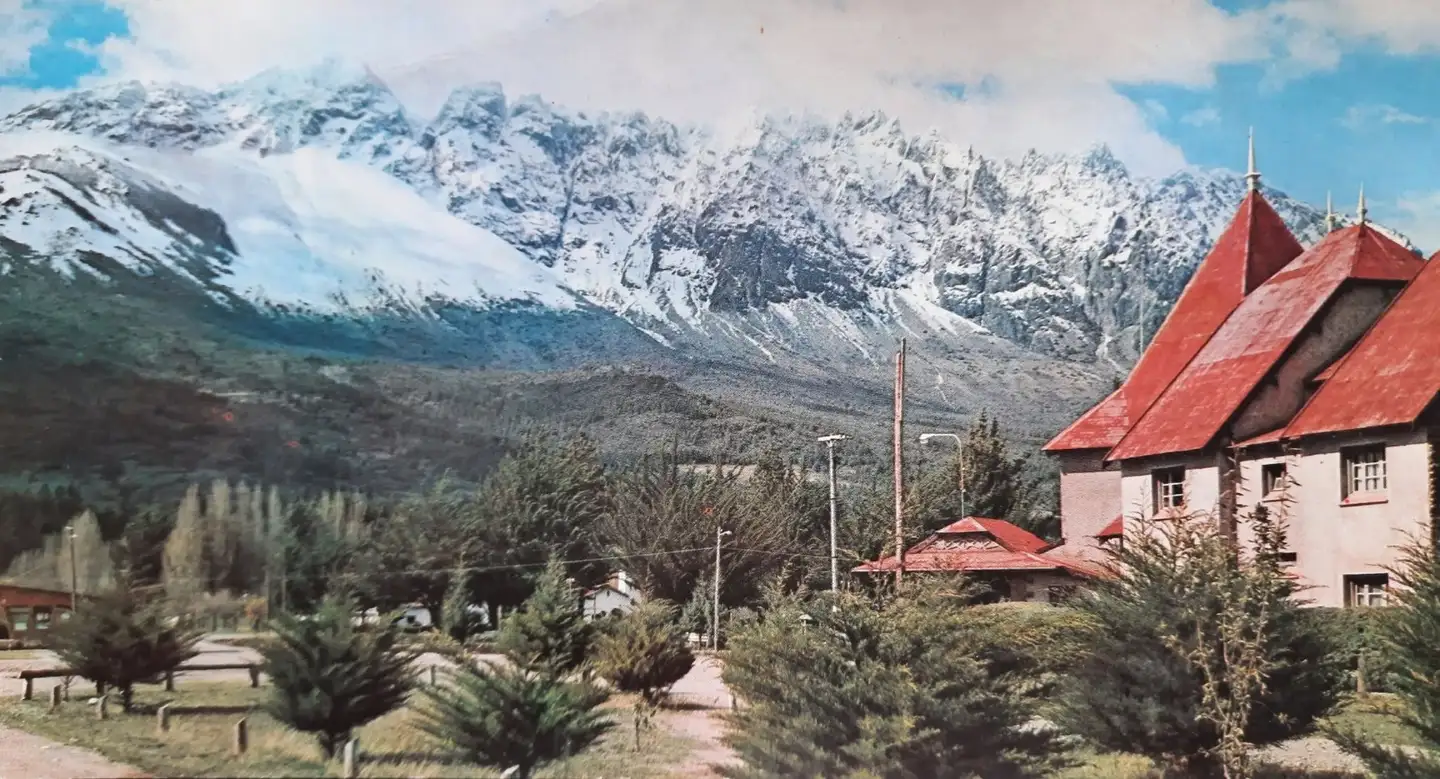
The church’s design evokes the Andean Patagonian style, establishing a direct visual connection with the typical constructions of the area and with churches found in southern Chile. The structure is characterized by a predominant use of natural materials: stone cladding that lends solidity, and wooden shingle roofs that give it an organic texture. Its silhouette, defined by a distinctive tower and a central bell tower, is easily recognizable from different points across the valley.
This building, inaugurated on November 19, 1953, was driven by the Franciscan order under the work of priests Emilio Favaratto and Feliciano Felice. The solidity of its materials responds not only to an aesthetic choice but also to the need to adapt to the Andean climate, achieving a balance between the robustness required by the environment and a simplicity that invites calm.
A space for gathering and heritage
The interior of the church offers an atmosphere of introspection, where the warmth of the wood plays a fundamental role in the perception of the space. The layout of the place seeks to create an intimate environment, conducive to personal contemplation. Among the elements that give the space its singularity is the presence of an image of the Virgin with Eastern features, a piece brought from China by one of the founding priests, which adds a dimension of universality to this corner of Patagonia.
Alongside this figure, the sanctuary houses traditional images such as Saint Anthony, Saint Francis, and the Virgin of Luján herself. This iconographic ensemble, combined with the church’s recognition as a Material Cultural Heritage site by the municipality, establishes the parish not only as a center of faith but as a space where the collective memory of El Bolsón is made present through its architecture and its objects.