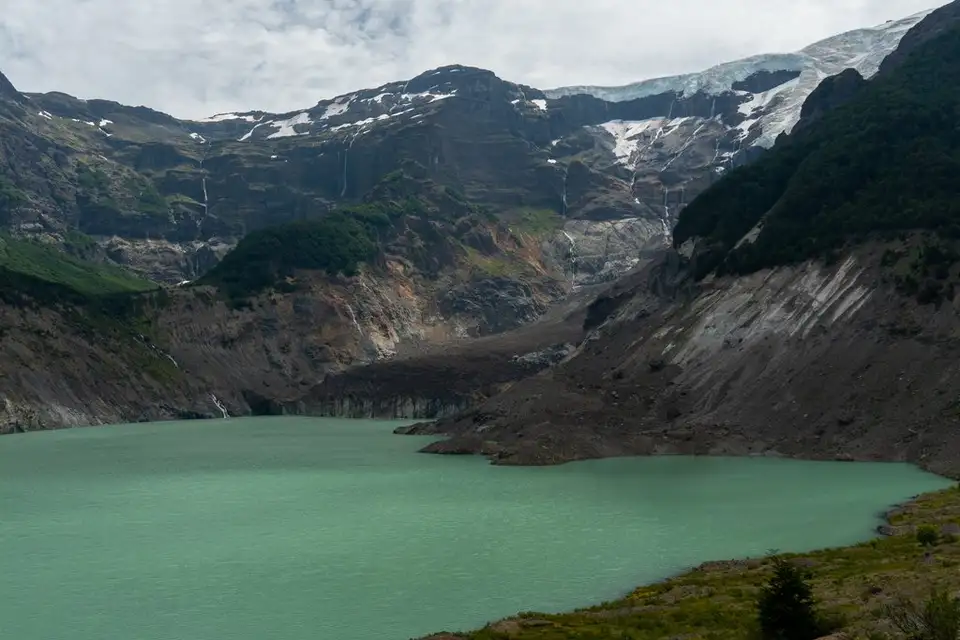
Ventisquero Negro
Ventisquero Negro is a glacial formation that stands out within Nahuel Huapi National Park for its distinctive appearance. Located in the southern area of the park, specifically near Cerro Tronador, this body of ice takes its name from the dark grey tone of its surface. This color is not the result of an intrinsic characteristic of pure ice, but of the accumulation of sediments and rocks that the glacier carries along during its movements.
Natural dynamics and surroundings
The presence of this glacier is closely linked to the activity of Cerro Tronador. The process of erosion and transport of materials from the snowy peaks down to the lower zones deposits mineral particles onto the glacier, altering its reflectance and giving it the dark patina that sets it apart from other glaciers in the region. This phenomenon is a key component of the Andean-Patagonian landscape, where the interaction between snow, ice, and mineral debris defines the character of the terrain.
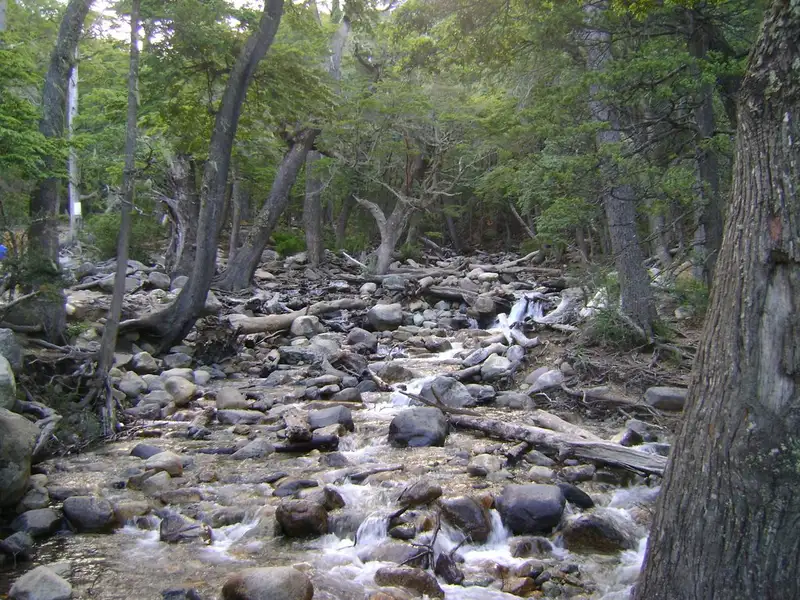
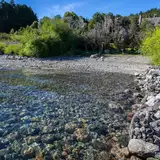
The area functions as a fundamental hydrological starting point, as the waters originating from this system contribute to the source of the Río Manso. This waterway is one of the most significant in the park’s southern basin, connecting the high-mountain zones with the lower valleys and sustaining the biodiversity of riparian ecosystems.
The ecosystem and land management
The environment surrounding Lago Ventisquero Negro is a space of great ecological importance. The lateral moraines — sediment formations left behind by glacial retreat — support vegetation that requires constant management to preserve its integrity. In these areas, monitoring and environmental control tasks are carried out to protect the native forest from invasive exotic species, such as certain willows that could displace the native flora.
The conservation of this sector is vital for maintaining the balance of the riparian environments in the Río Manso basin. The work of park rangers focuses on preventing alterations that could modify the plant composition of the moraines, ensuring that the natural process of ecological succession is not disrupted by external factors introduced into the region.