Cerro Tronador
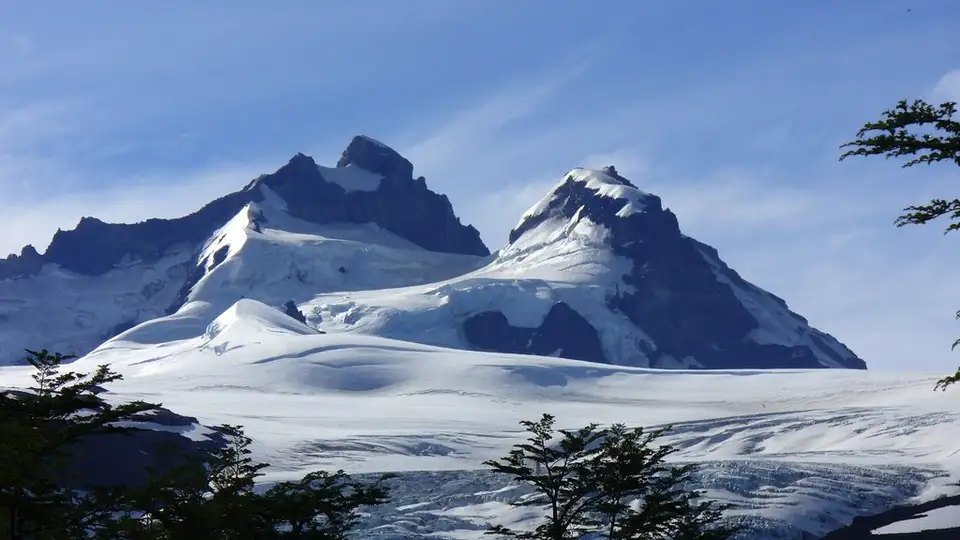
Cerro Tronador stands as one of the highest points in Nahuel Huapi National Park, reaching an altitude of 3,554 metres above sea level. Its name is no coincidence: it derives from the thunderous sounds produced when ice breaks away from its glaciers and crashes against the base, generating a noise similar to that of thunder. This mountain massif forms a fundamental part of the Andean landscape of the region and hosts seven glaciers that, due to global warming, are currently in a process of retreat.
The surroundings and the route to the massif
Accessing this area requires a journey that departs from the centre of Bariloche along Ruta Nacional 40 heading south. Along the way, the landscape shifts as the road follows the shores of lakes Gutiérrez and Mascardi, before connecting with Ruta Provincial 82. This route offers views of other geographic landmarks such as cerros Bonete and Cresta de Gallo from various lookout points along the way.
The landscape is rounded out by dark-sand beaches on Lago Mascardi and a setting of native forests that grow denser as the road advances toward Villa Mascardi. In this area, the terrain offers a transition between valleys and high-mountain zones, incorporating features such as Lago Los Moscos and the Río Manso.
Landscape dynamics and biodiversity
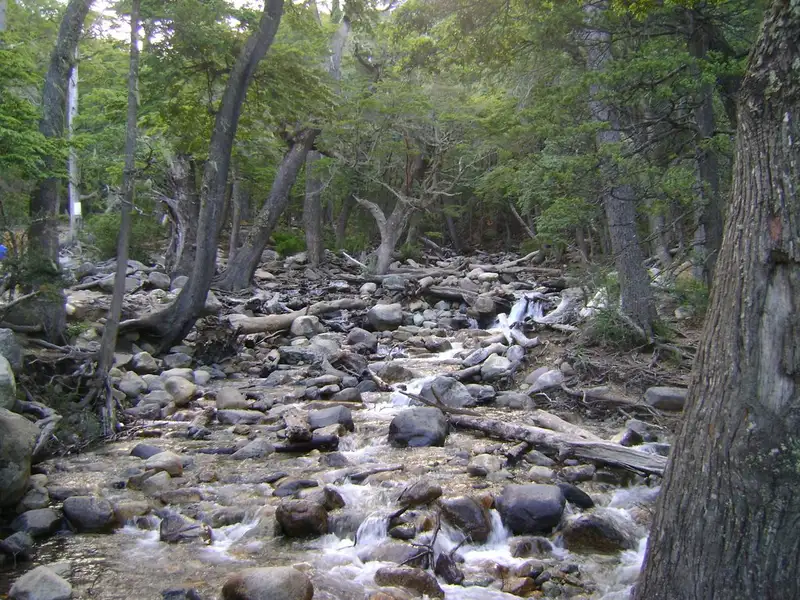
The stretch along the Río Manso allows visitors to observe how the water originates at the peaks of Tronador. This river passes through an ecosystem where the colour of its waters shifts along its course, reflecting the sediments and minerals of the mountain. At specific points, such as the Puente Los Rápidos, the clarity of the water is notable, along with the presence of local fauna — including trout that inhabit the currents and occasional sightings of kingfisher.
The significance of this sector lies in its territorial scale and the interconnection of its water systems. The presence of the glaciers not only defines the morphology of the peak but also conditions the flow of the rivers and the composition of the surrounding lakes, establishing Tronador as a central reference point for understanding glacial dynamics in the Andes mountain range.