La Casa de Botellas
On the outskirts of Puerto Iguazú, far from the roar of Iguazú Falls, stands a structure that challenges the conventions of traditional architecture and the very concept of waste. La Casa de Botellas is far more than a tourist curiosity; it is the living testament to the resilience of the Santa Cruz family, who turned a deep economic crisis into a patented construction technique and a global message of sustainability.
The project traces its origins to the Argentine crisis of 2001. Alfredo Santa Cruz, who was then making a living collecting recyclable materials, decided to fulfill his daughter’s Christmas wish by building her a small playhouse. With no resources to purchase conventional building materials, Alfredo used the PET plastic bottles he gathered in his daily work. What began as a family gesture quickly evolved into a technical exploration of plastic’s insulating and structural properties, culminating in the construction of a full-scale dwelling.
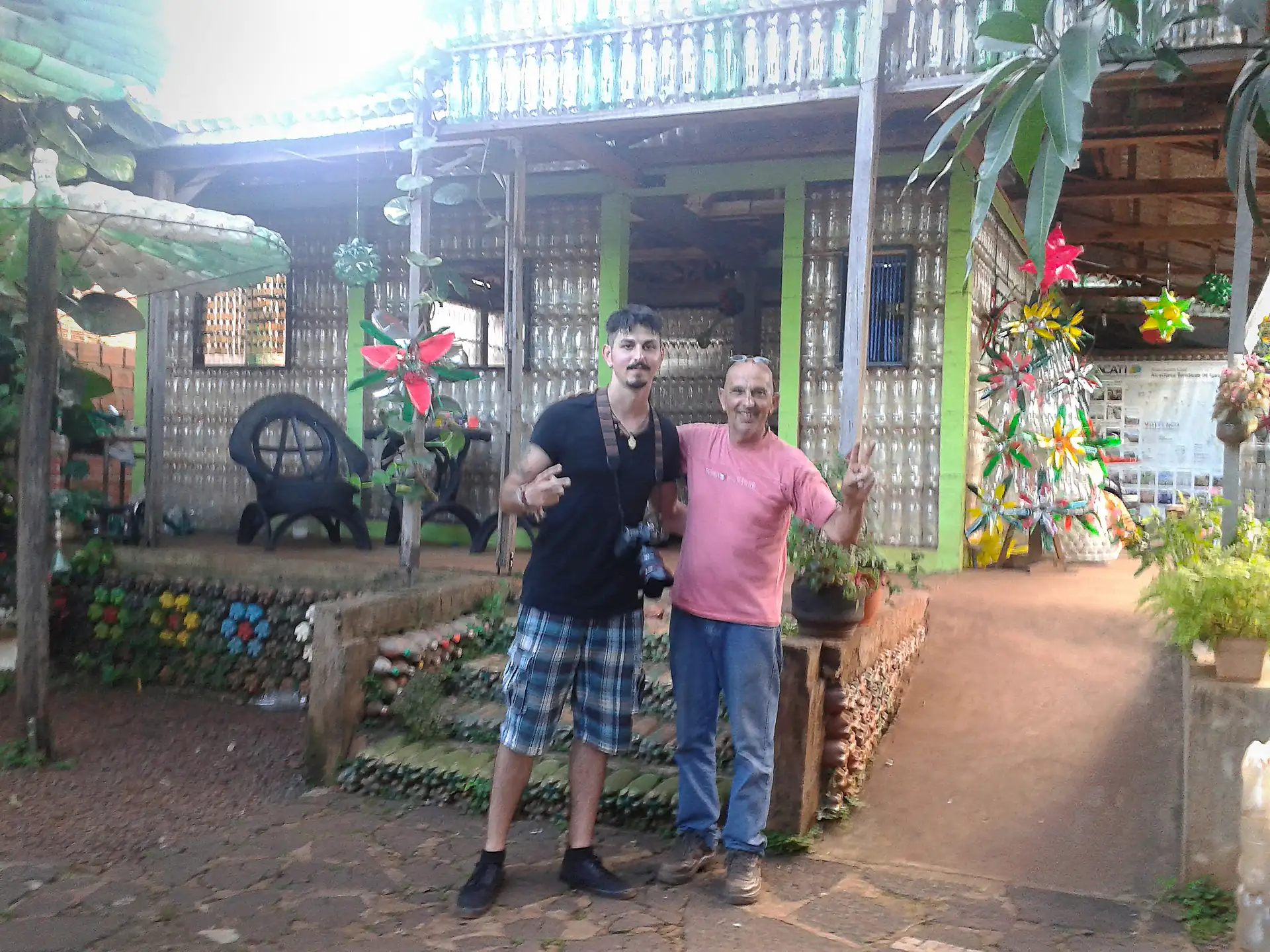
The architecture of the house is a display of technical ingenuity. The walls are composed of approximately 1,200 to 1,500 two-liter plastic bottles, arranged to form solid, sturdy partitions. The roof uses around 1,300 unfolded Tetra Brik cartons, which serve as an excellent thermal and acoustic insulator, shielding the interior from the intense Misiones heat. The subtler details are no less inventive: the windows and doors are made from more than 140 CD cases, creating translucent panels that allow natural light to pass through.
The interior of the dwelling maintains the same ecological consistency. The family has designed and built beds, armchairs, tables, and shelves using hundreds of additional bottles, demonstrating that everyday furniture can also be derived from recovered materials. Even the decorative elements — curtains made from bottle caps and lamps fashioned from aluminum cans — reinforce the idea that nothing is waste if the necessary creativity is applied.
A visit to the site is usually guided by members of the Santa Cruz family themselves, who share not only the technical details of their method but also their philosophy of life. The project has spread beyond the borders of Misiones, becoming a model of social housing that Alfredo teaches at seminars throughout Latin America. Walking through the property, visitors do not simply observe an unusual house — they encounter a practical lesson in how innovation can offer dignified, low-cost solutions for the most underserved communities.