Palacio de Aguas Corrientes
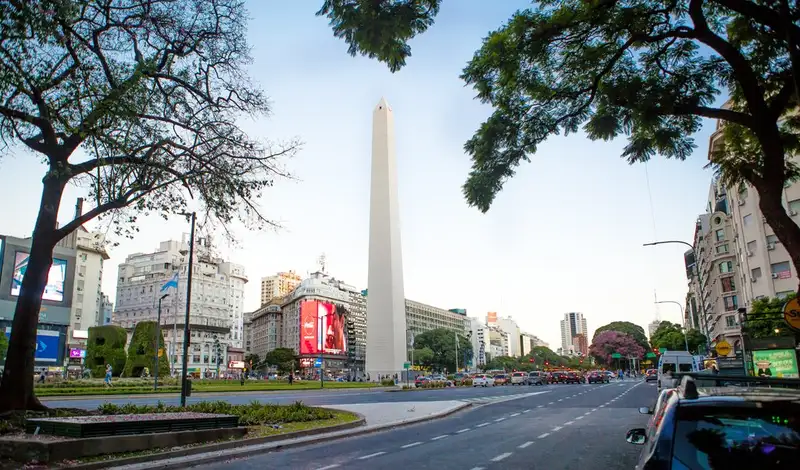
Situated in the emblematic San Nicolás neighbourhood, in the heart of Buenos Aires, the Palacio de Aguas Corrientes stands as one of the most singular architectural testimonies in the city. This building, part of the historic fabric of the central porteño area, is not merely a monumental structure but a remnant of the engineering and urban ambition of the late 19th century. Its presence on Avenida Córdoba connects it directly to the commercial and cultural pulse of San Nicolás, integrating it into a setting shared by landmarks such as the Obelisco and the Teatro Colón.
Architecture and hydraulic history
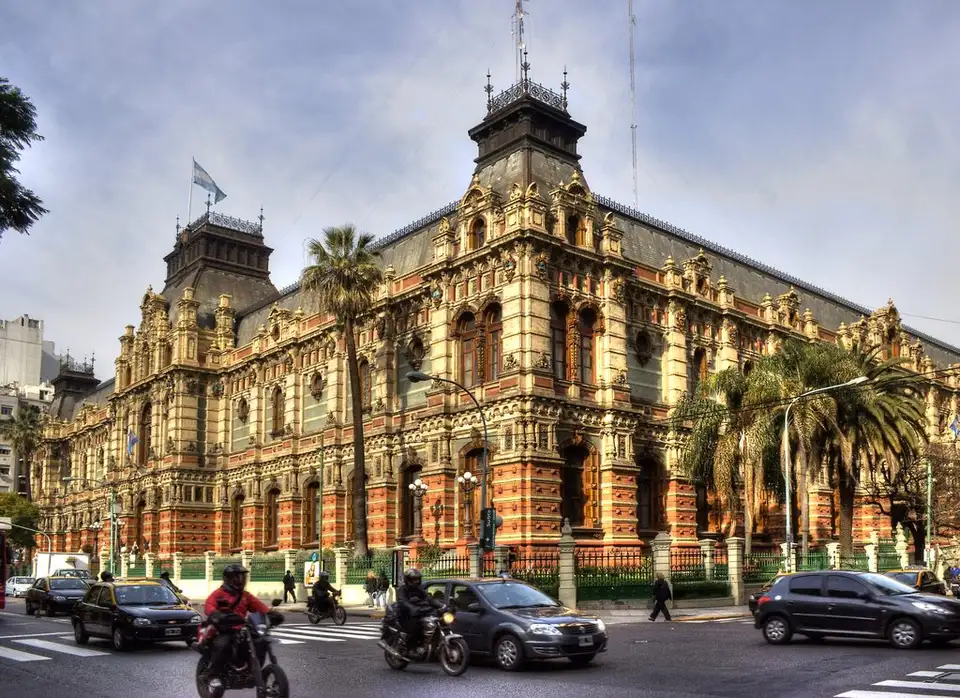
The building was originally conceived to fulfil an essential technical function: to serve as a pumping station. Its construction began in 1877 and was completed around 1894, during a period of major transformation for Buenos Aires’s infrastructure. At the time, it served as the headquarters of Obras Sanitarias de la Nación, playing a crucial role in the development of the capital’s water distribution system. What sets it apart from other utilitarian infrastructure of the era is its extraordinary aesthetic display, which transcends mere technical functionality to become a piece of heritage value.
The structure is distinguished by its imposing facade, characterised by a cladding of polychrome tiles that give it a unique visual identity in the urban landscape. This decorative detail, far from being mere ornamentation, reflects the importance attached to public aesthetics in 19th-century infrastructure projects. The Palacio not only housed the machinery required for pumping but was also designed to elevate the standing of sanitary works to the level of the city’s great monuments.
A landmark in the San Nicolás setting
The Palacio is embedded in a densely populated urban context laden with history. Located in the heart of the San Nicolás district, its scale and ornamentation contrast with the more modern and functional architecture that surrounds much of the central avenues. This coexistence of the old and the contemporary offers insight into Buenos Aires’s evolution as a metropolis that has managed to integrate its former service centres into its current urban fabric.
The building’s significance lies in its capacity to represent the city’s technical memory. While other buildings in the area have been transformed by commercial or residential uses, the Palacio retains its character as a monument to hydraulic engineering. Its presence invites a reading of the city that goes beyond the surface, connecting the visitor with the sanitation and growth processes that enabled Buenos Aires’s expansion towards the end of the last century.