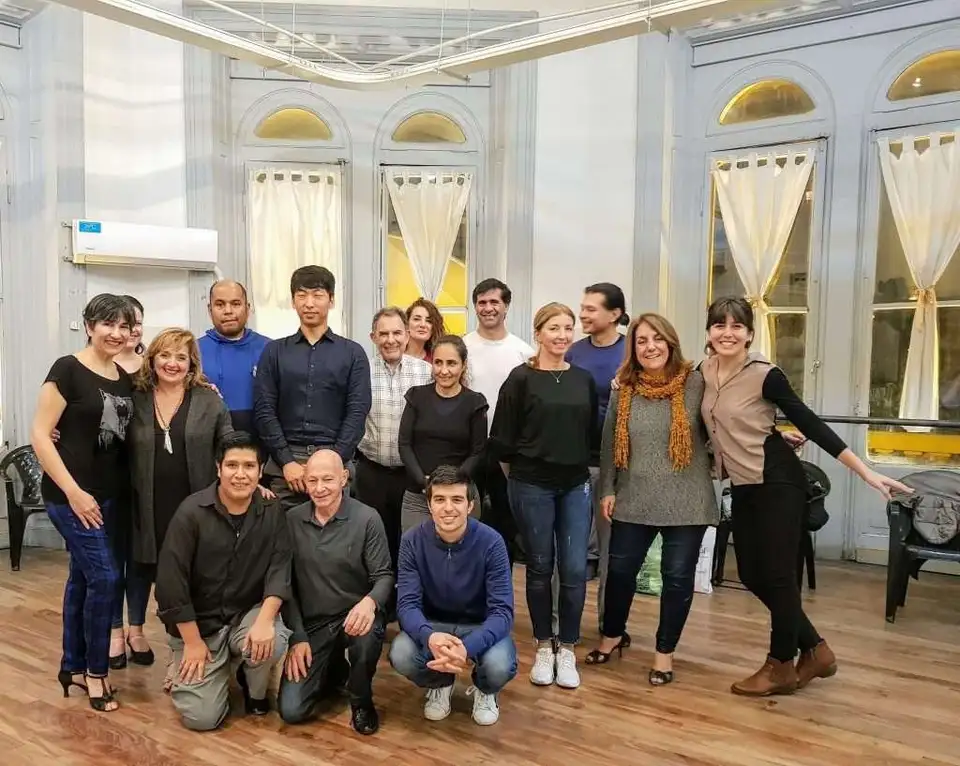
Escuela Mundial de Tango
Located in the Buenos Aires city center, specifically in the San Nicolás neighborhood, the Escuela Mundial de Tango functions as a training hub within the milonguero circuit of the Ciudad de Buenos Aires. In an area defined by its commercial dynamism and urban density, this space integrates into the city’s cultural fabric, offering a meeting point for those seeking to deepen their understanding of the technique and movement of the 2x4.
The dance context in San Nicolás
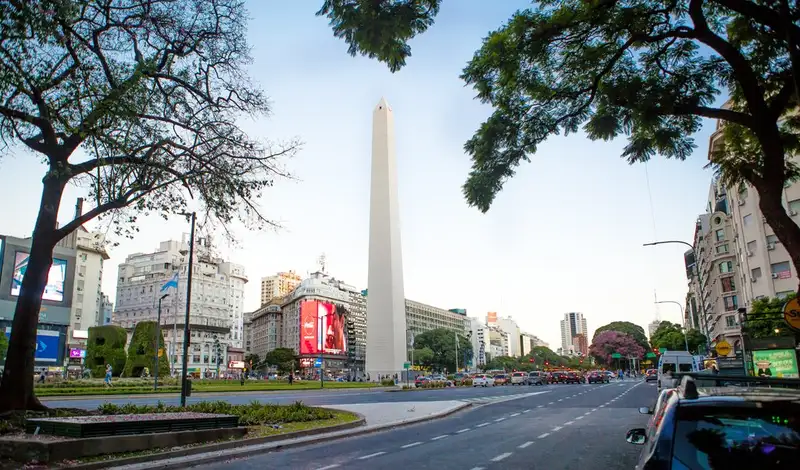
The San Nicolás neighborhood is one of the most emblematic sectors of Buenos Aires, where historical architecture coexists with the relentless pace of administrative activity. The presence of institutions dedicated to tango in this sector allows the genre to extend beyond traditional dance halls and embed itself in an environment of constant movement. Situated near fundamental arteries such as calle Florida, the school connects directly with the flow of people moving through the heart of the capital.
The practice of tango at this point in the city is not an isolated phenomenon, but part of a network of milongas and learning spaces spread across different Buenos Aires neighborhoods. While other sectors such as Almagro or Boedo maintain a more residential and neighborhood-club identity, San Nicolás offers a distinct perspective, where learning takes place in a consolidated urban environment that facilitates the integration of students and enthusiasts passing through the city center.
Training and movement culture
The school’s approach centers on transmitting the fundamental elements of the dance. The learning process involves not only the execution of steps, but also an understanding of musicality and the connection between dancers — aspects essential to understanding tango as a cultural discipline. These kinds of spaces are key elements in the continuity of the city’s intangible heritage, allowing new generations to take ownership of the technique.
A look at its activities reveals how tradition is kept alive within a modern setting. The teaching structure aims to equip students with concrete tools for their performance both in classes and within the city’s milonga circuit, where social practice is the ultimate goal of technical learning. In this way, the school acts as a bridge between formal instruction and the spontaneous experience of dancing in the ballrooms of Buenos Aires.