Museo Líbero Badií
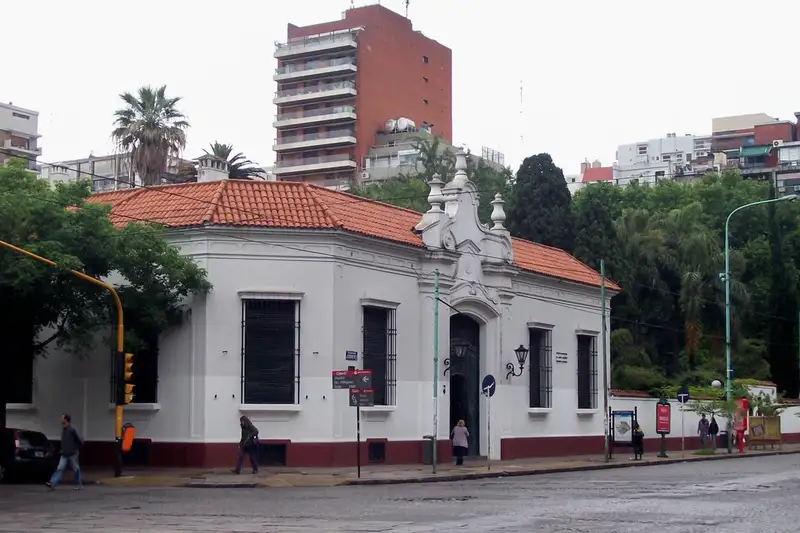
Located in the heart of Belgrano, the Museo Líbero Badií serves as a meeting point between the neighborhood’s architectural history and the plastic expression of one of the most significant Argentine artists of the 20th century. The space occupies the structure of the Casona Alsina, a building that lends an immediate sense of heritage to the experience. This place is not merely an exhibition gallery but the core where Badií’s visual language is preserved and disseminated, weaving together the city’s memory and the evolution of local contemporary art.
The Legacy in the Casona
The significance of this museum lies in its capacity to house Líbero Badií’s body of work within a setting that speaks to its own scale and solemnity. The collection comprises a range of pieces spanning different creative periods of the artist, situated primarily between 1942 and 1978. The itinerary allows visitors to observe the technical and conceptual transition through his sculptures, which form a central axis of the display, alongside a series of paintings, prints, and sketches that reveal the author’s thinking process.
Beyond the finished works, the museum holds documentary material that offers a deeper perspective on the artist’s career. The presence of artist’s books and other archival elements sheds light on the pedagogical and experimental dimension of his work, turning the visit into an approach to Badií’s creative methodology.
Context and Setting in Belgrano
The museum is fully integrated into the identity of Belgrano, a neighborhood distinguished by its residential and commercial importance as well as its historical richness. Situated on Calle 11 de Septiembre, within the former country house of Valentín Alsina — a key figure in Argentine history — the museum connects visitors to the roots of the area. This relationship between the architectural heritage of the Casona Alsina and Badií’s artistic heritage creates a cultural ecosystem in which the country’s political and social history intertwines with aesthetic evolution.
A visit to this space offers a contemplative pause amid the urban dynamic of Buenos Aires, allowing direct contact with the three-dimensionality of sculpture and the delicacy of drawing. The arrangement of the works within the historic structure facilitates an itinerary that alternates between the observation of large volumes and the minute detail of sketches, all framed by an architecture that already carries its own historical narrative.