Lago de Regatas
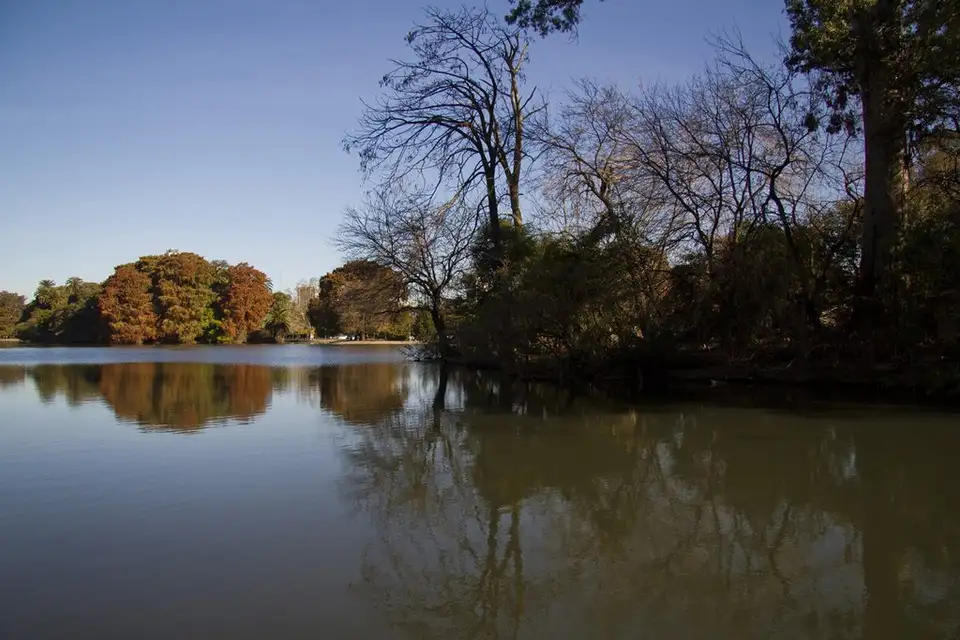
Lago de Regatas is one of the most significant landscape focal points in the City of Buenos Aires. Located within the grounds of Parque 3 de Febrero — commonly known as Bosques de Palermo — this body of water stands out for its natural characteristics and its integration with the surrounding green environment. Its importance lies in being a space where local biodiversity and intense recreational activity converge, serving as a gathering point for residents and visitors seeking contact with nature amid the urban fabric.
Landscape and Natural Setting
The area surrounding the lake is marked by its biological richness. As part of the city’s most important green lung, the sector is home to a diverse fauna that draws those who walk its shores. The landscape is defined by the presence of water and vegetation, making it possible to observe different types of birds and local species in a setting that remains a natural refuge within the capital. The character of the place has been preserved through its designation as a Historic Protection Area (APH), ensuring that the original layout and appearance of the grounds are maintained in the face of the city’s transformations.
Historical and Territorial Context
The history of these grounds is deeply tied to the development of Buenos Aires. Originally, this land was part of the estates of Juan Manuel de Rosas, who during his tenure as governor held properties in what was then known as the “bañado de Palermo.” On that site stood the quinta Palermo de San Benito, the caudillo’s residence, which was demolished following his fall from power. The process of expropriation and the resolution of litigation over the use of these lands allowed Parque 3 de Febrero to take shape decades later, officially inaugurated in November 1875 in the presence of figures such as Avellaneda and Sarmiento.
Visiting the Area
A visit to Lago de Regatas unfolds through a setting of intensive but dynamic use. The route around its surroundings is typically combined with other activities common to the Bosques de Palermo, where rowing on the water is a frequent sight, along with cyclists and rollerbladers moving along the surrounding paths. The area functions as a node connecting other landmark points within the park, such as the Rosedal, the Jardín Japonés, and the Planetario, allowing a fluid transition between different cultural and natural spaces. Activity in this sector is constant throughout the day, reflecting the vitality of a space designed for contemplation and active recreation.