Marchiori Barraud Tasting
An exploration of Pedriel's wine identity through a tasting focused on Marchiori Barraud's Malbec and Cabernet.
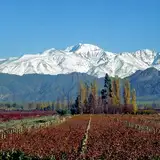
In the heart of Pedriel, within the well-known district of Luján de Cuyo, a tasting experience unfolds that centers on the pure expression of Mendoza’s soil. The tasting at Marchiori Barraud offers an understanding of how climatic conditions and soil composition shape each glass. The setting is defined by an arid to semi-arid microclimate, with warm summers and cool nights that encourage balanced ripening, under the high solar radiation characteristic of the area’s altitude.
The character of Pedriel’s soil
The experience revolves around recognizing the different textures and origins of the winery’s vineyards. As the wine profiles are explored, the influence of soils with very different characteristics becomes clear. On one hand, Viñedo Marchiori, which has belonged to the family since the late 1970s, has a deep alluvial structure with silty and clay layers where Malbec and Cabernet have found their place since the mid-nineties.
On the other hand, the experience allows for a contrast with Finca Las Piedras, a sector where the soils are younger and present a loamy texture with high permeability. Here, the presence of coarse materials and river stones, combined with the constant breeze from the river, lends a distinct identity to varieties such as Cabernet Franc and Cabernet Sauvignon. This alternation between deep soils and more gravelly materials is what defines the complexity of the tasting.
Profile of the experience
This activity is suited to visitors interested in technical viticulture and in understanding the direct relationship between terroir and the final product. It is not simply about tasting wine, but about analyzing how the altitude of close to 1,000 meters above sea level and furrow surface irrigation affect the concentration of the varieties. It is a proposition for those seeking to deepen their understanding of Luján de Cuyo’s identity, moving away from the generic to focus on the history of specific parcels such as those planted in 1995 or 1998.
The experience stands apart within the destination for its emphasis on traceability of origin. While other experiences may focus on more commercial aspects, the axis here is geology and climate: from the presence of silt and sand in certain zones to the importance of solar radiation on clear days. It is an invitation to understand the architecture of a wine through its fundamental components: soil, altitude, and microclimate.
Nearby experiences

Plan this experience
- Type
- experience