Puente Uruguay
A historic landmark over the San Antonio
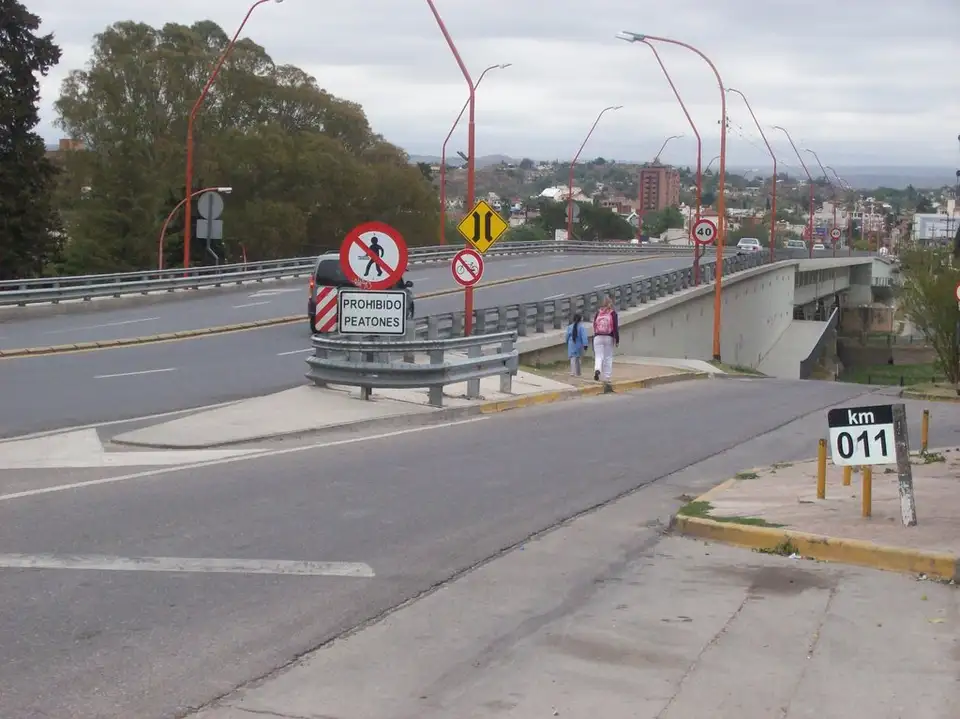
Puente Uruguay is much more than a simple road crossing in Villa Carlos Paz. Originally built in the 1940s, this structure spans the San Antonio river with a particular technical configuration: it has two supports set on land and three legs resting directly in the riverbed, allowing it to navigate the flow of the main tributary of Lago San Roque. What for decades served exclusively as a road crossing linking the city’s two banks and facilitating traffic toward the rest of the Valle de Punilla has undergone a significant transformation in recent years.
Following a joint project between the province and the municipality, the structure ceased to be purely an element of urban infrastructure and became integrated into the cultural life of the town. This repurposing allowed the space beneath the asphalt surface — through which vehicle traffic continues to flow — to become a gathering point for residents and visitors, giving the bridge a new social and artistic dimension.
Cultural space and multipurpose gallery
The architectural intervention transformed the lower level of the bridge into a multipurpose gallery that stands out for its design and luminosity. Entering through the lateral staircases, visitors access an extended corridor characterized by a glossy ceramic floor that reflects natural light. The space features wide lateral windows that maintain a constant visual connection with the river surroundings, avoiding the enclosed feeling typical of structures beneath bridges.
The interior functions as a cultural center hosting rotating, multidisciplinary exhibitions. The gallery is equipped to accommodate large-format shows, as seen in the panels of digital images by local photographers who have used these corridors to display their work. The design of the space — white walls and a clean aesthetic — aims to make light and artworks the focal point, offering an atmosphere of quiet contemplation that contrasts with the vehicular movement taking place above.
Urban integration and walkthrough
Moving through this space invites an unhurried pace. The design includes a pedestrian walkway that allows visitors to pass beneath the roadway without interfering with car traffic, integrating urban road infrastructure with public promenade. At one end of the corridor there is a tourist information office, making Puente Uruguay a strategic reference point for those newly arriving in the city who need to orient themselves within Villa Carlos Paz’s tourism circuit.
The presence of this cultural center beneath such an old structure reinforces the city’s character as a destination that knows how to reassess its heritage. The bridge not only fulfills its technical function of connecting the two banks, but acts as a node where the history of the 1940s meets contemporary artistic expression, consolidating a publicly accessible and culturally relevant space for the area.