Parroquia Santa Ana y San Joaquín
Located in the heart of Villa del Parque, opposite the train station, Parroquia Santa Ana y San Joaquín stands as an architectural and cultural reference point in the neighbourhood. This religious building, woven into the historical fabric of the area, serves not only as a place of Catholic worship but also as a testament to the urban development of Buenos Aires during the first half of the twentieth century.
Architecture and distinctive features
The building stands out for its aesthetic approach, combining elements of the Romanesque style with classical touches. Its façade features a triangular pediment supported by four Corinthian columns, giving it an imposing presence along Pedro Lozano street. Crowning the structure is a tower topped by a wrought-iron cross, a detail that integrates naturally into the neighbourhood’s traditional urban landscape.
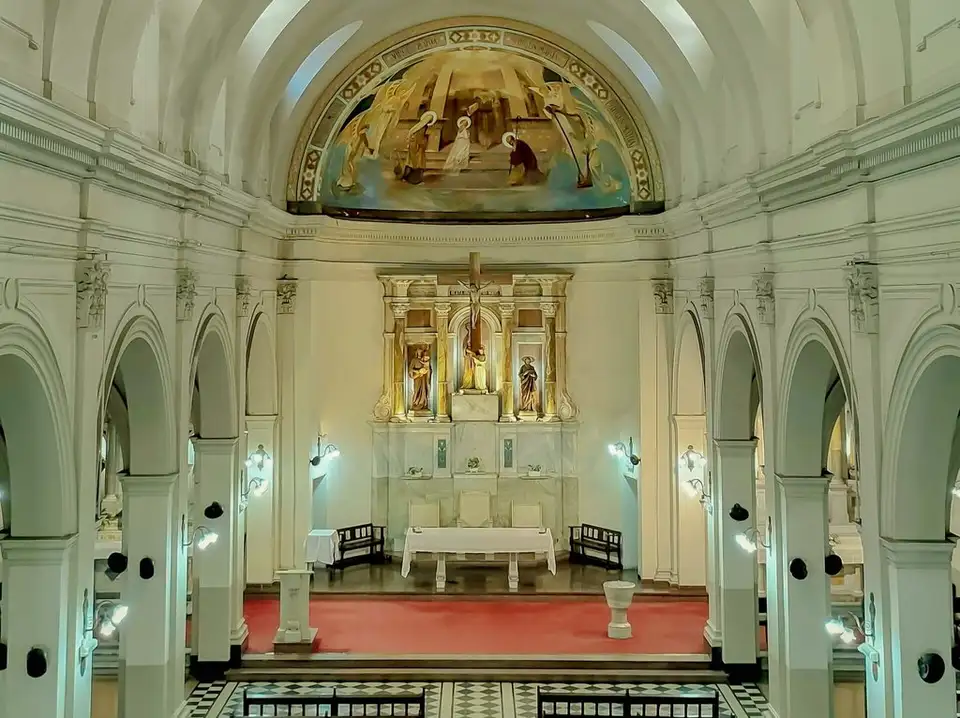
Upon entering the church, the visual experience shifts to the interior of the main nave. The space is decorated with frescoes depicting religious scenes, among which a representation of the Presentation of Mary at the Temple is particularly notable. These pictorial elements, together with the arrangement of the altar and the natural light entering the space, create an environment oriented toward reflection and prayer.
History and roots in Villa del Parque
The presence of the religious community in this area began to take shape around 1912, when nuns from the congregation of the Sisters of Charity established themselves on land near Cuenca street. What began as a small chapel built in 1913 evolved alongside the neighbourhood’s demographic growth. The need for a larger structure led to the decision to erect the current parish church, which would eventually be consolidated under its definitive dedication.
The construction of the current building reached important milestones during the 1920s. After the acquisition of land that had belonged to long-standing residents of the area, the foundation stone was laid in January 1924. The church was finally inaugurated in 1927, securing its place as a landmark of local heritage and maintaining its mission of proclaiming the faith in Villa del Parque since the early twentieth century.