Museo Malvinas e Islas del Atlántico Sur
The Museo Malvinas e Islas del Atlántico Sur is a fundamental reference point for understanding Argentina’s collective memory around its sovereignty claims. Located within the Espacio Memoria y Derechos Humanos (former ESMA), this national museum does not focus solely on the historical narrative of the conflicts — it aims to represent territorial identity through an educational and interactive approach. Its existence reflects the state’s commitment to asserting sovereignty over the islands and other areas of the South Atlantic.
Memory and historical heritage
The museum’s itinerary connects visitors with key milestones in Argentine history. The space has a historical dimension that includes documents and objects linking central figures, such as José de San Martín, who referred to the islands in his official correspondence in 1816. The museological approach incorporates the significance of the Comandancia Política y Militar de las Islas Malvinas, established in 1829, weaving together the colonial past and more recent conflicts.
Beyond the historical-political component, the museum devotes a section to Argentine Antarctica. Through exhibitions featuring instruments, materials, and equipment used by Argentine scientists on Antarctic expeditions, the museum draws a connection between territorial sovereignty and current scientific research. This framing helps visitors understand the strategic importance of these regions for the country.
Sensory experience and natural surroundings
The visit is structured around stations that offer sensory experiences designed to bring visitors closer to the physical reality of the archipelago. The museum uses auditory and tactile resources to recreate characteristic elements of the Malvinas landscape — from the wind sounds typical of the islands to the roar of warplanes — achieving an immersion that goes well beyond viewing display cases.
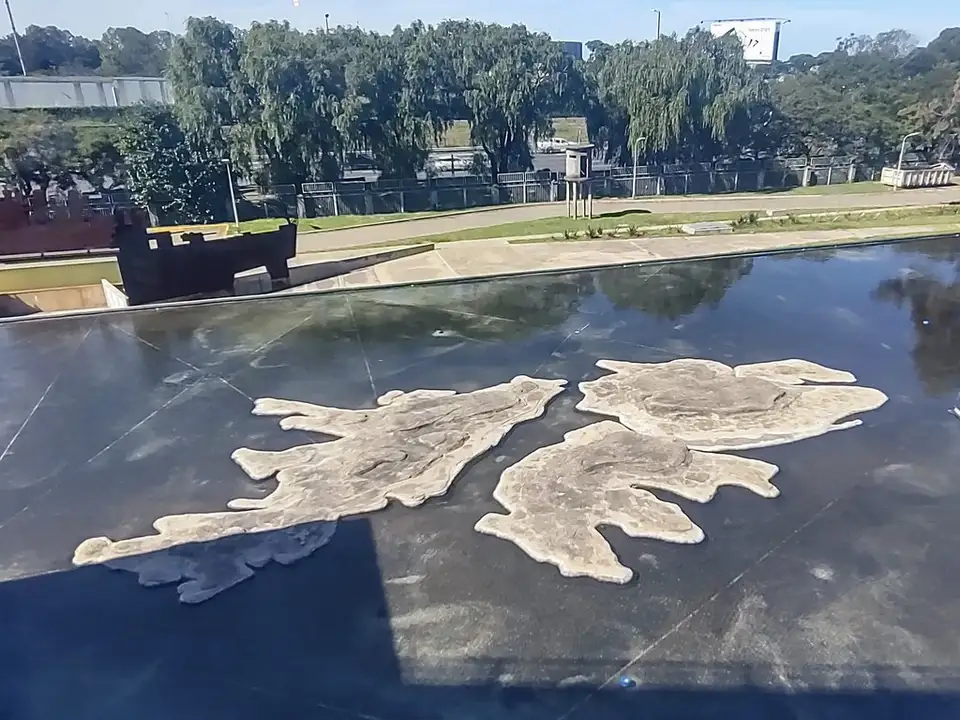
The grounds are divided into two main areas: the museum building and an open-air space. The latter serves as a memorial to those who fell in the 1982 war, set in a plaza that recreates the geography and landscape of the islands. In this sector, the design seeks to integrate Malvinas flora and fauna through elements such as a pier and an artificial lake, allowing visitors to sense the territorial scale and biodiversity of the South Atlantic.
Context in the City of Buenos Aires
Embedded in an area of great historical significance for human rights, the museum sits within a setting of reflection and remembrance. Its location on Avenida del Libertador connects it with other cultural and commemorative points of interest in the city, forming part of a circuit that invites deeper engagement with Argentine national identity and territorial heritage.