Auditorium Montoya
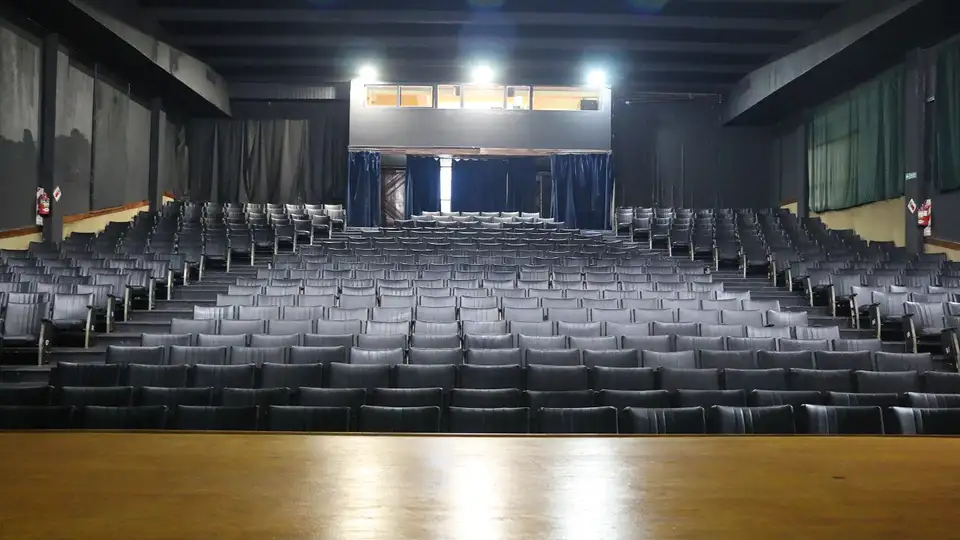
The Auditorium Montoya is the cultural hall of the Instituto Superior Antonio Ruiz de Montoya (ISARM), an institution with decades of presence in Posadas and across the interior of Misiones province. The auditorium serves as the public face of that institutional life: the space where the wider community can access the academic, cultural, and civic activity the institute generates.
The auditorium’s name — and the name of the institute that houses it — honors a foundational figure in the history of northeast Argentina. Father Antonio Ruiz de Montoya (1585–1652) was a Spanish Jesuit who spent decades working among the Guaraní peoples of the Río de la Plata region. Beyond his pastoral work, Ruiz de Montoya produced the first systematic grammars and vocabularies of the Guaraní language — a body of work that served missionary purposes but also preserved in writing a language that might otherwise have remained purely oral. His text Conquista espiritual (1639) remains one of the most detailed accounts of the Jesuit reductions and Guaraní life of that era. In Misiones, a province whose identity is deeply tied to that mission history, the name Montoya is not simply a tribute: it is a statement of cultural belonging.
ISARM was founded with the impetus of Monsignor Jorge Kemerer, a key figure in the Misionera church of the twentieth century, and grew into one of the most active teacher-training and technical institutes in the region. Today it offers more than fifteen teacher-training programs — ranging from Biology and History to Early Childhood Education and Design — along with several technical degrees, with campuses in Posadas, Eldorado, Oberá, and Bernardo de Irigoyen. Its Campus Kemerer, on Avenida Jauretche 6700, is the main location where the Auditorium Montoya is found.
From that campus, the institute projects its cultural activity into the city through initiatives such as Misiones Mbojeré Cultural — a program whose name is drawn from Guaraní and which deliberately anchors its offerings in provincial identity — and the Radio Educativa Montoya, which extends the institution’s reach beyond its classrooms. The auditorium is the physical space where that outward projection takes shape: communication forums, historical conversations, academic presentations, and events open to the public all find a regular home here.
For the traveler arriving in Posadas from the riverside or from the ruins of San Ignacio, looking to understand the city beyond its costanera and its border crossing to Encarnación, the Auditorium Montoya offers a different entry point into the province. It is not a monument or a museum: it is a living space, embedded in the daily life of an institution that trains Misiones’ teachers and takes seriously the idea that the territory’s Guaraní and Jesuit heritage is not only history but ongoing subject matter. Attending an open session or a Mbojeré Cultural event here is a glimpse into the Posadas that thinks and creates, well outside the conventional tourist circuit.