Bryn Gwyn Paleontological Park
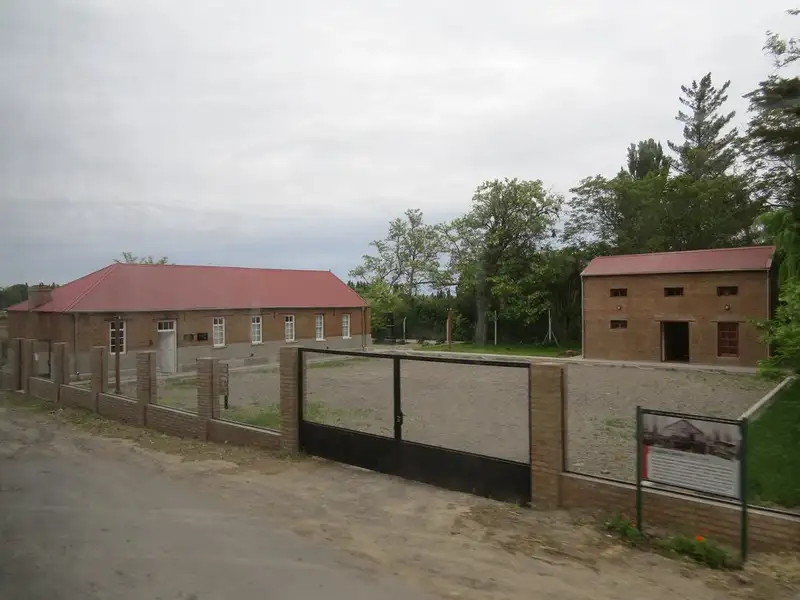
Located about 7 kilometres south of Gaiman, in the rural area along the southern escarpment of the lower Chubut river valley, Bryn Gwyn Paleontological Park operates as an open-air scientific exhibition. Part of the Egidio Feruglio Paleontological Museum, the site allows visitors to observe partially exposed fossil remains that document the biological and geological evolution of the Patagonian region over millions of years.
A geological record in strata
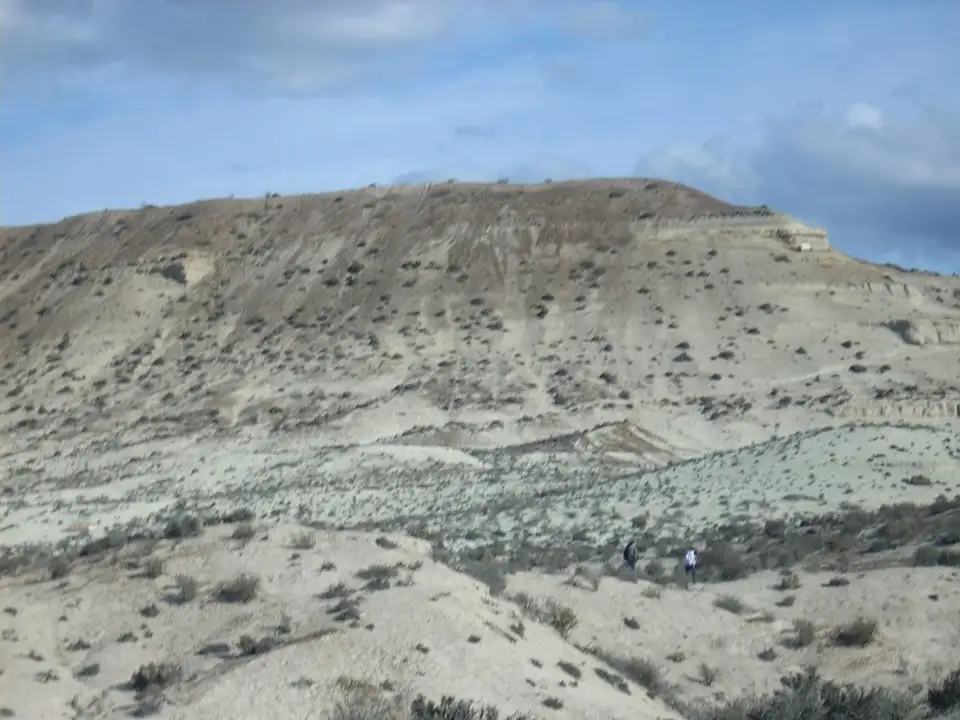
The park sits on terrain where distinct geological formations tell the stories of very different eras. The trail makes it possible to understand how the landscape changed dramatically, shifting from marine environments to terrestrial ones. The Sarmiento Formation, dating back 40 million years, preserves volcanic sediments with evidence of a much warmer Patagonia covered in vegetation similar to an African savanna. Within this layer, remains of land mammals and extinct wasp species have been identified, including chubutolithes gaimanensis.
Moving up through the strata, the Gaiman Formation, roughly 23 million years old, records a period when the sea advanced over the continent. At these levels, fossils belonging to marine fauna can be seen, including remains of sharks, carnivorous dolphins, penguins, and whales. More recently, the Puerto Madryn Formation, between 10 and 12 million years old, documents the retreat of the sea and the presence of marine mammals such as seals.
The escarpment trail
The visit follows an itinerary that advances chronologically. Setting out from the field station on the hillside of the escarpment, the route allows visitors to observe the different geological levels that serve as a narrative reference for the region’s past. The park covers an area of 250 hectares and keeps much of its territory under active research, giving it a dynamic character as a site of ongoing scientific study.
The park’s surroundings are deeply tied to the identity of Gaiman and its environs. The Bryn Gwyn area — whose name means ‘white hill’ in Welsh — is woven into the landscape of smallholdings and fruit plantations typical of the lower valley. This connection between paleontological heritage and the region’s agricultural activity — marked by crops of cherries, raspberries, and apples — offers a complete picture of the natural and cultural richness that defines this part of Chubut.