Iglesia Stella Maris
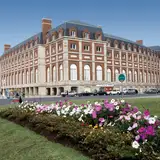
Located at the intersection of Viamonte and Brown streets, the Iglesia Stella Maris stands as one of the most symbolically and architecturally significant points in Mar del Plata. This building, whose current structure dates from 1911, is not only a religious temple but a testament to the urban and cultural development of the city in the early twentieth century. Its presence in the fabric of the central area connects it directly to the maritime identity of the region, as it is the place where devotion to the Marian title of Stella Maris — patroness of the Argentine Navy — first took hold in the country.
Architecture and Neo-Gothic Heritage
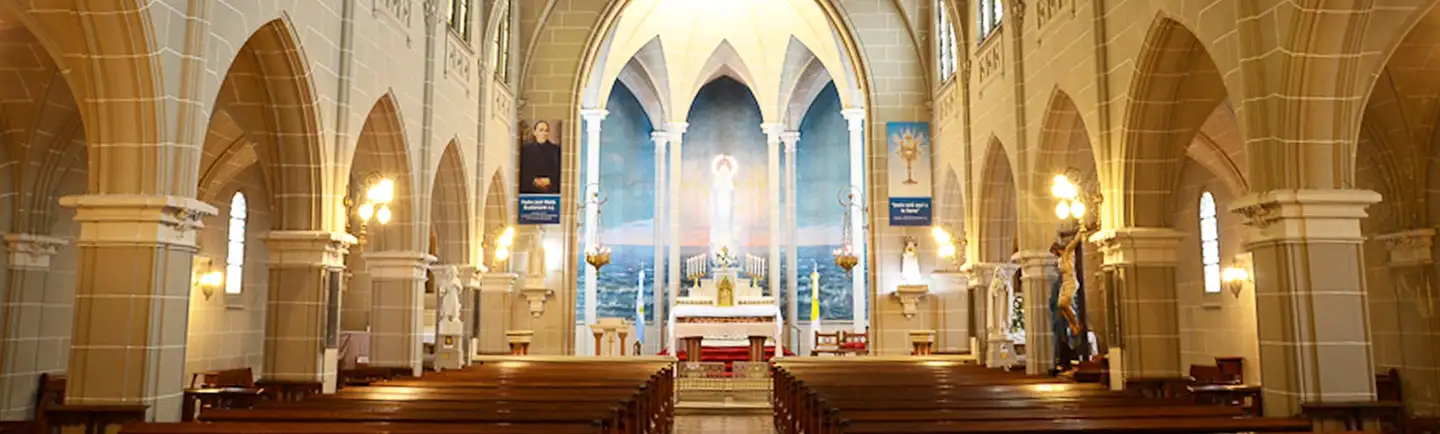
The church stands out for its eclectic neo-Gothic style, an aesthetic choice that lends it verticality and a solemn character within the urban surroundings. The construction displays features characteristic of this movement, with details that invite close attention to the complexity of its original design. A key element for understanding its artistic value is found in the apse of the main altar. Following an extension completed in 1940, this section houses a mural depicting the sea, in which an image of the Virgin appears suspended over the waters, integrating oceanic themes with religious devotion.
The church’s interior contains furnishings that reflect the community’s bond with the place; a large part of its fittings were donated by local residents, adding a layer of social history to the physical structure. This relationship between the community and the church is evident in the preservation of objects that form part of the local heritage.
Maritime Identity and Tradition
The importance of this site extends beyond the purely architectural into the realm of oral tradition and the faith of seafarers. The devotion to Stella Maris is deeply tied to the stories of local fishermen, who find in this figure a source of protection against the unpredictability of the Atlantic. Tradition holds that, in the face of despair before a stormy sea, the intercession of the heavenly Mother allowed the crew to find their lost bearing by following a star — a narrative that resonates with the identity of a city whose life depends on the port.
Moving through the space allows one to appreciate how the architecture seeks to evoke that connection between the divine and the natural. The presence of sea-related elements at the main altar reinforces this bond, making the church a meeting point where the history of sailors and local faith intertwine with the physical structure of the building.