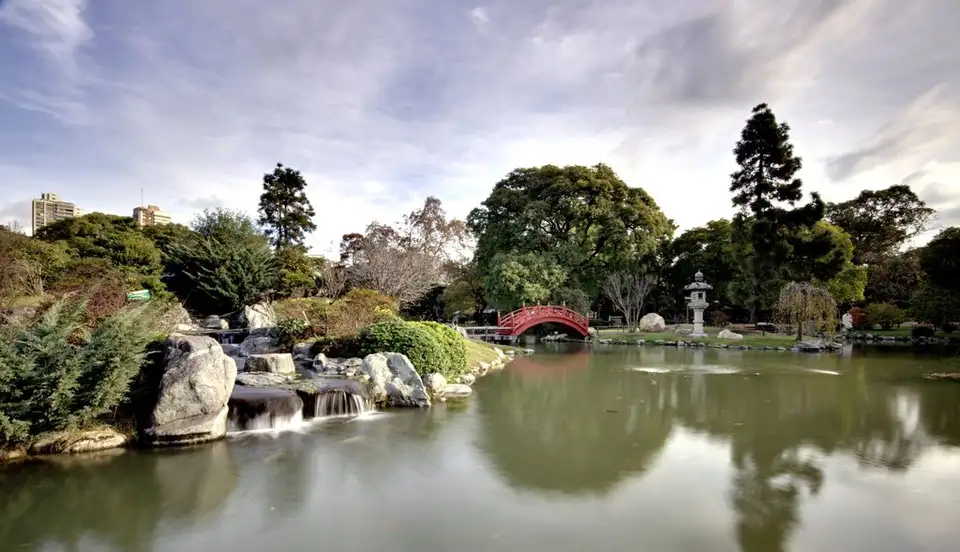
Jardín Japonés
Located in the heart of the Palermo neighborhood, surrounded by the expanse of the Bosques de Palermo, the Jardín Japonés presents itself as an enclave of calm within the dynamic Argentine capital. It is the largest Japanese-style park outside Japan, a distinction that positions it as a cultural and landscaping landmark in the region. Its origins date to 1967, on the occasion of the official visit of Emperor Akihito and his wife Michiko, marking the beginning of a space dedicated to preserving the aesthetics and values of Japanese culture.
Landscape and cultural elements
Walking its paths reveals a meticulous composition of natural and symbolic elements. The current design, modeled on the Zen Garden, was redesigned in 1977 under the direction of landscape engineer Yasuo Inomata. The park’s structure integrates lakes, bridges, and waterfalls that frame a setting where nature is presented in an ordered, contemplative manner. The vegetation is one of the central focuses of any visit: the garden holds a varied collection that includes bonsai, azaleas, kokedamas, and orchids. The seasonal cycle transforms the perception of the place; spring and summer are marked by floral color, autumn brings out the yellow tones of the Ginkgo biloba specimens, and winter allows visitors to appreciate the flowering of the cherry trees.
Tradition and architecture
Beyond its botanical value, the garden functions as a container of material heritage. A notable feature is the Chashitsu, a teahouse built specifically for the performance of the traditional Japanese tea ceremony. This space has a handcrafted interior, made using components imported from Japan that are over a hundred years old. The presence of cement lanterns and other traditional ornaments reinforces the authenticity of the setting.
The complex also incorporates other cultural and commercial functions that complement the experience on the grounds. The site includes a cultural center, an art gallery, and a restaurant specializing in Japanese cuisine. It also has a nursery where plants such as bonsai and fish food for the lake pond can be purchased, alongside a shop dedicated to Japanese crafts. This combination of elements makes the garden a space that goes beyond mere landscape observation, integrating living culture within an environment designed for contemplation.