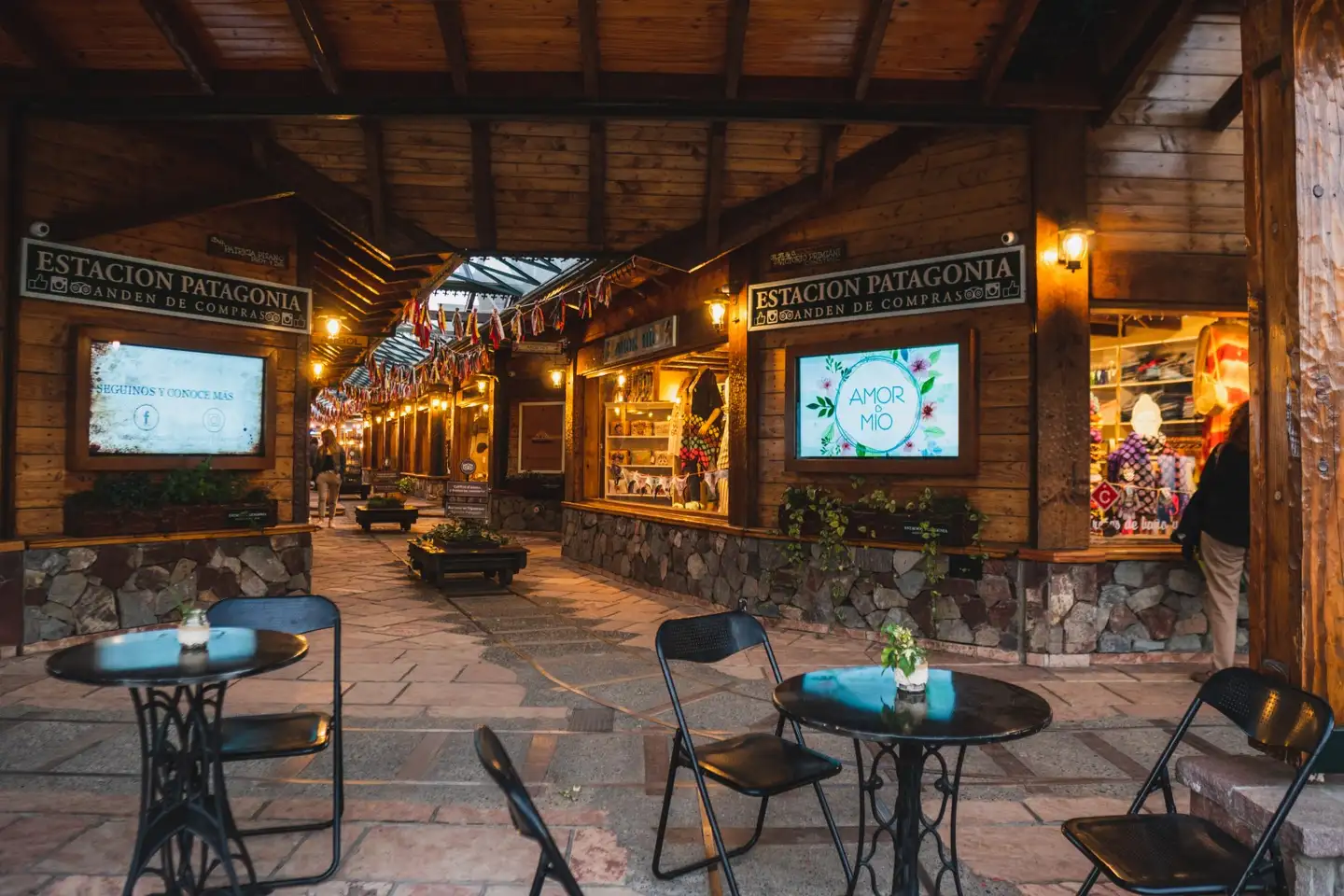
Estación Patagonia
On the main avenue of Villa La Angostura’s town center, a railway signal marks the entrance to a commercial promenade where architectural design turns every visit into a journey through time. Estación Patagonia draws its direct inspiration from La Trochita, the legendary narrow-gauge train that since the early 20th century connected the Patagonian cordillera and which survives today as a living heritage landmark of the region.
The concept is not simply a gallery of shops. The internal walkways are laid with railway tracks and handcars (zorras de ferrocarril) that replicate the atmosphere of a working platform, and the route ends at an original railway carriage that serves as a landmark photo spot within the promenade. For travelers arriving from Bariloche along the Ruta de los Siete Lagos or the shores of Lake Nahuel Huapi, the carriage is also a nod to the railway legacy that once linked these lands before automobiles came to dominate the landscape.
The commercial curation is intentionally boutique. Unlike the seasonal shops that proliferate on Villa La Angostura’s streets, the stores within the promenade follow a selection criterion that prizes quality over quantity and avoids duplication of categories. You will find design shops with artisan objects, regional product stores — from craft beers and preserves to liqueurs made from local forest fruits — and decoration spaces that work with materials and crafts from northwestern Patagonia.
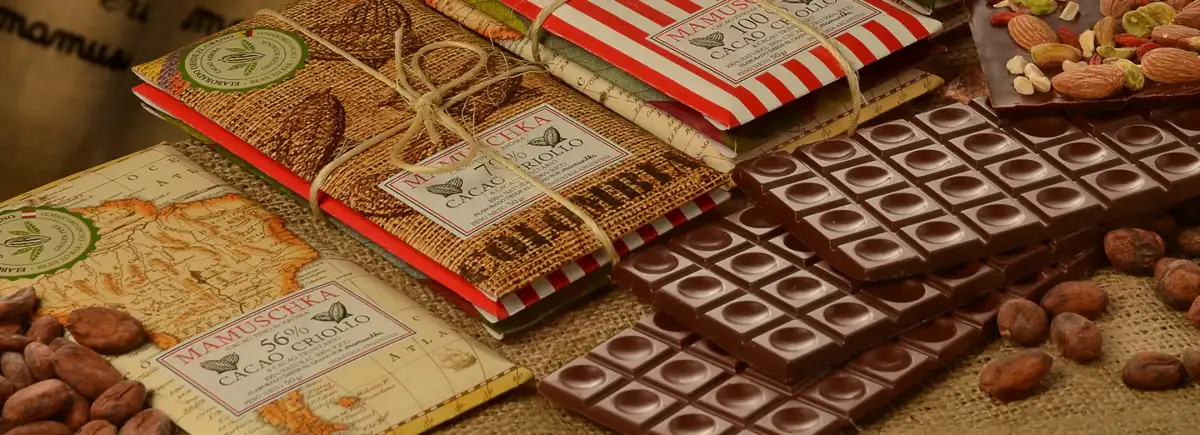
The gastronomic centerpiece of the promenade is the aroma of chocolate and coffee that permeates the platform year-round. The explicit reference to the old dining cars of the Patagonian train — where food and the pleasure of long-distance travel mingled — translates into a pause that goes beyond a simple purchase: sitting on the platform with a hot chocolate while other visitors browse the shops is one of the most photographed moments in the town’s social media presence.
The complex is also the work of the Estación Patagonia architecture studio itself, which maintains an office in Villa La Angostura as well as Buenos Aires. This dual authorship — designers who also operate and curate the promenade they built — gives the space its coherence: every constructive detail, from the timber joinery to the lighting, reflects a Patagonian reading of space that goes beyond mere thematic décor.
Villa La Angostura has no large shopping centers and no historically significant urban core; its appeal is scenic, lacustrine, and rooted in nature. Within that context, Estación Patagonia occupies a singular place: it is the urban walkable space with the strongest individual identity in the city, concentrating in just a few blocks the local artisan production and gastronomy that would otherwise be scattered across town. For travelers arriving after a day in Parque Nacional Arrayanes or on the slopes of Cerro Bayo, the promenade provides the natural transition from mountain to village.