San Ignacio Miní Ruins
The ruins of San Ignacio Miní represent one of the most valuable testimonies to the encounter between Jesuit evangelization and Guaraní culture in South America. Founded around 1610 by priests José Cataldino and Simón Maceta, the mission relocated to its current location in 1696 after fleeing attacks from Paulista bandeirantes in the Guayrá region of present-day Brazil.
At its peak, San Ignacio Miní housed more than 3,000 Guaraní people who formed a self-sufficient community engaged in agriculture, musical instrument manufacturing, and various artisanal crafts. The expulsion of the Jesuits in 1767 marked the beginning of the site’s abandonment, though its structures remained standing. Rediscovered in 1897, the complex was designated a UNESCO World Heritage Site in 1984, solidifying its importance as a monument to a crucial chapter in regional history.
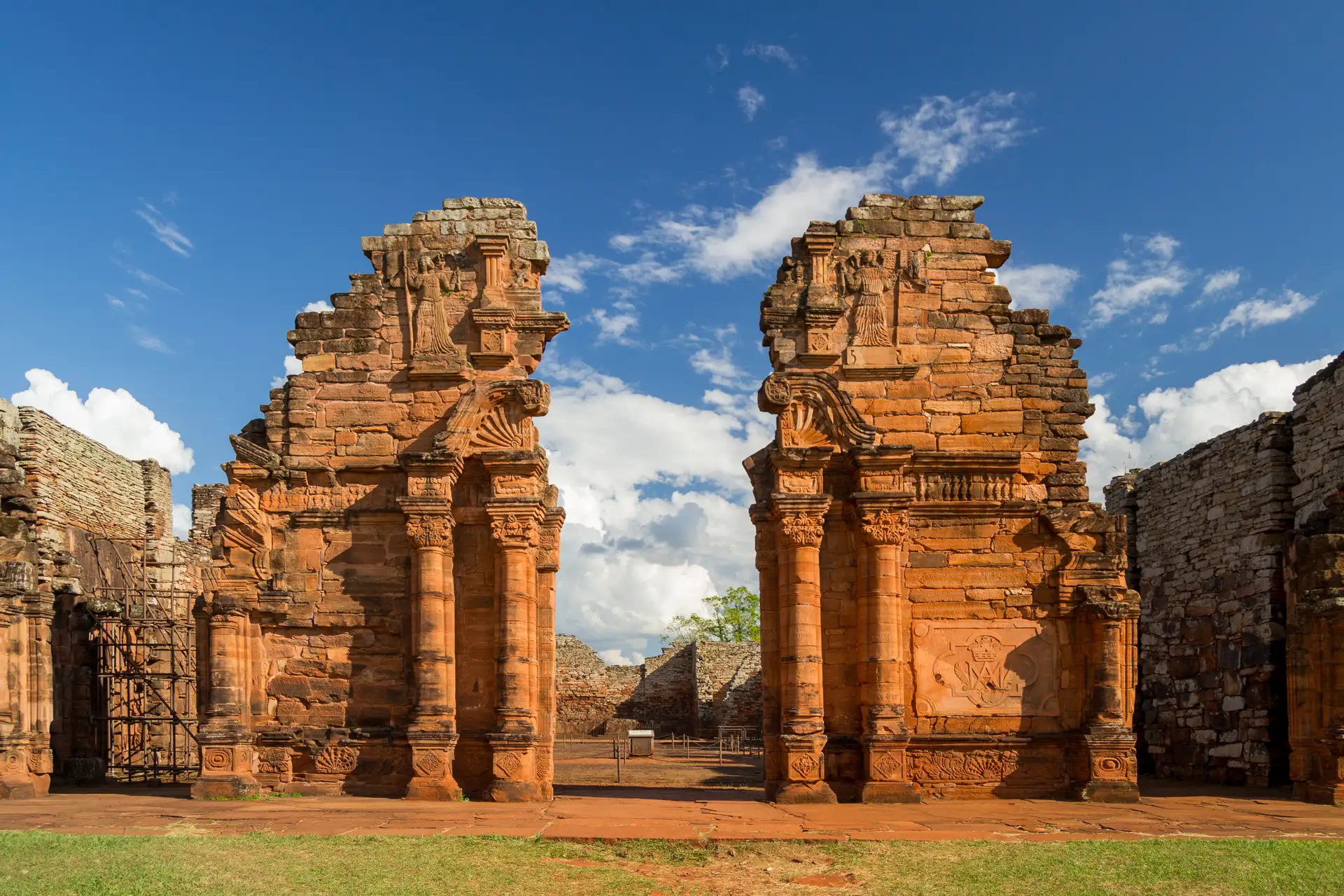
The site’s architecture reflects a unique synthesis known as Baroque-Guaraní. The main church, an imposing structure 74 meters long, stands out for its richly decorated façade featuring floral patterns and zoomorphic motifs that blend European aesthetics with elements of indigenous tradition. This jewel of locally quarried red sandstone imparts a distinctive visual character to the entire complex that remains captivating even in its ruined state.
Beyond the church, visitors can explore an urban layout that reveals the meticulous organization of the community: a central plaza that served as the administrative and ceremonial heart, flanked by residences, workshops, and administrative buildings. These spaces tell the story of how the Guaraní learned new construction, agricultural, and manufacturing techniques under Jesuit guidance while maintaining aspects of their cultural identity.
Today, San Ignacio Miní ruins are considered the most complete in all of Argentina in terms of architectural preservation. Restoration work has made it possible to clearly appreciate the ornamental details carved in stone: flowers, animals, and symbols that evidence the artisanal mastery of the Guaraní. A typical visit through the site lasts approximately one hour and invites reflection on this unique historical experience.
During winter months, a light and sound show projects historical narratives onto the ruins, immersing visitors in stories about daily life, Guaraní traditions, and the mission’s legacy. This immersive experience complements the daytime visit, allowing for a deeper connection with the place’s history.
As one of four Argentine Jesuit sites designated as UNESCO World Heritage in 1984—along with Santa Ana, Santa María La Mayor, and Nuestra Señora de Loreto—San Ignacio Miní exemplifies the importance of these reductions in Misiones’ colonial history. The site endures as testimony to an experiment in coexistence, as well as to the inherent tensions of European evangelization in Guaraní lands.