Plaza San Martín, Posadas
Plaza San Martín has occupied a central place in Posadas’s urban fabric since the city’s very origins. When the 1872 founding grid organized the historic center’s street plan, the plaza was set aside as one of two main public spaces in the area—alongside the neighboring Plaza Nueve de Julio—and its role as a civic anchor has remained unchanged ever since.
The green rectangle is bounded by Ayacucho, La Rioja, Junín, and Entre Ríos streets, in the heart of Posadas’s downtown. Along one side stands the Canal 12 television building, and within the same functional block, the Antonio Ruiz de Montoya Higher Institute, a long-established tertiary education institution in the province. That presence of media and education around the plaza gives it an everyday character that goes beyond tourism: it is a gathering point for local public life.
The element that visually organizes the space is the equestrian monument to General José Francisco de San Martín. The sculpture was created by French sculptor Joseph Louis Daumas, whose most celebrated work—the San Martín in Buenos Aires’s plaza of the same name—dates to 1862. The Posadas version is a replica of that original, though with deliberate adjustments: the angle of the horse’s tail and the Liberator’s hand, which points westward toward the Andes, are modified to give each version its own identity within a shared sculptural family.
The pedestal supporting the figure was commissioned by Carlos Acuña, then governor of the National Territory of Misiones, from architect Alejandro Bustillo. The choice was deliberate: by the 1930s, Bustillo was already one of Argentina’s most recognized designers, responsible for works such as the Llao Llao Hotel in Bariloche and the headquarters of the Banco de la Nación Argentina. His involvement in Posadas raised the monument’s scale and gave the plaza a pedestal of architectural distinction. Work was carried out between 1932 and 1934, and the inauguration was held on April 24, 1934—a date that continues to mark the monument’s anniversary.
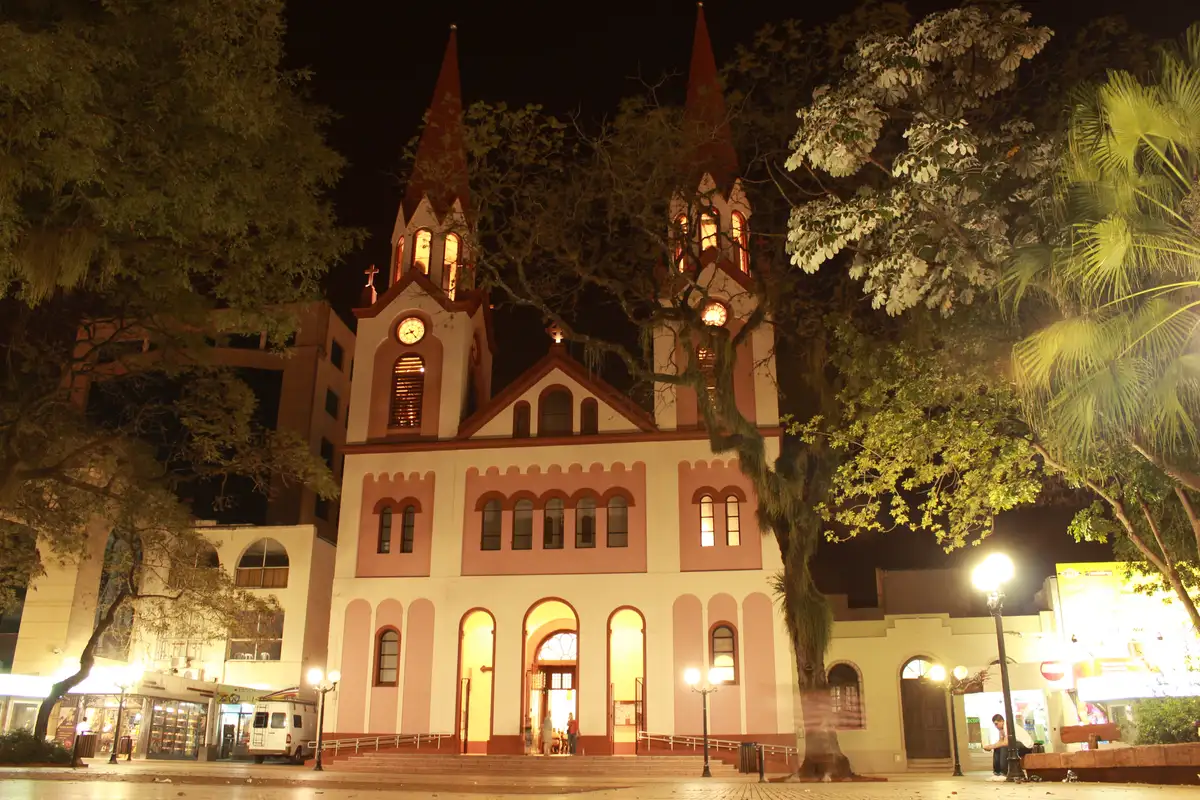
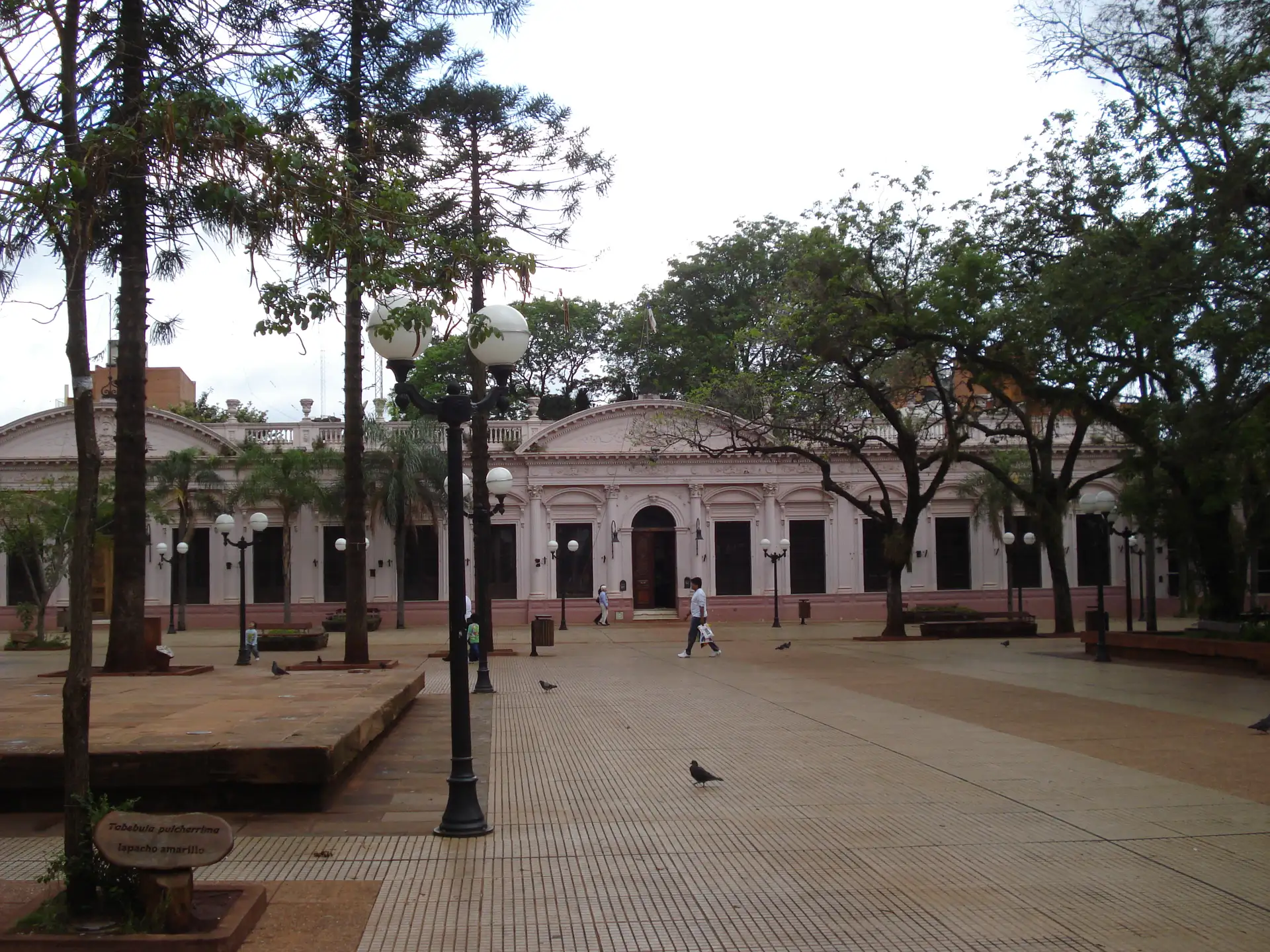
The municipality of Posadas formally recognized the site’s importance by declaring it a Place of Municipal Interest, a distinction that accompanies its established role as the setting for civic ceremonies, national commemorations, and cultural gatherings. The Misionera landscape gives those events a particular backdrop: the subtropical vegetation lining the paths—tipas, palms, and flowering shrubs depending on the season—contrasts with the monumental scale of the central ensemble and is a reminder that Posadas is a city whose character is inseparable from the warmth and natural abundance of Argentina’s Mesopotamia.
For visitors, the plaza works as a natural starting point for exploring the downtown area: from here it is easy to walk to the Paraná River waterfront, the historic district, and the main tourist and administrative facilities of the capital. The children’s play areas along its edges and the benches that invite rest confirm that it remains, above all, a living space in daily use.