Monument to Andrés Guazurarí
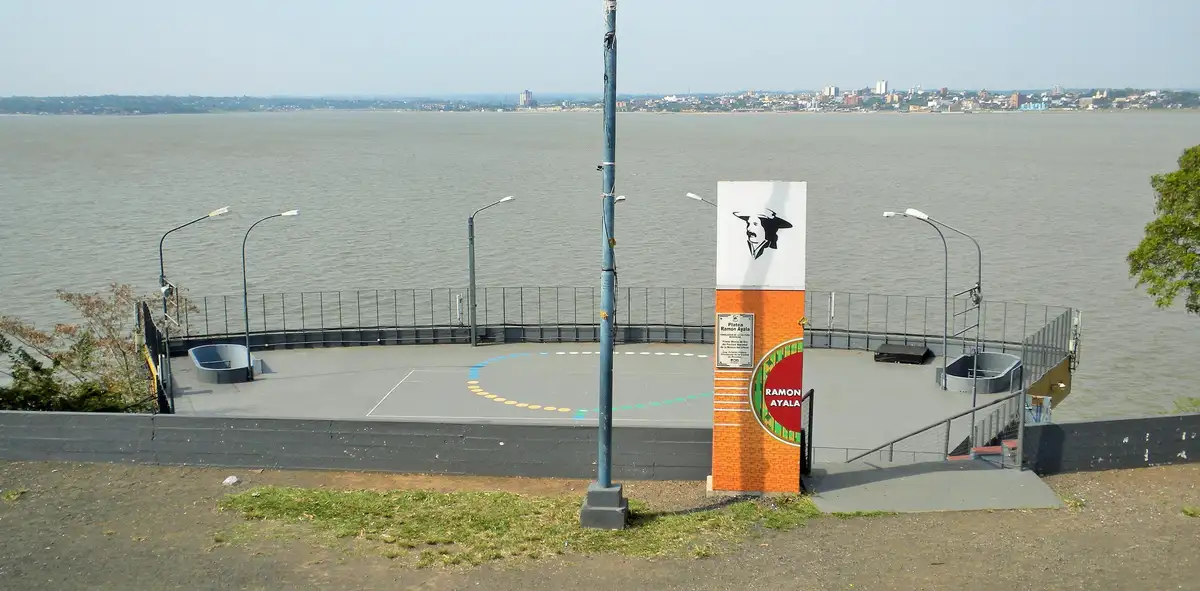
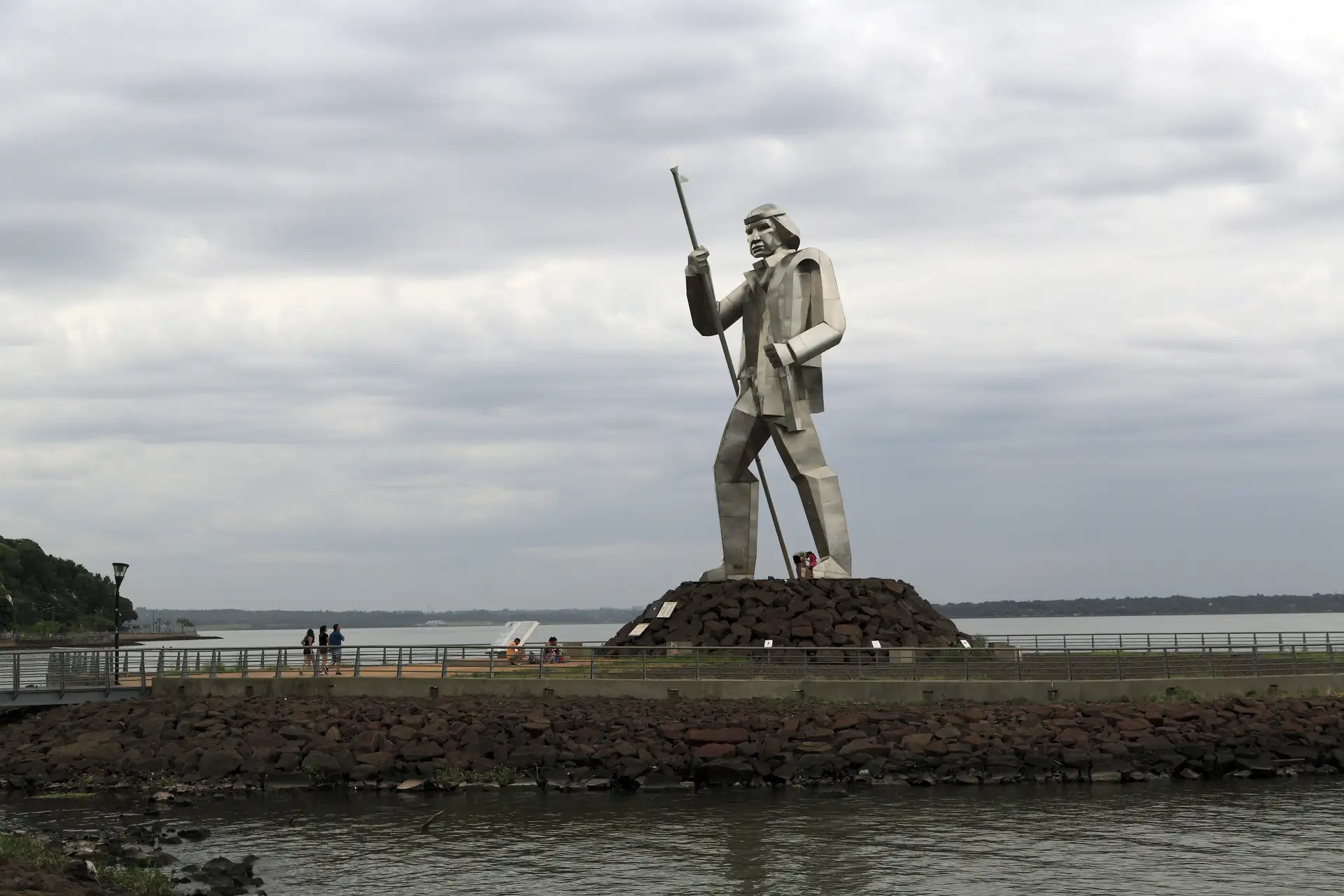
On the Posadas riverfront, the Monument to Andrés Guazurarí stands on a small island opposite Avenida Costanera and faces the Paraná River. That placement gives it a distinctive presence within the urban promenade: it is not separated from the walk, but woven into the river edge, as if it were part of the same landscape that shapes daily life in the city. The monument appears as a monumental stainless steel sculpture, which fits its role as a visible and durable landmark on a heavily used waterfront.
The work honors Andrés Guacurarí, known as Comandante Andresito. His biography describes him as a Guaraní military leader and caudillo, born in Santo Tomé in 1778, who governed the Provincia Grande de las Misiones from 1815 to 1819 and was one of José Gervasio Artigas’ closest collaborators. It also notes that Artigas legally adopted him, allowing him to sign as Andrés Artigas. His career became closely tied to the defense of Misiones’ territory against the Luso-Brazilian invasions and to the region’s political resistance during the independence period.
In that context, the Posadas monument is more than a personal tribute: it is a way of fixing memory in public space. The tradition around his surname shows that several spellings were used, and the biography explicitly notes that the waterfront monument in Posadas uses the variant “Guazurarí.” That local choice matters because it roots the work in a way of naming that circulates in Misiones and connects the sculpture to regional history rather than to a single abstract spelling. The result is a monument that does not only remember a hero; it also shows how a community chooses to write and transmit its own past.
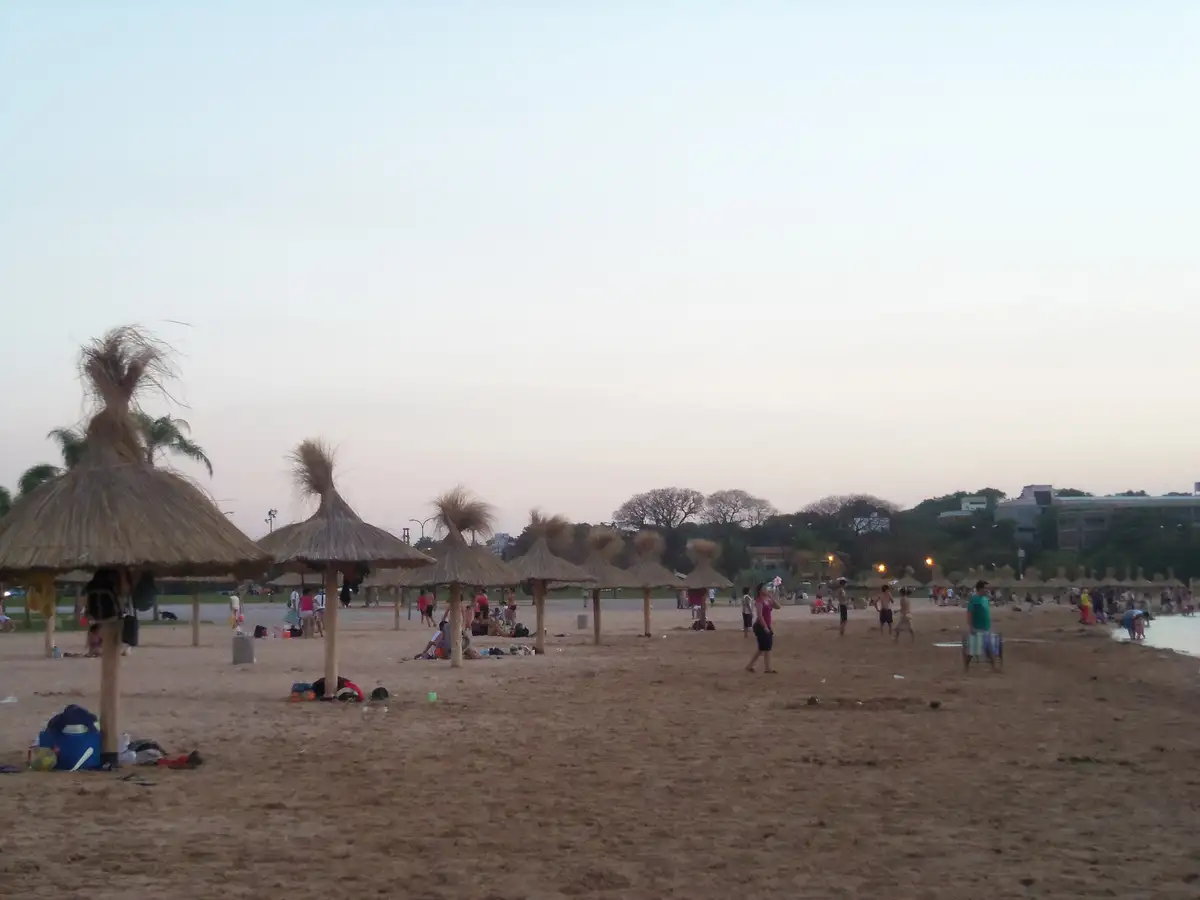
For someone walking through Posadas, the visit works best as a pause within a waterfront stroll rather than as a standalone attraction. The monument gives a quick reading of the place: the city opens onto the Paraná, the waterfront organizes the encounter with the landscape, and Andresito’s figure links that contemporary walk with a history of frontier defense, Indigenous leadership, and provincial formation. In that sense, the site has a double value. It provides a clear visual reference on the waterfront, and it turns an ordinary walk into a direct entry point to Misiones’ memory. It also explains why the Costanera is not only a recreational space: in Posadas, the riverside promenade functions as a stage for public symbols and historical narratives. The monument condenses that idea without needing any extra explanation. A few minutes is enough to understand that the edge of the Paraná is at once landscape, promenade, and civic story.